Flywheel: What It Is, How It Fails, and What to Do When It Goes Bad
When your car’s flywheel, a heavy metal disc that connects the engine to the transmission and smooths out power pulses. Also known as a crankshaft flywheel, it’s one of the least talked about but most critical parts in a manual transmission system. Most drivers never think about it—until the clutch starts slipping, the car shudders at idle, or you hear a grinding noise when shifting. That’s when you realize the flywheel isn’t just a passive part. It’s the bridge between your engine’s power and your driver’s control.
The dual mass flywheel, a more complex version with two pieces and a damping system to reduce vibration is common in modern cars, especially diesels. It’s designed to make driving smoother, but it’s also the first to fail under stress. When the damping springs wear out or the two halves start to separate, you’ll feel it as a rhythmic clunk when you press the clutch. This isn’t normal. And if you ignore it, you’ll eventually damage your clutch kit, the set of parts including the pressure plate, disc, and release bearing that engage and disengage the engine from the transmission. Replacing the clutch without checking the flywheel is like putting new tires on a bent rim—it won’t last.
How do you know if your flywheel is done? Look for vibrations when you let the clutch out, especially at low speeds. Listen for a metallic rattle when the engine is idling. Check for shiny spots or grooves on the surface—these mean the clutch disc has been grinding against it. A cracked or warped flywheel can cause the clutch to grab unevenly or even fail completely mid-drive. And here’s the thing: most mechanics will tell you to replace the flywheel whenever you replace the clutch. It’s not just a suggestion. It’s because the flywheel wears at the same rate as the clutch, and once it’s damaged, no new clutch will work right.
Driving habits matter. If you ride the clutch, sit in gear at traffic lights, or frequently launch hard from a stop, you’re putting extra stress on the flywheel. It’s not designed for that. Even if your car has 100,000 miles and runs fine, the flywheel could be worn out inside. You won’t see it unless you pull the transmission. That’s why many UK drivers opt for a full clutch and flywheel replacement together—it’s cheaper in the long run than fixing the same problem twice.
There’s no magic number for how long a flywheel lasts. Some last the life of the car. Others go bad at 40,000 miles if you’ve been rough on the transmission. The key is to pay attention to how your car feels. If the clutch pedal feels different, if you hear new noises, or if gear changes are suddenly jerky—it’s not just the clutch. It’s probably the flywheel too.
Below, you’ll find real-world guides from UK drivers and mechanics on how to spot flywheel failure before it leaves you stranded, what to look for when replacing it, and why skipping this step can cost you hundreds more down the line. You don’t need to be a mechanic to understand these signs. You just need to know what to watch for.
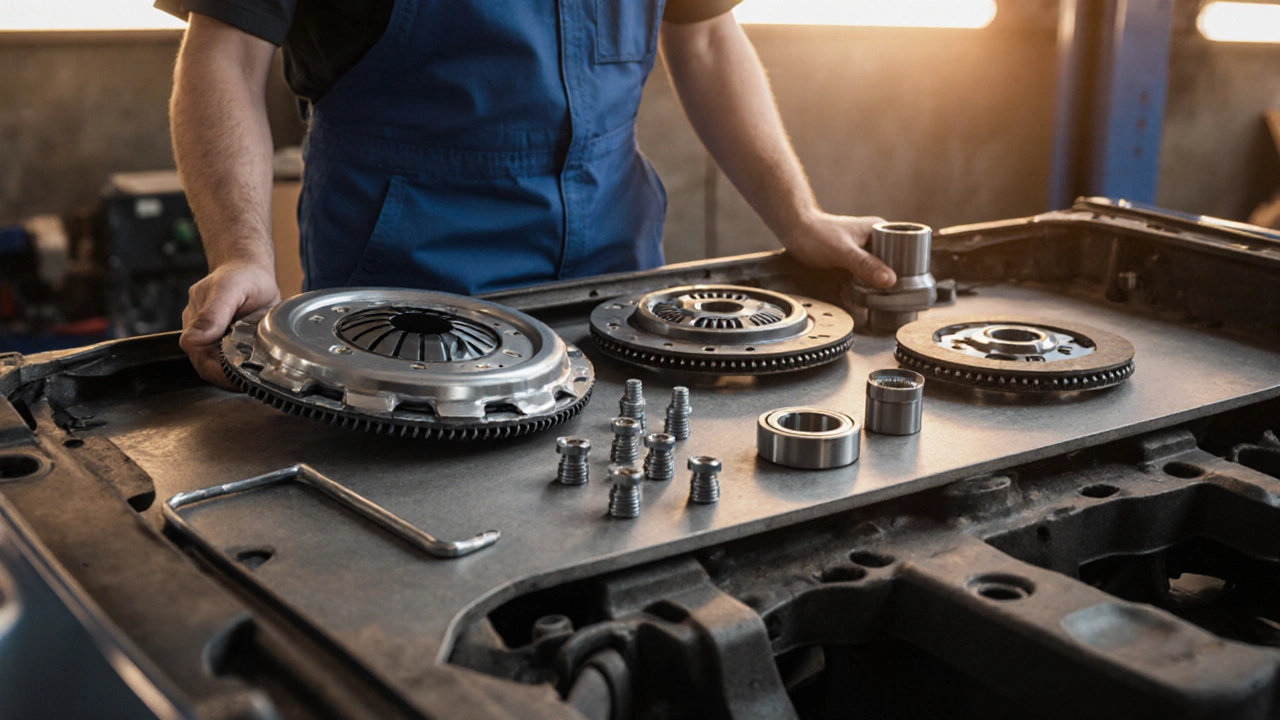
Additional Parts to Replace When Changing a Clutch
Learn which extra components to swap when you replace a clutch, from flywheel and pressure plate to hydraulic lines and engine mounts, with a full checklist and FAQs.
October 20 2025