Cooling After Filter Change: What You Need to Know About Car Cooling Systems
When you hear "cooling after filter change," most people think of the air filter, a component that cleans incoming air before it enters the engine. Also known as engine air filter, it helps your engine breathe better and can improve fuel efficiency. But here’s the truth: changing the air filter doesn’t directly affect how well your engine cools down. That job belongs to the car radiator, a heat exchanger that pulls heat out of engine coolant. Also known as radiator core, it’s the real hero behind preventing your engine from overheating.
Confusion happens because people mix up air flow with cooling. A clean air filter lets more air into the engine, which helps combustion—but the radiator needs coolant flow, fan operation, and clean passages to do its job. If your engine runs hot after an air filter swap, the problem isn’t the filter. It’s more likely a clogged radiator, low coolant, a failing water pump, or a broken thermostat. These are the parts that actually control temperature. The coolant system, the network of hoses, pumps, and fluids that circulate liquid to absorb and release engine heat. Also known as cooling system, it’s what keeps your engine from turning into a melted mess. Even the best air filter won’t fix a radiator full of rust or a fan that won’t turn on.
Looking at the posts here, you’ll see a lot of focus on radiator lifespan, signs of failure, and how to test your cooling system. That’s because overheating doesn’t come with a warning light until it’s too late. A radiator can leak slowly for months before you notice. Coolant can turn to sludge. The thermostat can stick. And none of that has anything to do with your air filter. What you’ll find in these guides are real, step-by-step checks you can do yourself: how to inspect radiator hoses for cracks, how to test if the cooling fan kicks on, what color your coolant should be, and why topping off with tap water is a bad idea. You’ll also learn when to replace the radiator entirely—not just because it’s old, but because the metal is corroding from the inside.
There’s no magic fix. You don’t get better cooling just because you changed a filter. You get better cooling by maintaining the right parts, at the right time. If your car runs hot after any service, look at the radiator, not the air box. Check the coolant level. Listen for the fan. Feel the hoses. These are the real signs. The posts below give you exactly that—no fluff, no guesses. Just what works on UK roads, in all weather, with real cars you drive every day.
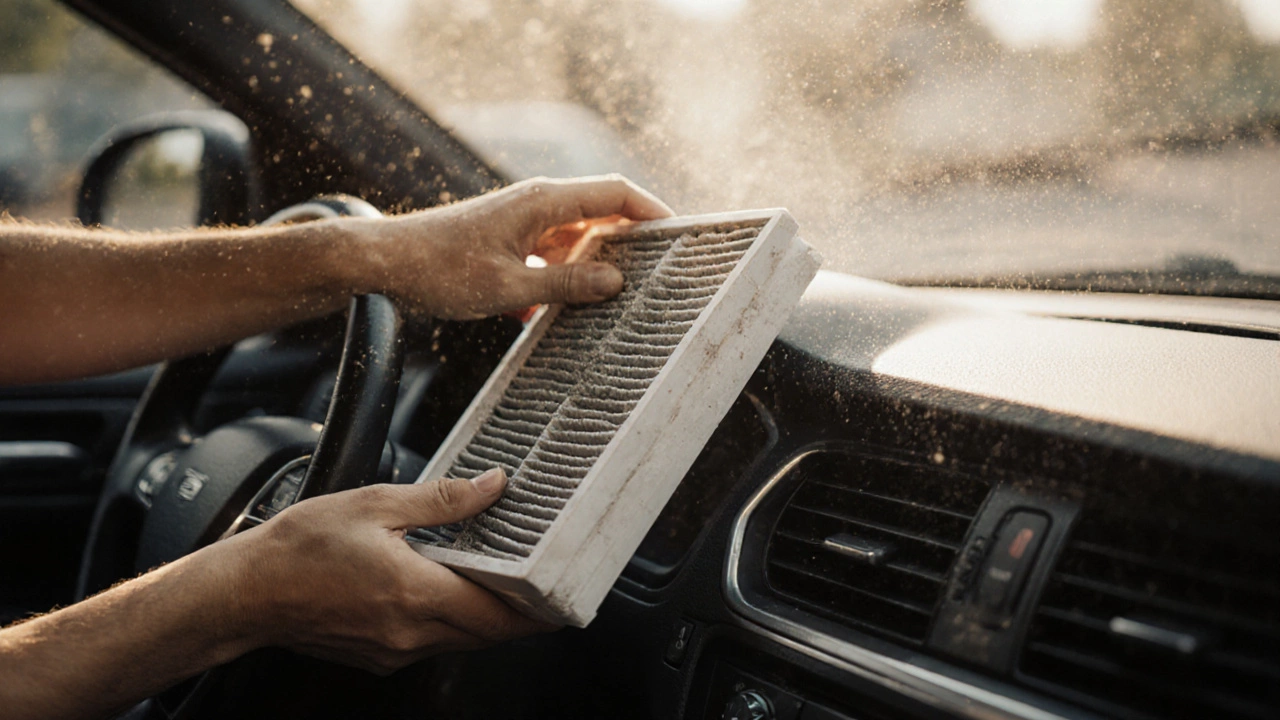
How Soon After Replacing an Air Filter Will Your AC Start Working?
Find out how quickly an AC system recovers after changing the cabin air filter, what factors affect cooling time, and what to do if it still blows warm air.
October 23 2025