Change Radiator: When, Why, and How to Do It Right
When you need to change radiator, a critical part of your car’s cooling system that prevents the engine from overheating. Also known as a cooling radiator, it’s not something you replace on a schedule—it fails when you least expect it, often after years of neglect. Most car radiators last between 8 and 12 years, but if you’re skipping coolant flushes or driving with low fluid, that lifespan can drop to under 5 years. A failed radiator doesn’t just leave you stranded—it can destroy your engine in minutes.
Before you change radiator, check the signs. Is your temperature gauge climbing? Are there puddles under your car with a sweet smell? Is the coolant murky or full of rust? These aren’t normal. They mean the radiator’s internal passages are clogged, the tanks are cracked, or the seals are gone. You might also notice the heater blowing cold air—because the radiator and heater core share the same coolant loop. If one fails, the other suffers. And don’t assume a new radiator is the only fix. Often, the thermostat, water pump, or hoses are worn out too. Replacing just the radiator without checking those parts is like putting a new tire on a car with bad brakes.
Radiator replacement, the process of removing a damaged cooling unit and installing a new one. Also known as cooling system overhaul, it’s not a weekend job for everyone. It requires draining coolant, disconnecting hoses, electrical connectors, and sometimes even the fan or AC lines. The right tools matter—using the wrong wrench can crack the plastic tanks. And don’t forget to flush the entire system. Old coolant left in the engine will ruin a brand-new radiator in months. Radiator failure signs, the visible and audible clues that your radiator is breaking down. Also known as overheating symptoms, they include white smoke from the exhaust, bubbles in the coolant reservoir, or a hissing noise from under the hood. These aren’t just repair issues—they’re safety issues. Overheating can warp the cylinder head, blow the head gasket, or seize the engine. That’s not a $300 fix. That’s a $3,000 bill.
Some people try to extend radiator life with stop-leak products. Don’t. They clog the system faster than rust. Others think aftermarket radiators are always better. Not true. A cheap aluminum unit might look nice, but if it doesn’t match your car’s flow rate or mounting points, it’ll overheat. Stick to OEM specs unless you’re upgrading for performance—and even then, get professional advice.
When you’re ready to radiator maintenance, the routine care that keeps your cooling system running smoothly. Also known as coolant service, it’s one of the cheapest ways to avoid expensive repairs. Flush the coolant every 30,000 to 50,000 miles. Check the level monthly. Look for leaks. Clean debris off the front grille. These small steps keep your radiator working for over a decade.
Below, you’ll find real-world guides on exactly when to replace your radiator, what to check at the same time, how to spot early failure, and why some replacements fail faster than others. No fluff. No theory. Just what works for UK drivers.
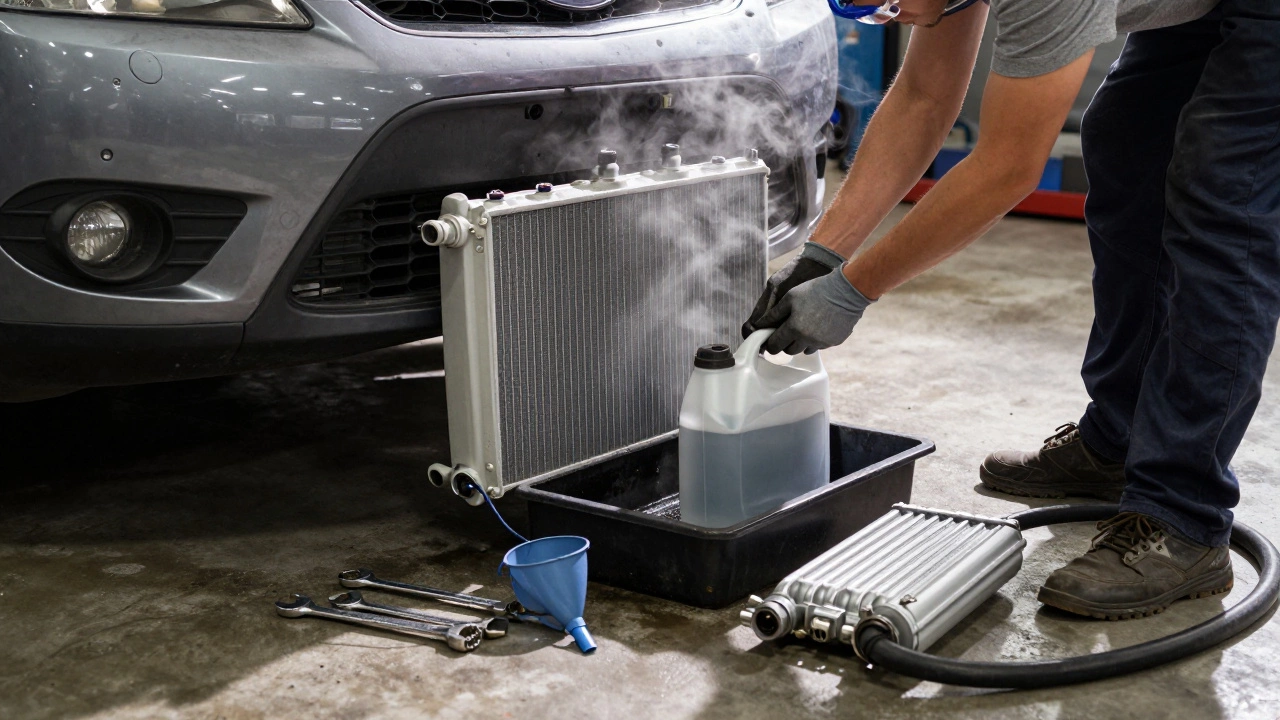
Is Changing a Radiator Easy? A Real-World Guide for Car Owners
Changing a radiator is doable for DIYers with the right tools and patience. Learn the steps, common mistakes, costs, and when to call a pro to avoid costly engine damage.
December 4 2025