Automotive Radiator: Signs of Failure, Lifespan, and How to Keep It Running
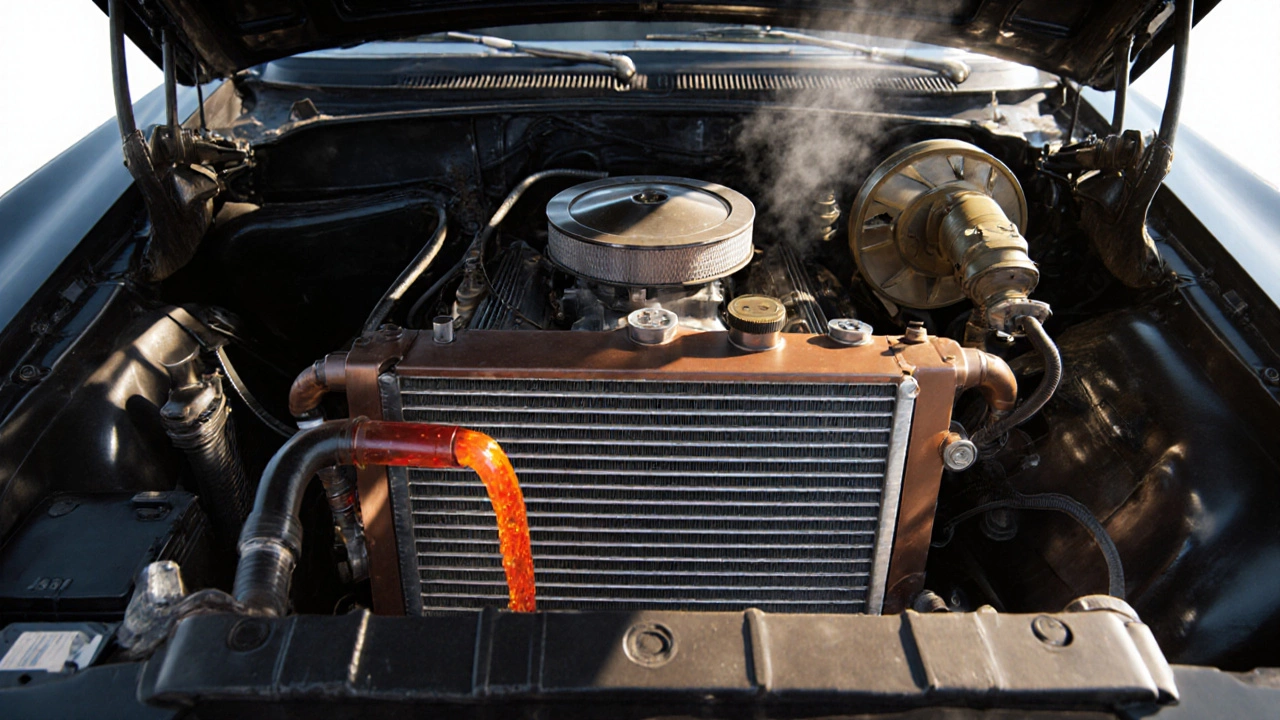
When your automotive radiator, a critical component in your car’s cooling system that circulates coolant to prevent engine overheating. Also known as a radiator core, it’s not something you think about until your temperature gauge spikes. Most people assume their radiator will last the life of the car—but that’s only true if you check it. Neglect can turn a $300 repair into a $3,000 engine rebuild.
The car cooling system, the network of hoses, thermostat, water pump, and radiator that regulates engine temperature doesn’t work in isolation. A failing radiator hose, the rubber tubes that carry coolant between the engine and radiator can leak, a clogged thermostat, a valve that controls coolant flow to the radiator can trap heat, and rust buildup inside the radiator itself can block flow. All of these lead to the same end: engine overheating. And once that happens, you’re not just replacing parts—you’re risking warped heads, blown gaskets, or a seized engine.
You don’t need a garage to spot trouble. Look for puddles under your car—green, orange, or pink fluid? That’s coolant, and it’s leaking. Smell sweet, burnt syrup when you open the hood? That’s coolant burning off. Your temperature needle creeping into the red, even on a cool day? That’s your radiator failing. And if your heater blows cold air while the engine runs hot, the radiator isn’t circulating coolant properly. These aren’t myths. These are real signs, backed by mechanics who see the damage every day.
Most radiators last between 8 and 12 years, but that’s only if you flush the coolant every 30,000 to 50,000 miles. Old coolant turns acidic, eats away at metal, and leaves sludge that clogs the tiny tubes inside the radiator. A simple flush costs less than a tank of gas. Skip it, and you’re gambling with your engine.
What you’ll find below isn’t theory. It’s what real car owners and mechanics in the UK have seen. How to test your radiator step by step. When you can save money by cleaning it instead of replacing it. Why some radiators fail before 5 years—and how to avoid being one of them. And what to look for when you’re shopping for a replacement so you don’t get stuck with a cheap part that fails again in a year.
Do Modern Cars Still Use Radiators?
Explore why most cars still use radiators, how electric pumps and fans have changed cooling, and what EVs need to keep cool. Get maintenance tips and a clear comparison.
October 17 2025