Radiator Replacement Cost Calculator
Your Car Details
Results
Pro Tip: Using the wrong coolant causes corrosion. Always match your vehicle's specification as shown in your manual.
Changing a car radiator isn’t something most people think they can do themselves. But if you’ve got basic tools, a little patience, and the right mindset, it’s totally doable. I’ve replaced radiators on three different cars over the last five years - a Ford Focus, a Honda Civic, and a Toyota Corolla. All of them were done in my garage in Manchester, no lift needed. You don’t need to be a mechanic to get it right. You just need to know what you’re doing.
Why replace a radiator at all?
Your radiator is the heart of your cooling system. It pulls heat away from the engine and keeps things running at the right temperature. When it fails, your engine overheats. That’s not just inconvenient - it can destroy your engine in minutes. Signs you need a new radiator? Leaking coolant, rusted or corroded fins, frequent overheating even after topping up fluid, or a temperature gauge that spikes during normal driving. If you’ve seen any of those, don’t wait. A new radiator costs between £120 and £300 depending on your car. A mechanic might charge £400-£700 to install it. Doing it yourself cuts that cost in half.
What tools and parts do you need?
You won’t need fancy gear. Here’s what’s actually necessary:
- A new radiator (match the part number exactly - don’t guess)
- A drain pan (at least 5 litres capacity)
- Funnel for refilling coolant
- Socket set and wrenches (metric sizes, usually 10mm to 14mm)
- Flathead screwdriver
- Plastic zip ties (for securing hoses temporarily)
- Shop towels or rags
- Owner’s manual (for torque specs and coolant type)
- New coolant - use the exact type your car requires (Dex-Cool, G12, etc.)
Don’t skip the coolant. Mixing types can cause sludge. Use the same brand and colour as the old one. If you’re unsure, check your manual or look up your car’s coolant specification online. For example, a 2018 Honda Civic needs Honda Long-Life Coolant - not generic green stuff.
Step-by-step: How to remove the old radiator
Start with a cold engine. Never work on a hot radiator - steam and boiling coolant can burn you badly. Wait at least an hour after turning off the car.
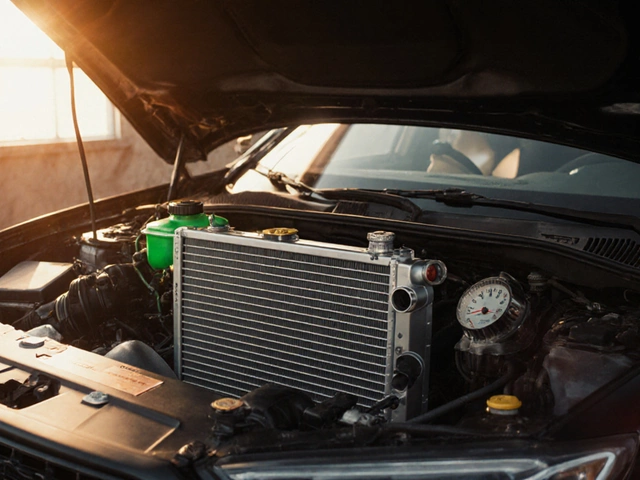
- Locate the radiator. It’s at the front of the engine bay, behind the grille. Most cars have a plastic cover over it - remove that first.
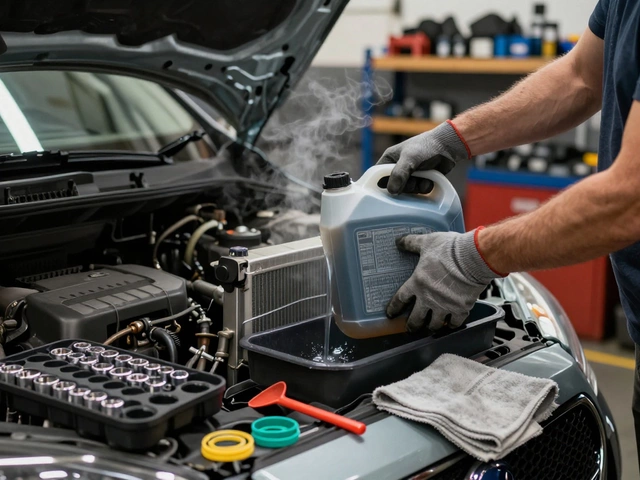
- Put the drain pan under the radiator drain valve or bottom hose. Open the drain valve with a wrench. If there’s no valve, loosen the bottom hose clamp and slide the hose off. Let all the coolant drain out. This can take 10-20 minutes.
- Disconnect electrical connectors. Most modern radiators have a temperature sensor or fan relay plug. Gently unplug them. Don’t yank.
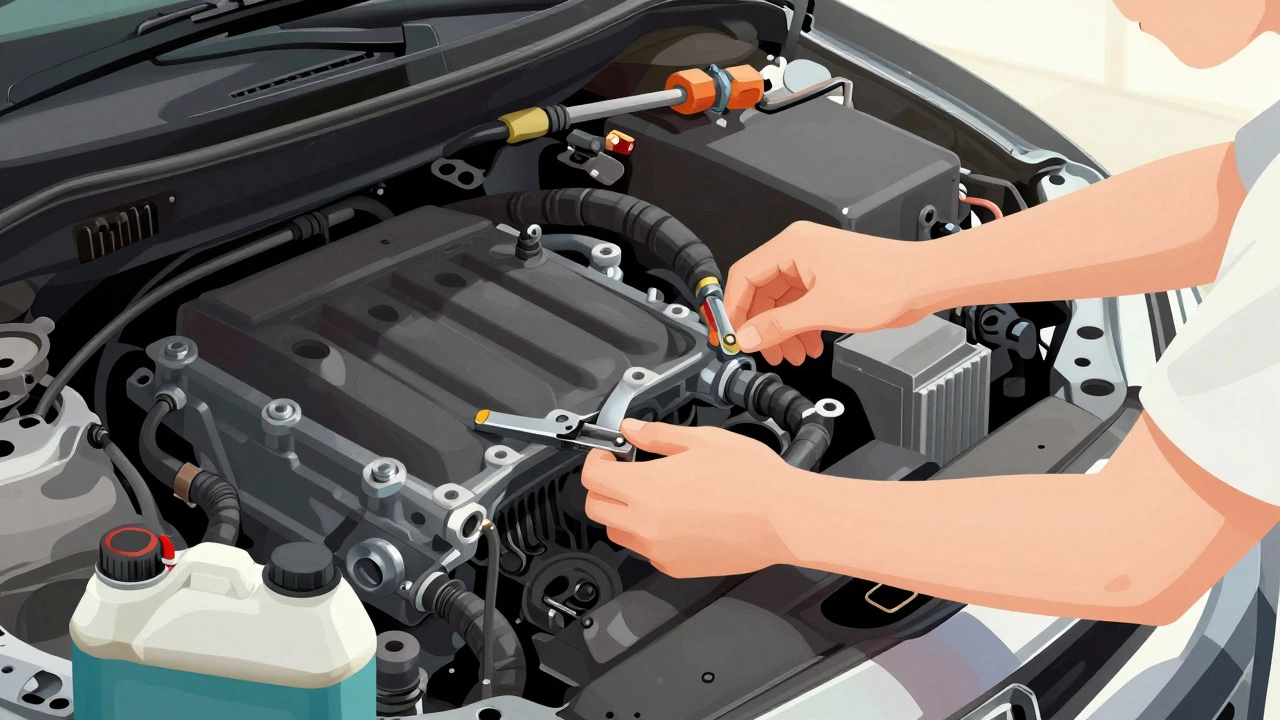
- Remove the upper and lower radiator hoses. Use a screwdriver to loosen the hose clamps. Slide them back, then twist and pull the hoses off. You’ll get some drips - that’s normal. Use rags to mop up.
- Unbolt the radiator mounting brackets. There are usually two or three on each side. Some cars have transmission cooler lines attached - disconnect those carefully. They’re often metal and can crack if twisted.
- Lift the radiator straight up. It’s heavy. If you’re alone, use a second person or a small jack to support it as you lift. Slide it out slowly. Watch for wiring, hoses, or the fan assembly that might catch.
Installing the new radiator
Now that the old one’s out, inspect the mounting points. Clean off any old gasket material or debris. A clean surface means a leak-free fit.
- Position the new radiator. Line it up with the mounting holes. Don’t force it - if it doesn’t slide in, check the alignment.
- Reattach transmission lines if your car has them. Tighten gently - over-tightening cracks the fittings.
- Reconnect the upper and lower hoses. Slide them on fully, then push the clamps back into place. You should hear a slight click when they’re seated.
- Reconnect electrical connectors. Make sure they snap shut.
- Reinstall the mounting brackets. Tighten bolts to the torque spec in your manual. If you don’t have that info, snug them with a wrench - don’t go full torque.
Refill and bleed the system
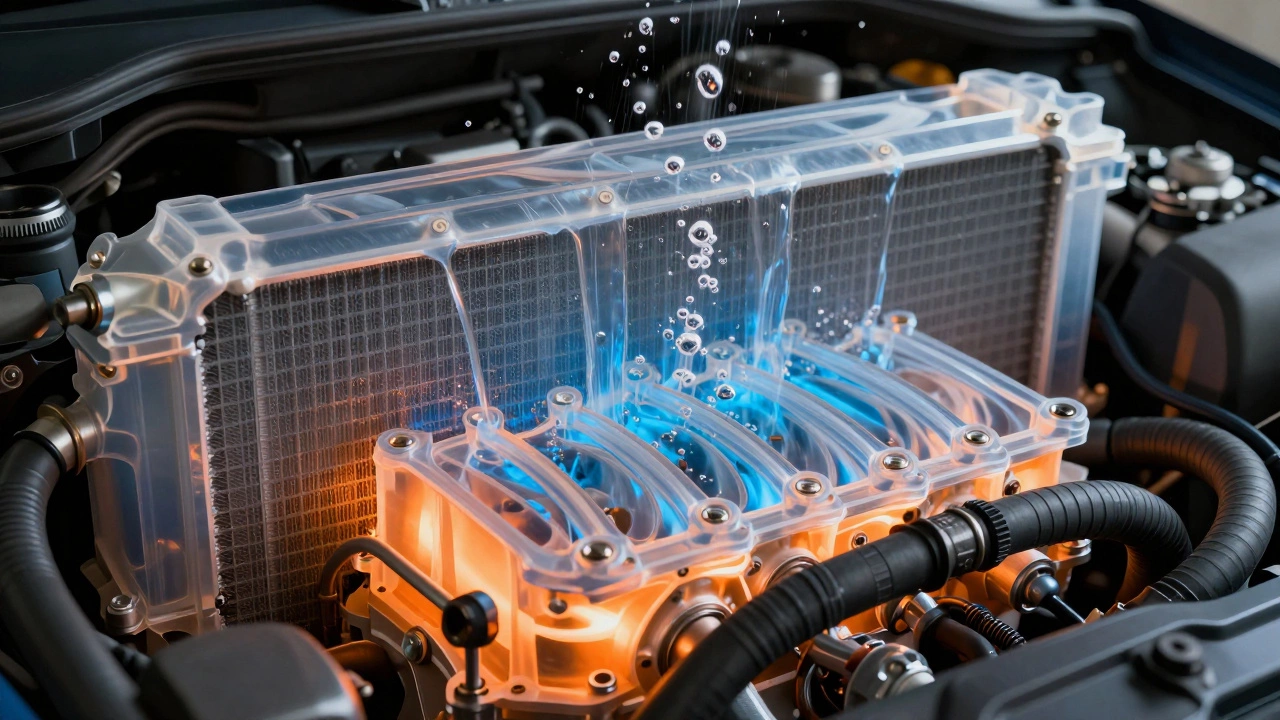
This is where most DIYers mess up. You can’t just pour coolant in and drive off. Air gets trapped in the system, and that causes overheating.
- Use a funnel to pour coolant into the reservoir. Fill to the "max" line.
- Start the engine. Leave it running with the radiator cap off (if your system has one). Let it idle for 10 minutes. Watch for bubbles.
- As air escapes, the coolant level drops. Keep topping up slowly.
- Once no more bubbles appear, turn off the engine. Let it cool for 15 minutes.
- Top up again, then screw the cap on tightly.
Take the car for a short drive - 10-15 minutes. Then let it cool. Check the level again. If it’s low, add more. Repeat until the level stays steady.
Common mistakes to avoid
Here’s what goes wrong most often:
- Using the wrong coolant - causes corrosion or gelling
- Not bleeding air - leads to overheating after 20 minutes of driving
- Over-tightening hoses or fittings - cracks plastic or metal ports
- Forgetting to reconnect sensors - triggers check engine lights
- Driving before the system is fully bled - big risk of engine damage
I once replaced a radiator on my Civic and skipped the bleeding step. The next day, the engine overheated on the way to work. I had to tow it. Lesson learned: air in the system is silent, but deadly.
When to call a pro
There are cases where DIY isn’t worth it:
- Your car has a complex cooling system (like a BMW or Mercedes with electric water pumps)
- The radiator is integrated with the AC condenser - removing it means evacuating refrigerant
- You’re not comfortable working around pressurized systems
- You don’t have a way to properly dispose of old coolant (it’s toxic)
If any of those apply, hire a mechanic. But for most sedans, hatchbacks, and older SUVs? You’ve got this.
How long does it take?
First time? Expect 3-4 hours. You’ll be slow. You’ll fumble the hoses. You’ll spill coolant. Second time? Under 90 minutes. With practice, it becomes routine. I’ve done it in 60 minutes on a 2015 Toyota Corolla - and I was listening to a podcast the whole time.
Final thoughts
Changing a radiator isn’t glamorous. It’s messy. It’s not fun. But it’s one of the most satisfying repairs you can do yourself. You save money. You learn how your car works. And you gain confidence. If you can change your oil, you can change your radiator. Start with a simple car. Take your time. Don’t rush the bleeding step. And don’t forget - a radiator isn’t just a part. It’s the reason your engine survives.
Can I drive my car with a leaking radiator?
No. Even a small leak can cause your engine to overheat within minutes. Coolant loss leads to overheating, which warps the cylinder head, damages the head gasket, or seizes the engine. If you notice coolant on the ground or the temperature gauge rising, stop driving immediately. Towing is cheaper than engine replacement.
How often should I replace my radiator?
Most radiators last 8-12 years or 100,000-150,000 miles. But that’s only if you change coolant regularly. Old coolant turns acidic and eats away at the radiator’s internal tubes. If you haven’t flushed the system in over 5 years, your radiator is at risk - even if it doesn’t look damaged.
Do I need to replace the thermostat too?
Not always, but it’s a smart move. The thermostat is cheap (under £30) and easy to replace while the radiator’s out. If it’s stuck closed, the engine overheats. If it’s stuck open, the engine runs too cool and wastes fuel. Replacing it at the same time saves labour and prevents future issues.
Can I use aftermarket radiators?
Yes, but choose wisely. Brands like Koyo, Denso, and Behr make reliable aftermarket radiators that match OEM specs. Avoid the cheapest options on Amazon - they often have thinner tubes, poor soldering, or incorrect fittings. Look for reviews that mention longevity and fitment. A £180 radiator from a reputable brand is better than a £90 one from an unknown seller.
What if I spill coolant on the ground?
Coolant is toxic to pets and wildlife. Never wash it down the drain or let it soak into the soil. Use absorbent pads or kitty litter to soak it up, then take it to a local garage or recycling centre. Most UK garages accept used coolant for free. Check with your local council for hazardous waste drop-off points.