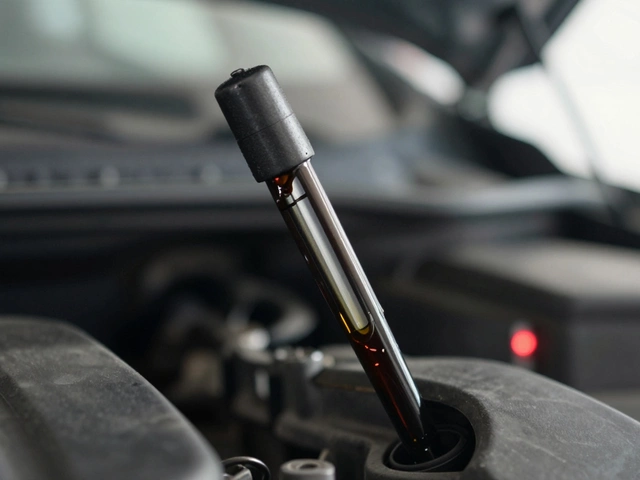
Most car problems start with something small - like not checking your engine oil. It’s not glamorous, but skipping this simple check can turn a $50 oil change into a $5,000 engine repair. If you’ve ever heard a knocking sound from under the hood, or seen a warning light flash on your dashboard, it might not be a complex fault. It could just be that your car needs oil.
Look for the oil warning light
Your car’s dashboard has one of the clearest signals: the oil pressure warning light. It usually looks like a small oil can with a drip underneath. If it comes on while driving - even briefly - stop as soon as it’s safe. This isn’t a suggestion. It’s a red flag that oil isn’t reaching critical engine parts. Running the engine without enough oil can cause metal-on-metal contact, which fries bearings, pistons, and even the crankshaft. Most modern cars will trigger this light when oil pressure drops below 5 psi. That’s not a lot. By the time it lights up, your engine is already at risk.
Check the dipstick - properly
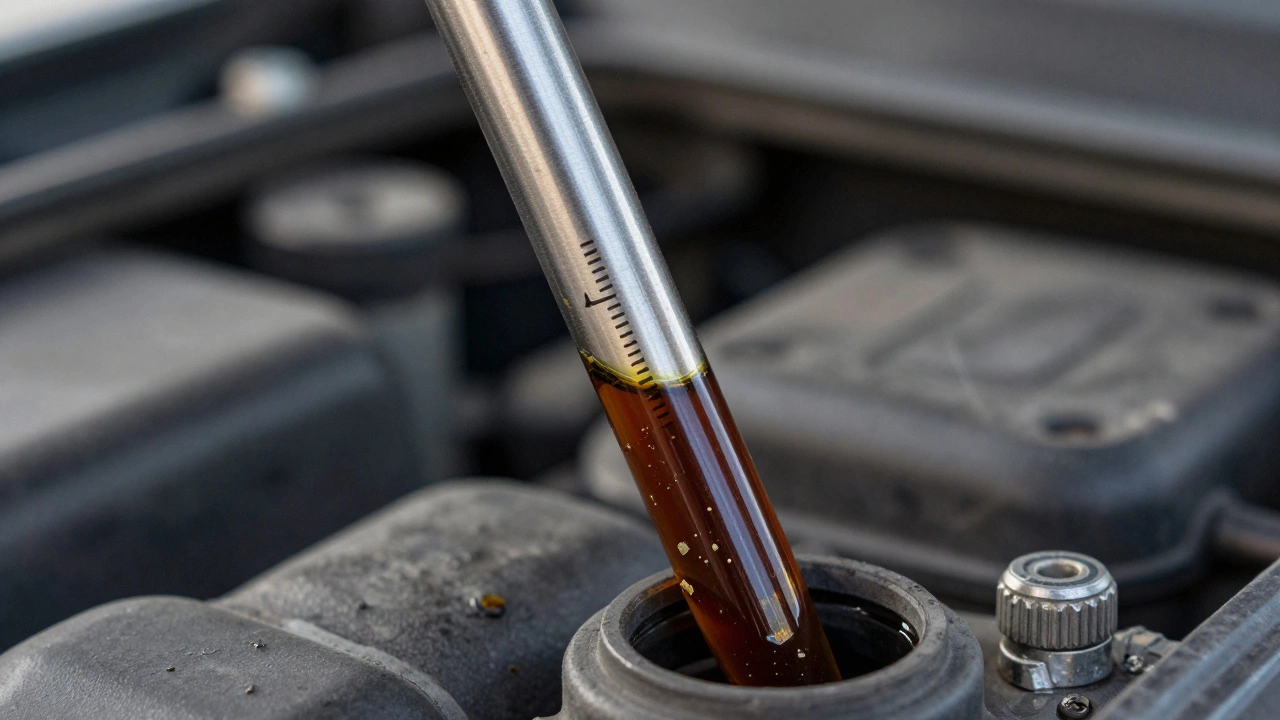
Even if the warning light hasn’t come on, you should check your oil every few weeks. It takes two minutes. First, make sure the car is parked on level ground. If you’ve just driven, wait five minutes for the oil to settle back into the pan. Pop the hood, find the dipstick (it usually has a bright yellow or orange handle), pull it out, wipe it clean with a rag, then reinsert it fully. Pull it out again. Look at the end. There are two marks: min and max. If the oil level is below the min line, you need more. If it’s right at the min line, top it up. Don’t overfill. Too much oil can cause foaming, which reduces lubrication and increases pressure on seals.
While you’re at it, check the colour and texture. Fresh oil is amber and clear. Old or dirty oil is dark brown or black. If it looks gritty or has metal flakes stuck to the dipstick, that’s a sign of internal engine wear. Don’t ignore that. It’s not just low oil - it’s a deeper problem.
Listen for unusual engine noise
Engines are designed to run quietly. If you start hearing a ticking, tapping, or knocking sound - especially when the engine is cold - it’s often a sign of low oil. The lifters and valve train rely on oil pressure to function smoothly. When oil is low, those parts don’t get enough lubrication, and they start clattering. Some drivers mistake this for a bad spark plug or exhaust leak. But if the noise gets louder after the engine warms up, or if it goes away after you add oil, it’s almost certainly an oil issue. In Manchester, where winters get cold, this noise is more common in the morning. Cold oil is thicker and flows slower, so low levels hit harder in freezing temps.
Smell burning oil
Ever walked past a car and caught a whiff of something like burnt toast or popcorn? That’s not your neighbour’s dinner. That’s oil burning on hot engine parts. If your car has an oil leak - maybe from a worn gasket or a loose filter - oil can drip onto the exhaust manifold. It doesn’t take much. A few drops can create that smell, especially when the engine is running. You might also see a faint blueish smoke coming from the tailpipe. That’s oil being burned in the combustion chamber, which happens when oil leaks past worn piston rings or valve seals. Either way, it’s a sign your engine is losing oil faster than it should. Don’t wait for the dipstick to show empty. Smell it early.
Check for oil leaks under the car
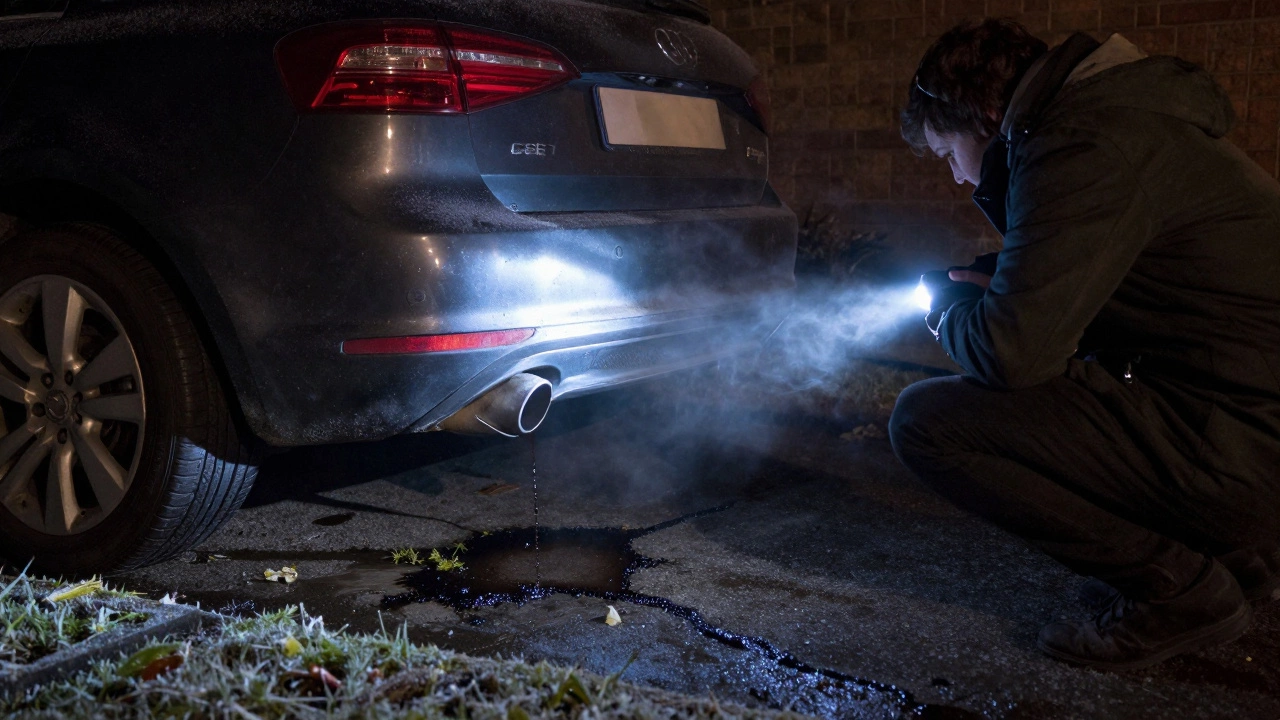
Park your car on a clean driveway or garage floor overnight. In the morning, look underneath. Oil leaks leave behind dark, greasy spots. Fresh oil is black and glossy. Older leaks look dry and crusty. Even a small drip - about the size of a quarter - means you’re losing oil. Common leak points include the oil pan gasket, valve cover gasket, and the oil filter housing. In older cars, rubber seals harden over time. In colder climates like the UK, temperature swings make seals crack. A leak might not be urgent right now, but if you’re adding a quart every 500 miles, you’re playing Russian roulette with your engine.
Pay attention to performance changes
Your car doesn’t just make noise when it’s low on oil - it starts to feel sluggish. You might notice slower acceleration, or the engine hesitates when you press the gas pedal. That’s because oil isn’t just lubricating - it’s helping cool and clean internal parts. When oil levels drop, friction increases. The engine has to work harder. Fuel efficiency drops too. If you suddenly find yourself filling up more often, and you haven’t changed your driving habits, check the oil. It’s not always the fuel system. Sometimes it’s just a lack of lubrication.
Know your car’s oil consumption rate
Not all cars burn oil the same way. Older engines, especially high-mileage ones, naturally burn a bit. A small amount - like a quart every 1,000 to 1,500 miles - is normal for a 10-year-old car. But if you’re adding a quart every 500 miles, that’s not normal. It’s a sign of worn rings, valves, or seals. Check your owner’s manual. Most manufacturers list acceptable oil consumption limits. If you’re over that, it’s time for a professional inspection. Don’t just keep topping up. You’re masking a problem that’s getting worse.
Don’t rely only on the oil change light
Many modern cars have an oil life monitor. It estimates when you need an oil change based on driving habits, temperature, and engine load. But it doesn’t measure actual oil level. If you have a leak, or your engine is burning oil, the light won’t warn you until it’s too late. The oil life monitor tells you when to change the fluid. It doesn’t tell you if you’re running low. Always check the dipstick manually, even if the light says you’re good for another 2,000 miles.
What to do if your oil is low
If you find your oil is below the minimum mark, don’t panic. Buy the right type of oil - check your owner’s manual for viscosity (like 5W-30 or 10W-40) and specification (like API SN or ACEA C3). Add a little at a time. Half a quart. Wait a minute. Check again. Repeat until it hits the full mark. Don’t overfill. Use a funnel to avoid spills. If you’re unsure what oil to use, take your car’s registration number to a garage or parts store. They can look it up instantly.
If you’re adding oil frequently - more than once a month - get it checked. A simple leak is easy to fix. A worn engine is expensive. Catching it early saves money, time, and stress.
How often should you check your oil?
At least once a month. If you drive more than 1,000 miles a month, check it every two weeks. If you have an older car, or you drive in stop-and-go traffic, check it weekly. In winter, check it before long trips. Cold weather makes oil thicker and harder to circulate. If you’re planning a road trip, always check the oil before you leave. It’s the easiest thing you can do to avoid being stranded.
Most people wait until something breaks. Don’t be one of them. Checking your oil isn’t a chore - it’s insurance. Five minutes every few weeks can keep your engine running for another 100,000 miles.
Can I drive my car if it’s low on oil?
Driving with low oil is risky. Even a few minutes can cause permanent engine damage. If the oil light is on, stop immediately. If the dipstick shows low oil but no warning light, drive slowly to the nearest garage - don’t go far. Never ignore it.
Why does my car use oil so fast?
Fast oil consumption usually means internal wear. Worn piston rings let oil slip into the combustion chamber and burn. Leaking valve seals let oil drip onto hot exhaust parts. Both are common in high-mileage engines. If you’re adding a quart every 500 miles, you need a mechanic to inspect the engine - not just top it up.
Does synthetic oil last longer than conventional oil?
Yes, synthetic oil resists breakdown better and flows more easily in cold weather. It also reduces oil consumption in older engines. But it doesn’t stop leaks or internal wear. You still need to check the level regularly. Synthetic oil gives you better protection - not a free pass to skip checks.
Can I mix different types of oil?
Mixing synthetic and conventional oil won’t harm your engine in an emergency. But it’s not ideal. Different additives can reduce performance. Always use the oil type recommended in your owner’s manual. If you’re topping up, try to match the brand and viscosity. Don’t make it a habit.
How do I know what oil my car needs?
Check your owner’s manual. Look for the viscosity grade (like 5W-30) and the API or ACEA specification. If you don’t have the manual, enter your car’s registration number on the manufacturer’s website or at a reputable parts store. They’ll give you the exact oil type. Using the wrong oil can damage sensors, reduce fuel economy, or void your warranty.
Checking your oil isn’t about being a mechanic. It’s about being responsible. You don’t need tools, training, or a garage. Just a rag, a dipstick, and five minutes. That’s all it takes to keep your engine alive - and your wallet full.