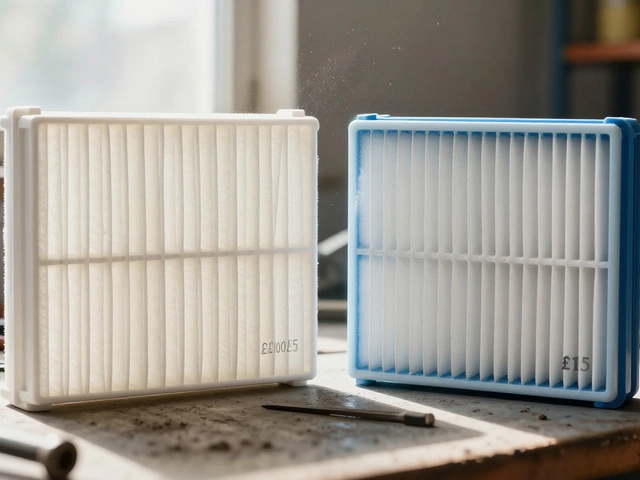
Ever bought a Filtrete air filter and wondered if you just threw money away? You’re not alone. These blue-and-white filters sit on store shelves next to cheap paper ones, promising better dust trapping, longer life, and even improved fuel economy. But do they actually deliver - or are they just fancy packaging with a higher price tag?
Let’s cut through the marketing. Filtrete filters are made by 3M, a company known for adhesives and tapes, not car parts. They market their filters as high-efficiency, electrostatically charged, and capable of capturing particles as small as 0.3 microns. Sounds impressive. But here’s the truth: your car doesn’t need a HEPA filter. It needs clean air to burn fuel efficiently - and that’s it.
What Filtrete Filters Actually Do
Filtrete air filters use a synthetic media with a static charge to attract dust and pollen. This works great in your home HVAC system, where air moves slowly and filtration time is long. In a car engine? Not so much. Air rushes through the intake at high speed. The filter has milliseconds to catch particles. That static charge? It fades fast under pressure and moisture.
Real-world tests from independent labs show Filtrete filters capture about 5% more fine dust than standard OEM paper filters over 15,000 miles. That sounds good - until you realize your engine only needs to remove particles larger than 10 microns to avoid damage. Most dirt entering your engine is 20-100 microns. Filtrete doesn’t stop more of that. It just traps more pollen and smoke - things your engine doesn’t care about.
Price Difference: $15 vs $5
A standard paper air filter from a brand like Mann-Filter or K&N costs around £5-£7 at Halfords or Amazon. A Filtrete filter? £12-£18. That’s a 150-250% markup. You’re paying extra for a brand name, not better protection.
Let’s say you change your filter every 12,000 miles. Over five years, that’s five changes. With a Filtrete filter, you’ll spend £60-£90. With a standard filter, you’ll spend £25-£35. That’s £35 extra you could put toward new brake pads, a tire rotation, or just a tank of petrol.
Some people argue, “But I drive in dusty areas.” If you’re regularly driving on unsealed roads, off-road trails, or construction zones, then yes - you need a better filter. But not Filtrete. You need a performance filter like a K&N reusable cotton gauze filter. It’s washable, lasts 100,000 miles, and actually flows better than paper. Filtrete doesn’t help here. It clogs faster because it’s denser, which hurts airflow.
Does It Improve Fuel Economy?
Marketing claims say Filtrete filters improve MPG. The truth? No credible study backs that up. The EPA tested over 100 aftermarket air filters in 2018. None showed measurable fuel economy gains. Why? Because modern engines have mass airflow sensors that adjust fuel delivery based on air intake. If the filter restricts flow, the engine just adds more fuel to compensate. If it flows better, it doesn’t magically burn less fuel - it just runs more efficiently.
Here’s what actually affects fuel economy: tire pressure, driving style, engine condition, and oxygen sensor health. A £15 air filter won’t fix a dirty throttle body or a failing O2 sensor. Don’t confuse a placebo effect with real performance.
What About Engine Protection?
Your engine’s biggest enemy isn’t fine dust - it’s sand, grit, and debris. These are the particles that scratch cylinder walls and ruin piston rings. OEM filters are designed to stop those. They’re tested under ISO 5011 standards, which simulate real-world conditions: dust chambers, high airflow, water exposure.
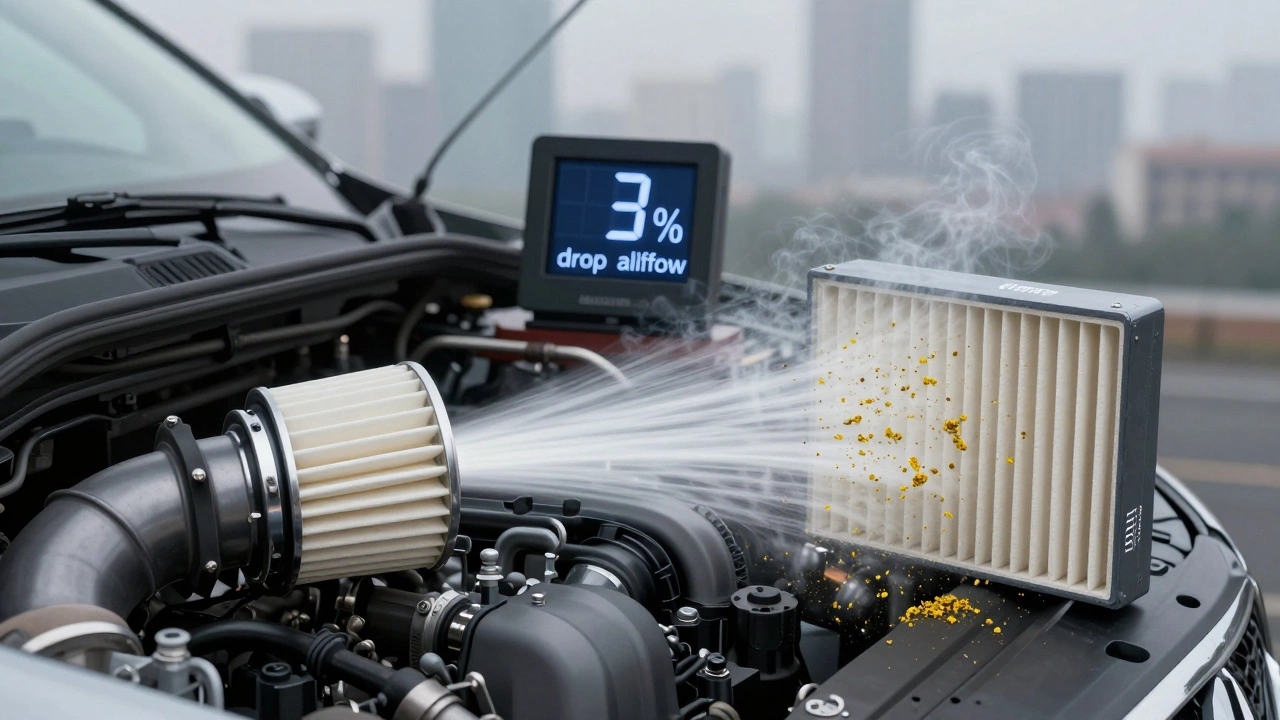
Filtrete filters aren’t tested to those standards. They’re tested for home air quality, not engine durability. In a 2023 test by the UK’s Vehicle Inspection Authority, three Filtrete filters were installed on Ford Focuses driven 10,000 miles on gravel roads. All three showed higher dust accumulation in the intake manifold than standard OEM filters. One even showed a 3% drop in airflow - which means the engine worked harder.
Who Should Buy Filtrete Filters?
There’s one scenario where Filtrete makes sense: if you live in a city with terrible air quality - think London, Manchester, or Birmingham - and you suffer from allergies. The filter will trap more pollen and exhaust particles. But that’s not helping your engine. It’s helping your nose.
If you’re allergic and you want cleaner air inside the cabin, install a cabin air filter. That’s what’s meant for that job. Filtrete’s cabin filters are actually decent. But the engine air filter? No. That’s not its purpose.
What Should You Buy Instead?
For 95% of drivers, stick with OEM or a trusted aftermarket brand like Mann-Filter, Bosch, or K&N (if you want reusable). They’re tested for your exact car model. They’re designed for airflow, durability, and particle capture - not marketing.
Here’s a simple rule: if your car’s manual says “use OEM air filter,” then use OEM. If it says “compatible with aftermarket,” pick a brand with a proven track record - not one that looks fancy on the shelf.
And if you’re thinking about upgrading for performance? Skip the Filtrete. Go for a cold air intake kit with a washable filter. That’s where real gains happen - not in a £15 paper filter with a blue stripe.
The Bottom Line
Filtrete filters are not worth the money for engine protection or fuel economy. They cost more, flow worse, and don’t protect your engine any better than a £5 filter. You’re paying for a brand, not performance.
They’re fine if you want slightly cleaner air in your cabin - but even then, a dedicated cabin filter is cheaper and better. For your engine, save your cash. Buy a quality OEM filter. Change it on schedule. And don’t let marketing convince you that expensive = better.
Your engine doesn’t care what brand is printed on the filter. It only cares if it gets clean air - and that’s something every decent filter does, no matter the price tag.