Clutch & Flywheel Decision Tool
Answer the questions below to get a recommendation on whether to replace or resurface your flywheel.
You’re staring at a quote for a clutch replacement. The price tag makes you wince. Then the mechanic adds another line item: "Flywheel resurfacing" or worse, "New Dual Mass Flywheel." Suddenly, the bill doubles. Is this a scam? Or is it actually necessary?
Here’s the brutal truth: in modern cars, skipping the flywheel when replacing the clutch is often a false economy. But it depends entirely on what kind of flywheel your car has and how worn it currently is. Let’s break down exactly when you can save money and when you absolutely shouldn’t touch that wallet.
The Quick Verdict: When to Replace vs. Resurface
Before we get into the nitty-gritty, here is the cheat sheet. If you have one of these scenarios, act accordingly:
- Single Mass Flywheel (SMF): Usually just needs resurfacing if the surface is smooth and not cracked. Replacement is only needed if there are deep grooves, cracks, or heat spots.
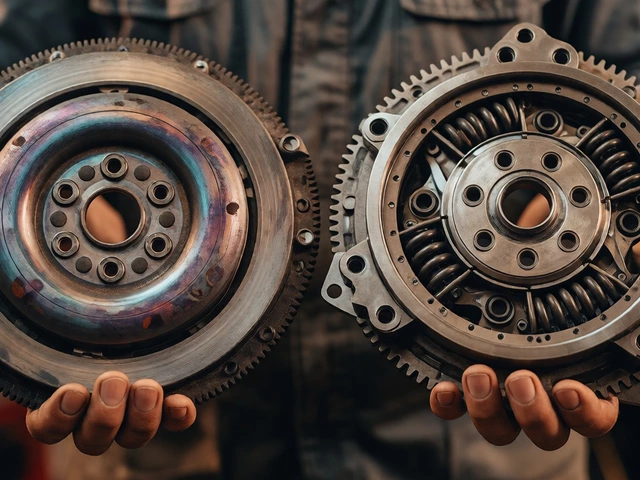
- Dual Mass Flywheel (DMF): Almost always needs replacement. These are complex components with internal springs and dampers that wear out. They rarely survive a second clutch change.
- High Mileage (>100k miles): Even SMFs suffer from thermal fatigue. If the car has done heavy city driving, replace it.
- Performance Driving: If you launch hard or track the car, replace the flywheel. A warped flywheel kills performance immediately.
Understanding Your Enemy: Single vs. Dual Mass Flywheels
To understand why the advice differs, you need to know what sits between your engine and transmission. The flywheel is a heavy metal disc attached to the crankshaft. Its job is twofold: it provides a friction surface for the clutch plate and acts as a counterweight to keep the engine spinning smoothly.
There are two main types, and they behave very differently under stress.
| Feature | Single Mass Flywheel (SMF) | Dual Mass Flywheel (DMF) |
|---|---|---|
| Construction | One solid piece of steel or cast iron. | Two separate masses connected by springs and grease. |
| Purpose | Basic inertia and friction surface. | Absorbs engine vibrations and reduces noise/vibration/harshness (NVH). |
| Lifespan | Very long; often lasts multiple clutch changes. | Shorter; typically matches the life of one or two clutches. |
| Failure Mode | Surface scoring, warping, or cracking. | Springs collapse, grease leaks, excessive rattling. |
| Cost | Cheap ($50-$150). | Expensive ($300-$800+). |
Scenario 1: You Have a Single Mass Flywheel
If you drive an older car, a truck, or a budget-friendly hatchback like an older Ford Fiesta or VW Polo, you likely have an SMF. This is good news for your bank account.
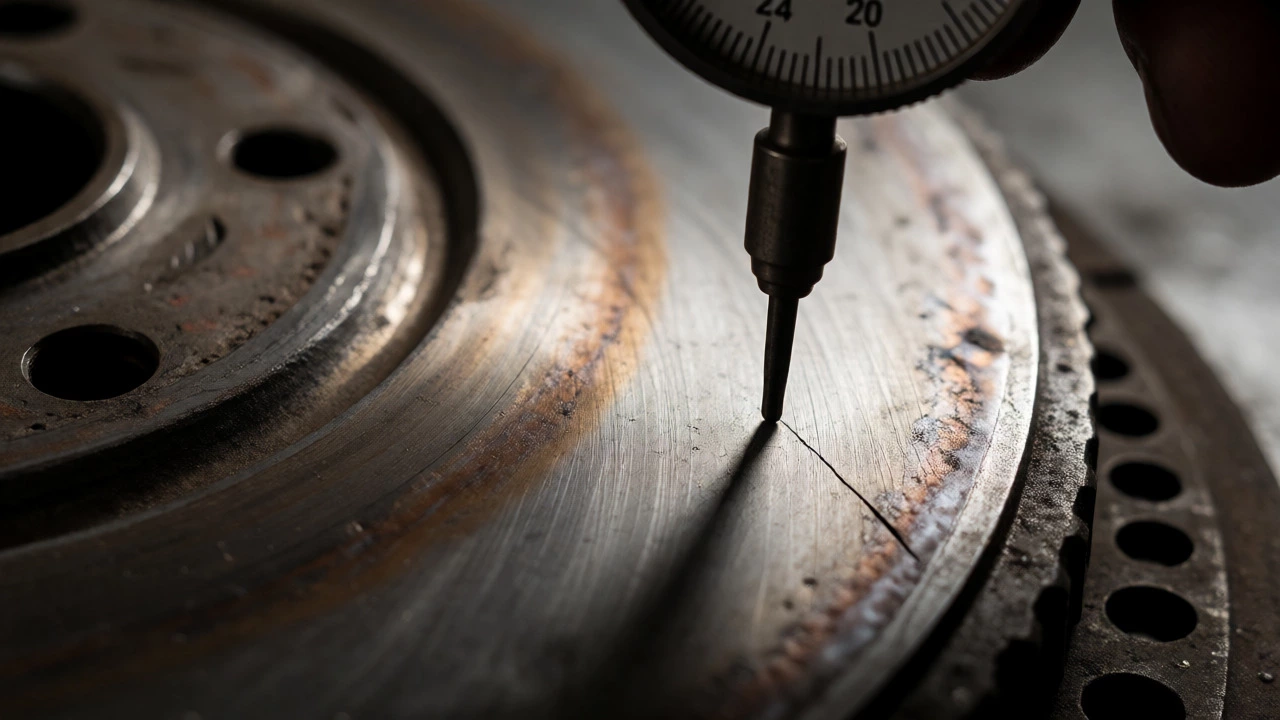
An SMF doesn't have moving parts inside it. It’s just a big chunk of metal. Over time, the friction surface gets hot. If you ride the clutch or slip it excessively, the surface can develop "hot spots"-bluish discoloration indicating overheating. It can also warp due to uneven cooling.
When to Resurface:
Most machine shops can skim the surface of an SMF. This removes about 0.5mm to 1mm of material, creating a fresh, flat friction surface. If the flywheel looks generally healthy-no deep gouges, no cracks-resurfacing is usually sufficient. It costs significantly less than buying a new one.
When to Replace:
- Cracks: Look closely at the mounting bolts holes and the friction surface. Hairline cracks mean the metal is stressed. Replace it.
- Deep Scoring: If the clutch rivets dug deep trenches into the flywheel, you might run out of material to resurface.
- Warping: Use a dial indicator. If it’s out of spec, resurfacing might make it too thin to be safe.
Pro Tip: Always check the condition of the starter ring gear teeth. If they are chipped or worn, buy a new flywheel. Resurfacing doesn't fix the teeth, and replacing the ring gear alone is often more labor-intensive than swapping the whole unit.
Scenario 2: You Have a Dual Mass Flywheel
This is where things get expensive and tricky. DMFs became popular in the late 1990s and early 2000s to meet stricter emissions and comfort standards. Modern diesel engines, in particular, produce high torque pulses that shake the drivetrain. The DMF uses internal torsion springs to absorb these shocks before they hit the gearbox.
Here is the problem: those springs wear out. The grease inside dries up or leaks. Once the damping effect is gone, the flywheel rattles, especially at idle. More importantly, the relative movement between the two masses increases, causing rapid wear on the clutch disc splines and the input shaft.
Why you almost always need a new DMF:
You cannot resurface a DMF effectively. The friction surface is just one part of a complex assembly. If the internal springs are weak, putting a new clutch on top won't stop the vibration. In fact, a new clutch will wear out prematurely because it's being battered by un-damped engine pulses.
Some owners try to convert a DMF system to an SMF kit to save money. This involves installing a solid flywheel and a specialized clutch disc with its own damper springs. While cheaper upfront, this conversion often results in increased cabin noise and vibration. It’s a trade-off: lower cost now, potentially harsher ride later.
The Hidden Cost of Skipping the Flywheel
Mechanics hate coming back for repeat work. If they install a new clutch on a tired flywheel, who gets blamed when the new clutch slips in six months? The mechanic. So, they err on the side of caution.
But let’s look at the physics. A clutch works by friction. For optimal grip, both mating surfaces need to be clean, flat, and free of oil contamination. A used flywheel often has microscopic imperfections or residual oil baked into the pores of the metal. A brand-new clutch disc needs a pristine partner to bed in correctly.
If you skip the flywheel and experience issues later, consider these causes:
- Hot Spots: Uneven heating causes the clutch to grab and release unpredictably.
- Grooves: Deep tracks prevent full contact area, reducing torque capacity.
- Contamination: Old oil residue prevents proper bonding during the break-in period.
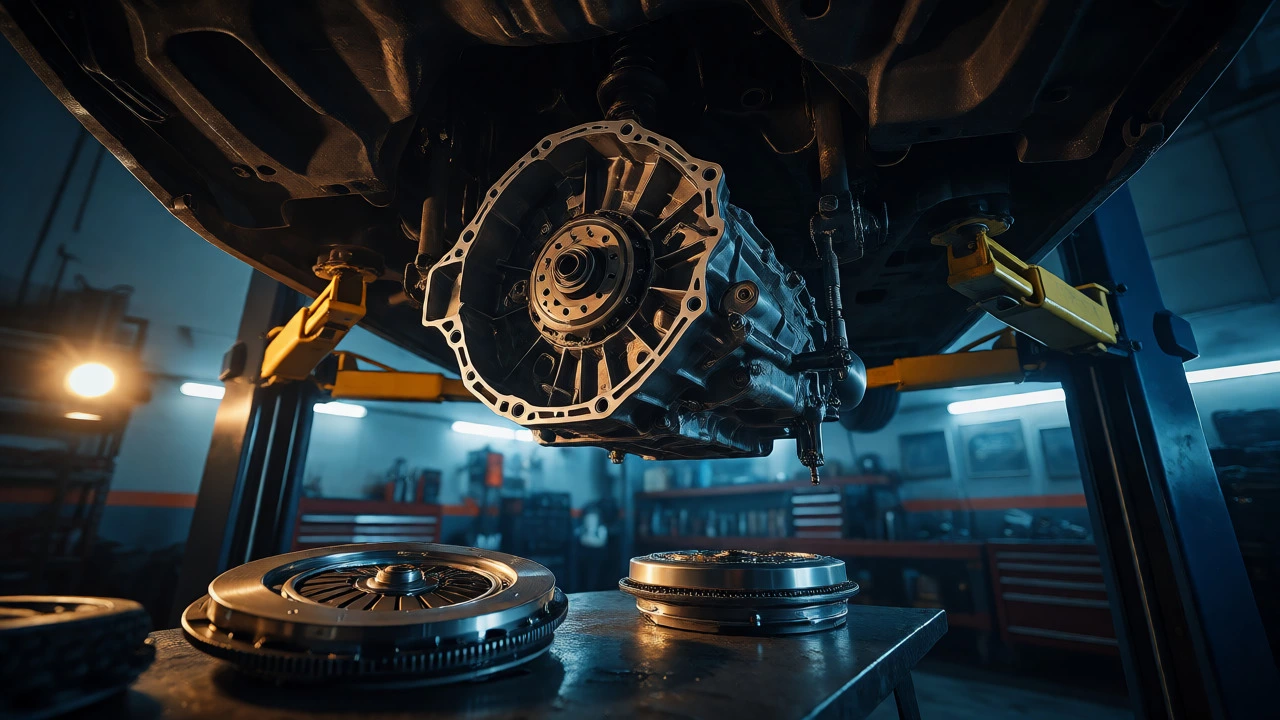
Replacing the flywheel while the transmission is already out is cheap insurance. The labor to remove the gearbox is the biggest cost. Adding a new flywheel adds minimal labor time but saves you from paying that same labor charge again in a year.
How to Inspect Your Current Flywheel
If you are doing this DIY, here is how to judge the condition yourself once the gearbox is off.
Visual Inspection:
- Color: Uniform light blue/gold tint is normal heat coloring. Dark purple or black indicates severe overheating.
- Surface Texture: Run your fingernail across the surface. If it catches on ridges, it’s scored.
- Cracks: Use a dye penetrant kit if unsure. Cracks near bolt holes are critical failures.
Physical Test (DMF specific):
Try to rotate the inner hub against the outer mass. There should be some resistance and a limited range of motion (usually 15-20 degrees). If it spins freely without resistance, the springs are broken. If it feels gritty or crunchy, the bearings/springs are disintegrating. Both cases require replacement.
Frequently Asked Questions
Can I reuse my old flywheel if it looks fine?
If you have a Single Mass Flywheel and it is flat, crack-free, and not deeply scored, yes. You should still have it machined (resurfaced) to ensure perfect flatness. If you have a Dual Mass Flywheel, no. Visual inspection doesn't reveal internal spring fatigue, which is the primary failure mode.
Is it worth converting from a Dual Mass to a Single Mass flywheel?
It depends on your tolerance for noise. Conversions are cheaper and more durable but increase vibration and noise in the cabin. For daily commuting in a quiet car, many drivers prefer sticking with the OEM Dual Mass design. For commercial vehicles or modified cars, the SMF conversion is often preferred for reliability.
How much does it cost to resurface a flywheel?
In the UK, resurfacing typically costs between £30 and £60. Compare this to a new Dual Mass Flywheel costing £400+. However, remember that resurfacing takes time. If your local shop is busy, waiting three days for machining might delay your car return, whereas a new part is ready immediately.
What happens if I don't replace a bad flywheel?
You risk premature clutch failure, shuddering when pulling away, and potential damage to the transmission input shaft. In extreme cases, a cracked flywheel can fragment, destroying the bell housing and causing catastrophic engine damage.
Does mileage matter for flywheel replacement?
Yes. High mileage correlates with thermal cycling. Every time you use the clutch, the flywheel heats up and cools down. After 80,000-100,000 miles, even robust Single Mass Flywheels may have accumulated enough thermal stress to warp slightly. At this stage, replacement is safer than resurfacing.
Final Thoughts: Don't Gamble with Labor Costs
Replacing a clutch is a major job. The labor hours required to drop the transmission dwarf the cost of the parts themselves. If you are already paying for the teardown, saving £50 on a flywheel isn't worth the risk of having to pay £300 in labor again next year.
Check your type. If it’s a DMF, replace it. If it’s an SMF, inspect it carefully. When in doubt, replace it. Your future self-and your bank account-will thank you for avoiding a repeat visit to the garage.