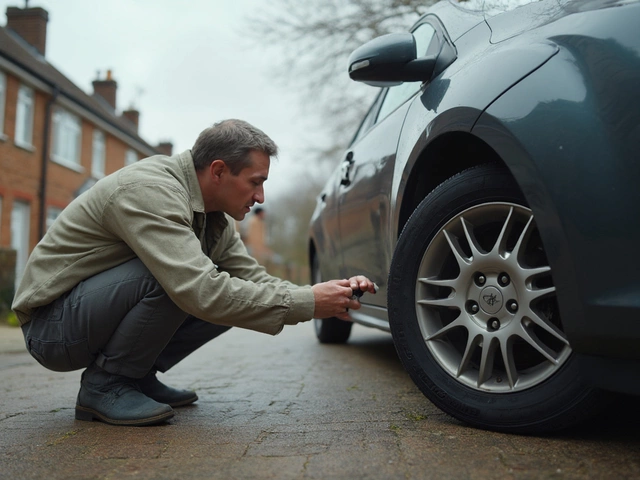
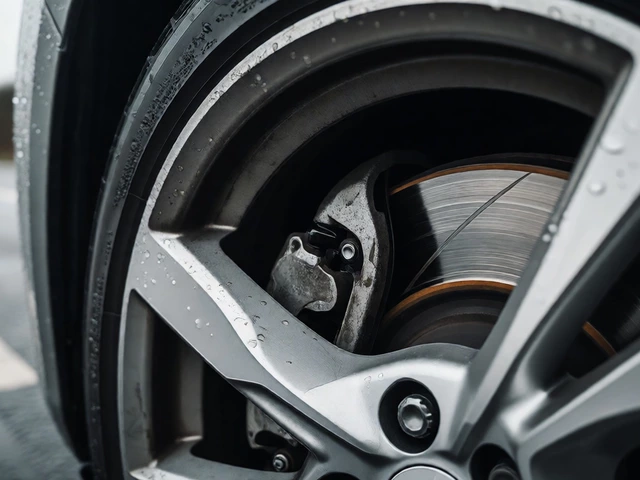
There is a moment every driver faces: the screech of metal on metal or that unsettling vibration when you press the pedal. You book an appointment, and the mechanic hands you a quote. Often, that quote includes replacing all four sets of brake pads, which are the friction material that clamps down on rotors to slow your vehicle. Your gut tells you something else. You only felt the noise coming from the front. Why pay for the rear if they aren't making a sound?
This is one of the most common debates in automotive repair. Do you change all four brakes at once, or just the ones that are worn out? The short answer is: usually, no, you do not need to replace all four simultaneously. However, the long answer depends entirely on how you drive, what you drive, and the condition of your specific components.
The Physics of Stopping: Why Front Brakes Wear Faster
To understand why you might only need to change two pads, you have to look at weight transfer. When you slam on the brakes, physics takes over. The weight of your car shifts forward. Think about riding in a car that stops suddenly; your body jerks forward against the seatbelt. That same force pushes the car's mass onto the front wheels.
In a typical passenger sedan or SUV, roughly 70% to 80% of the braking force comes from the front axle. This means the front brake pads work significantly harder than the rear ones. If you replace your front pads every 30,000 miles, it is not uncommon for the rear pads to last another 15,000 to 20,000 miles before needing attention. Replacing them all at the same time would be like changing your tires only on the rear because the front ones still have tread left-it doesn't make sense mechanically or financially.
However, there is a golden rule you must never break: always replace brake pads in pairs. If the front left pad is worn, replace the front right pad as well. Doing otherwise creates uneven braking forces, which can pull your steering wheel to one side and cause dangerous handling issues.
When Should You Replace All Four?
While separate replacement is standard for most daily drivers, there are scenarios where changing all four makes perfect sense. Timing is everything here.
- Mileage Alignment: If your front pads are due for replacement and your rear pads are within 20% of their lifespan, it often makes financial sense to do all four. Labor costs are a major part of brake jobs. Paying for the labor twice in a short period adds up quickly.
- Towing and Heavy Loads: If you regularly tow trailers or carry heavy loads, the weight distribution changes. The rear brakes take on more stress. In these cases, wear rates between front and rear become much more similar.
- Performance Driving: Track enthusiasts often change all four sets together to ensure consistent stopping power and predictable feel under extreme heat cycles.
- Scheduled Maintenance: Some manufacturers recommend synchronized replacements for warranty purposes or specific safety standards, though this is rare for consumer vehicles.
The Hidden Cost: Rotors and Calipers
Replacing pads is rarely just about the pads. The rotor (or disc) is the metal surface the pads clamp onto. Over time, rotors warp, develop grooves, or thin out. If you install new, soft brake pads on old, glazed rotors, the new pads will not bite properly. You might experience squeaking, pulsation, or reduced stopping distance.
A good mechanic will measure the thickness of your rotors. If they are below the manufacturer's minimum specification, they must be replaced. Often, mechanics recommend resurfacing or replacing rotors whenever pads are changed to ensure optimal performance. This cost should factor into your decision. If your rear rotors are also nearing the end of their life, doing all four becomes a smarter investment.
| Factor | Front Brakes Only | All Four Brakes |
|---|---|---|
| Typical Lifespan | 30,000 - 40,000 miles | Rear: 40,000 - 60,000+ miles |
| Braking Force Contribution | 70-80% | 20-30% (Rear) |
| Cost Efficiency | Higher (if rears are healthy) | Lower (if rears are near failure) |
| Labor Frequency | More frequent visits | Less frequent visits |
Signs Your Brakes Need Attention
You don't need to guess when your brakes are failing. Modern cars provide clear signals. Ignoring these signs can lead to catastrophic failure or expensive damage to other components.
- Squealing or Screeching: Most modern pads have a small metal tab called a wear indicator. When the pad wears down to a critical level, this tab scrapes against the rotor, creating a high-pitched noise. This is your first warning.
- Gritty or Grinding Feel: If you feel a vibration through the pedal or the steering wheel, your rotors may be warped. A grinding sound means the metal backing plate is rubbing directly on the rotor. Stop driving immediately.
- Pulling to One Side: If your car pulls left or right when braking, one caliper may be stuck, or one set of pads is more worn than the other. This requires immediate inspection.
- Dashboard Warning Light: Many newer vehicles have sensors that monitor pad thickness. If the light comes on, your pads are critically low.
DIY vs. Professional Installation
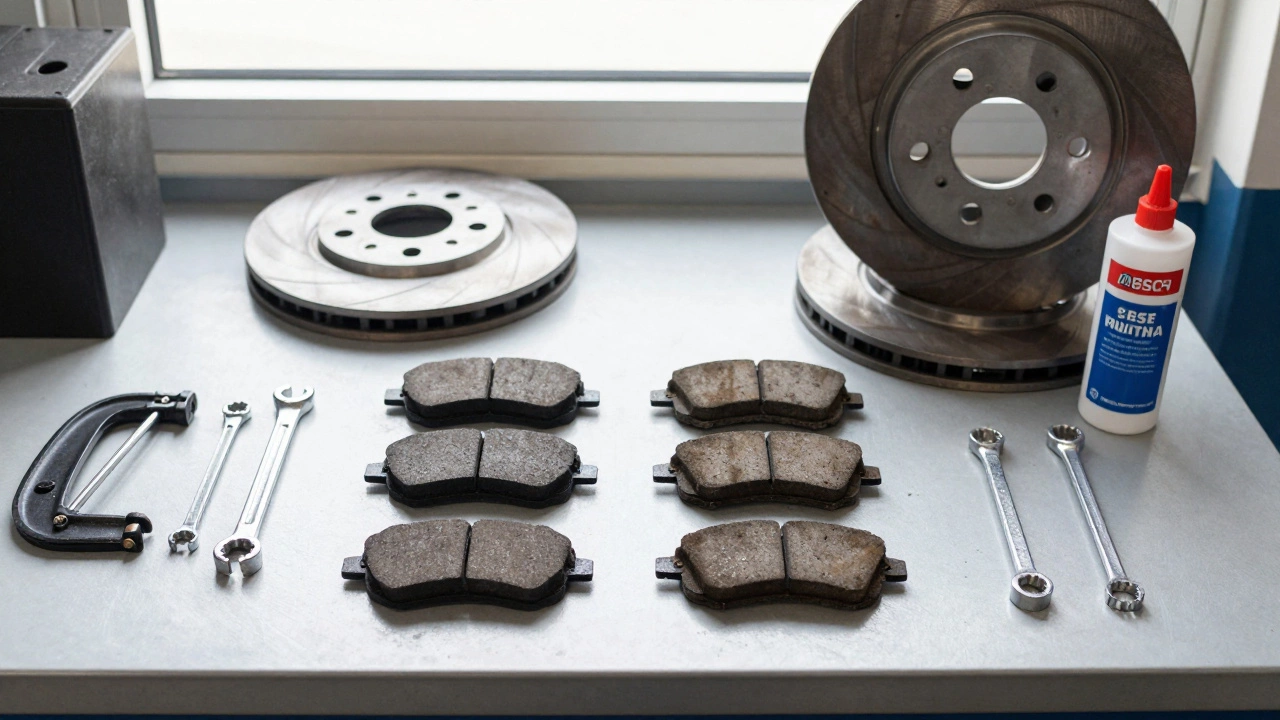
Changing brake pads is considered a moderate DIY task. It requires basic tools: a jack, jack stands, a lug wrench, and a C-clamp to compress the caliper pistons. However, there are risks. Improper installation can lead to brake fluid leaks, seized calipers, or uneven pad seating.
If you choose to do it yourself, follow these steps carefully:
- Always use jack stands. Never rely solely on a hydraulic jack.
- Clean the caliper slides. Rust and debris can prevent the caliper from moving freely, causing premature wear.
- Lubricate contact points. Use high-temperature brake grease on the back of the pads and the slide pins. Never get grease on the friction surface or rotor.
- Bleed the system if necessary. If you opened any brake lines, air bubbles must be removed to maintain pedal firmness.
For most people, paying a professional ensures the job is done correctly with a warranty on parts and labor. In Manchester, where wet weather is common, proper brake maintenance is crucial for safety. Wet roads reduce traction, making reliable brakes even more important.
Material Matters: Ceramic vs. Semi-Metallic
The type of brake pad you choose affects longevity and performance. Ceramic pads are quieter, produce less dust, and last longer, but they are more expensive and perform poorly in cold temperatures. Semi-metallic pads offer better stopping power in extreme conditions but are noisier and create more brake dust.
For daily commuting in urban areas, ceramic pads are often the best choice. For towing or mountain driving, semi-metallic or performance organic pads may be superior. Always check your vehicle owner's manual for recommended specifications.
Making the Decision
So, do you change all four brakes? Look at your mileage. Check the thickness of your rear pads. If they are above 3mm and smooth, save your money and replace only the front pair. If they are below 3mm, cracked, or glazed, replace all four. Remember, brakes are a safety system. Never compromise on quality or delay repairs when warning signs appear.
Your mechanic should provide a transparent assessment. Ask to see the worn parts. Understand the cost breakdown. And always prioritize safety over savings. A set of brake pads is a small price to pay for peace of mind on the road.
Can I replace just one brake pad?
No, you should never replace just one brake pad. Always replace pads in pairs on the same axle (both front or both rear). Replacing only one creates uneven braking force, which can cause your vehicle to pull to one side and compromise safety.
How often should brake pads be replaced?
Front brake pads typically last between 30,000 and 40,000 miles, while rear pads can last 40,000 to 60,000 miles or more. However, this varies greatly based on driving habits, vehicle weight, and pad material. Aggressive city driving with frequent stops will wear pads faster than highway cruising.
Should I replace rotors when changing brake pads?
Not always, but often. If your rotors are within manufacturer specifications for thickness and show no signs of warping, cracking, or deep scoring, you can keep them. However, installing new pads on old, glazed rotors can reduce braking efficiency and cause noise. Mechanics often recommend replacing or resurfacing rotors to ensure optimal performance.
What causes brake pads to wear out faster?
Several factors accelerate brake pad wear: frequent stop-and-go city driving, carrying heavy loads, towing trailers, aggressive driving habits (hard braking), and stuck calipers. Additionally, using lower-quality brake pads or improper installation can lead to premature wear.
Is it cheaper to change brakes myself?
Yes, DIY brake replacement can save you 50% or more on labor costs. However, you need the right tools, technical knowledge, and a safe workspace. Incorrect installation can lead to serious safety hazards. If you are unsure, paying a professional is worth the investment for peace of mind and warranty coverage.