Interactive Oil Level Simulator
Controls
Use the buttons below to simulate adding oil. Remember to add gradually!
Status: Critical Low
The oil level is dangerously low. Engine friction is high. Please add oil immediately.
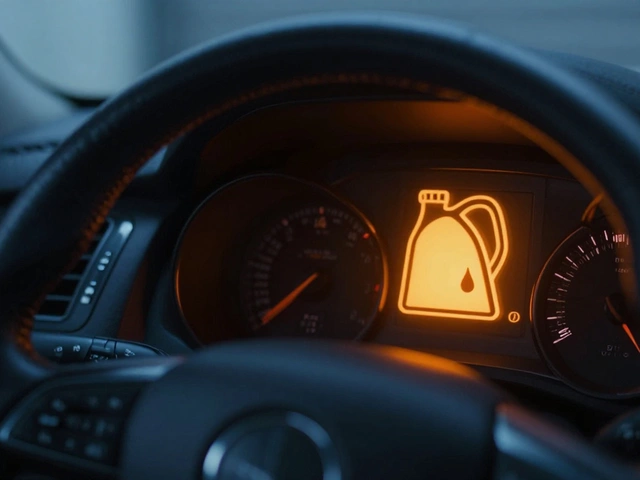
You pull into the driveway, and that dreaded orange or red icon lights up on your dashboard. It looks like a dripping oil can. Your heart skips a beat. Is the engine dying? Do you need a tow truck? Or can you just pop the hood and pour in some fresh oil from the store?
The short answer is yes, you can-and often should-just add oil to your car. But doing it correctly matters. Pouring the wrong type, overfilling the reservoir, or ignoring the root cause of the drop can turn a simple five-minute fix into a costly repair bill.
Adding oil isn't magic; it's maintenance. Modern engines are designed with tight tolerances, and they rely on a specific volume and viscosity of lubricant to keep metal parts from grinding against each other. When the level drops below the safe zone, friction increases, heat builds up, and wear accelerates. Topping off the oil restores that protective film, buying you time until your next scheduled service.
Understanding Why Oil Levels Drop
Before you buy a quart of oil, it helps to know why the level went down in the first place. Engines don't usually lose oil through evaporation alone. There are three common culprits: consumption, leaks, and neglect.
Oil Consumption: Some engines, particularly older models or high-performance variants, naturally burn a small amount of oil during combustion. This happens when oil seeps past piston rings into the combustion chamber. If your car has high mileage (over 75,000 miles), this might be normal. You’ll notice blue-ish smoke from the exhaust on startup or under hard acceleration.
Leaks: Look at your parking spot overnight. Are there dark spots on the pavement? Common leak points include the valve cover gasket, oil pan gasket, or drain plug. A slow leak can drop your oil level by half a quart every few hundred miles. While topping off keeps the engine running, it doesn't fix the leak. Eventually, you'll need a mechanic to replace the failed seal.
Neglect: Many drivers assume their car will tell them when to change the oil. Modern cars have "oil life" monitors, but these track intervals based on driving conditions, not actual fluid volume. If you haven't changed your oil in 10,000 miles, the sludge buildup might be restricting flow, or the old oil might have degraded so much that it's being consumed faster than usual.
Is it bad to add oil if the level is slightly low?
No, it is necessary. Running an engine with low oil causes increased friction and heat, leading to premature wear or catastrophic failure. Always maintain the level between the minimum and maximum marks on the dipstick.
Gathering What You Need
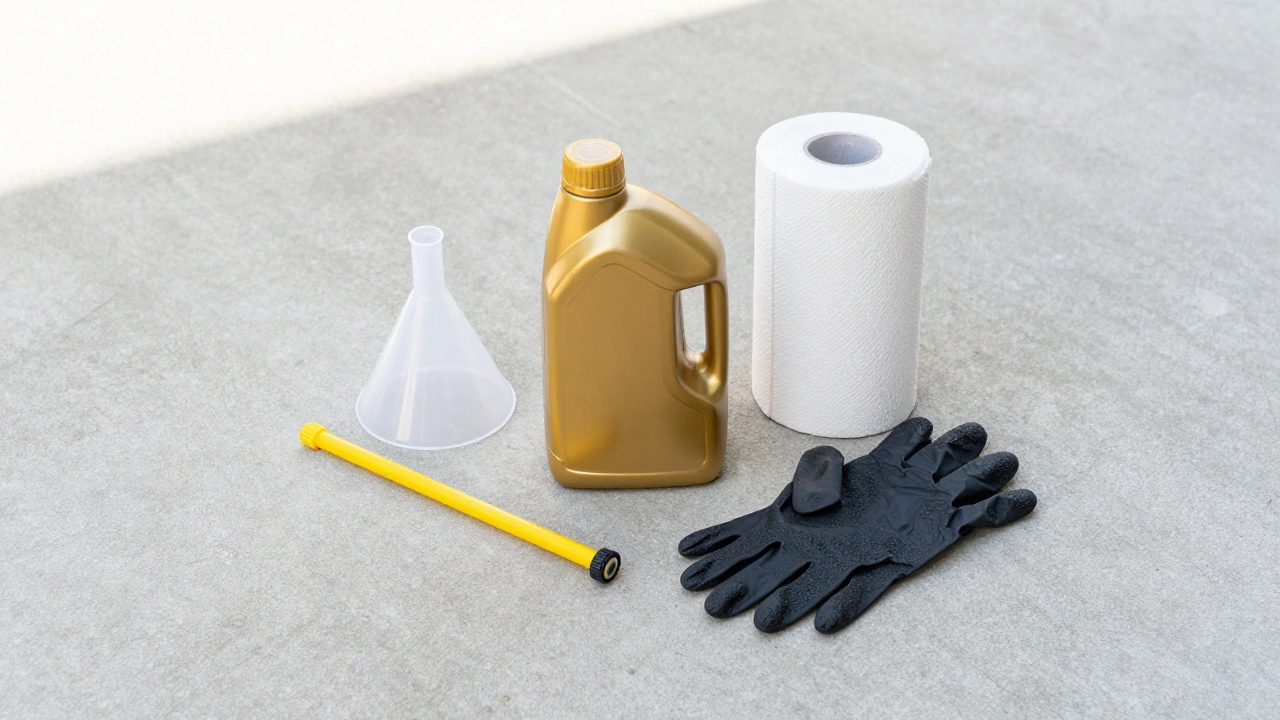
You don't need a garage full of tools to top off your oil. In fact, most people can do it in their driveway with just two items: the correct motor oil and a funnel.
Motor Oil is the primary component. You must use the exact viscosity grade recommended by your manufacturer. This information is found in your owner’s manual or on a sticker under the hood. Common grades include 0W-20, 5W-30, and 5W-40. The numbers refer to how the oil flows at different temperatures. Using 5W-30 when your car requires 0W-20 can affect fuel economy and cold-start protection. Conversely, using thinner oil in an engine designed for thicker oil might lead to excessive wear under high heat.
Most modern cars require synthetic or synthetic-blend oil. Synthetic oil provides better stability at extreme temperatures and lasts longer than conventional mineral oil. Check the bottle label. If your manual specifies "Synthetic," stick to it. Mixing synthetic and conventional oil occasionally won't destroy your engine immediately, but it dilutes the benefits of the premium product.
A Funnel is essential. Motor oil is viscous. Pouring directly from the bottle into the narrow filler neck is messy and inefficient. A cheap plastic funnel ensures all the oil goes into the engine, not onto your clothes or the ground.
Optional but helpful: Paper Towels or rags for cleanup, and Gloves if you want to keep your hands clean. Old oil stains skin and is difficult to wash off with regular soap.
Step-by-Step: How to Add Oil Safely
Follow these steps to ensure you add the right amount of oil without making a mess or damaging the engine.
- Park on Level Ground: This is critical. If your car is tilted, the oil will pool to one side of the pan, giving you a false reading on the dipstick. Park on a flat driveway or street.
- Cool Down the Engine: You can add oil to a warm engine, but wait at least 5-10 minutes after turning off the ignition. This allows the oil to drain back down from the upper galleries into the oil pan. Adding oil to a hot engine risks burns from splashes.
- Locate the Oil Filler Cap: Open the hood. Look for a round cap on top of the engine, usually labeled "Engine Oil" or with an oil can symbol. Do not confuse this with the coolant reservoir (usually translucent with pink/green fluid) or brake fluid reservoir (near the firewall).
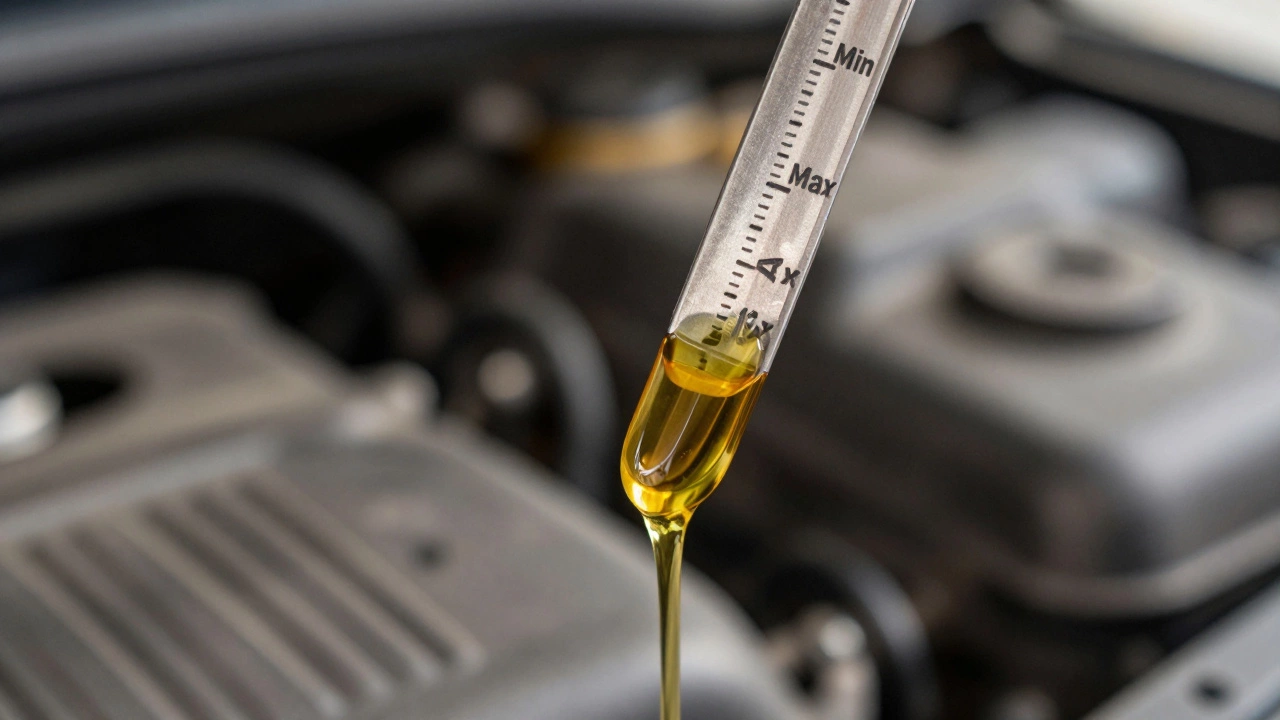
- Check the Current Level: Pull out the Dipstick. It’s a long, thin metal or plastic rod with a yellow or red handle. Wipe it clean with a paper towel. Reinsert it fully, then pull it out again. Read the level against the marked zones. Most dipsticks have two holes or lines: "Min" (or "L") and "Max" (or "H").
- Add Oil Gradually: Place the funnel in the filler neck. Pour in about half a quart (or 0.5 liters) of oil. Wait 30 seconds for it to settle. Check the dipstick again. Repeat until the oil level reaches the middle of the cross-hatched area or the "Max" line.
- Do Not Overfill: This is the most common mistake. Too much oil creates foam as the crankshaft spins. Foamy oil doesn't lubricate well and can damage the seals and catalytic converter. If you go past the max mark, stop immediately. You may need to drain the excess.
- Replace the Cap Securely: Screw the oil filler cap back on tightly. Close the hood.
Decoding the Dipstick Reading
The dipstick is your best friend when monitoring engine health. It’s easy to misread if you’re rushing.
When you pull the dipstick, look for the oil residue. On newer cars, the dipstick might have a textured grid pattern. The oil should reach the top of this grid. On older cars, there are two distinct dots or lines. The goal is to have the oil level halfway between the minimum and maximum marks. This provides a buffer for thermal expansion and minor fluctuations.
If the oil is completely dry on the dipstick, your engine is critically low. Add oil immediately, but drive cautiously to a shop. If the oil looks milky or frothy (like chocolate milk), you have a serious problem: coolant is mixing with the oil, likely due to a blown head gasket. Do not drive the car. Call a tow truck.
If the oil is black and gritty, it’s dirty, but not necessarily low. Dark oil is normal as it collects contaminants. However, if it smells like gasoline, you might have fuel dilution, which thins the oil and reduces its protective qualities.
Common Mistakes to Avoid
Even simple tasks have pitfalls. Here’s what to watch out for.
- Mixing Viscosities: If you run out of 5W-30 and only find 0W-20, adding a little bit in an emergency is okay. But don’t make it a habit. Different additives and base oils can interact poorly over time. Try to match the original specification.
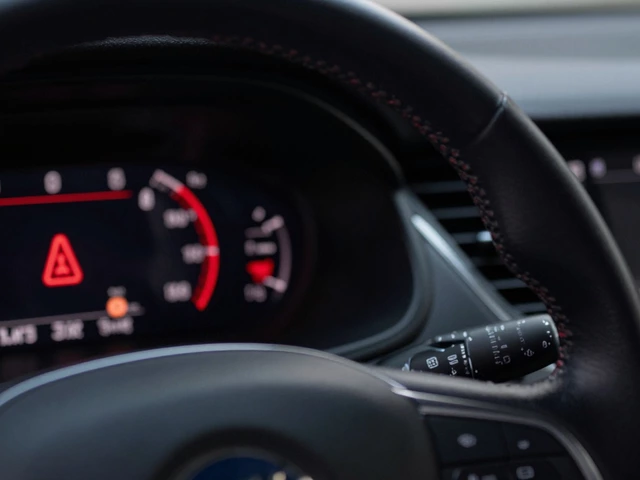
- Ignoring the Low Oil Light: Some cars have a warning light that comes on when pressure drops, not just when volume is low. If the light flashes while driving, pull over safely and shut off the engine. Low pressure means the pump isn't getting enough oil, which can destroy bearings in minutes.
- Using the Wrong Funnel: Ensure the funnel stem fits snugly into the filler neck. A loose fit causes spills. Spilled oil on hot engine components can smoke or, in rare cases, ignite.
- Forgetting to Reset the Monitor: After adding oil, your car’s computer might still show "Add Oil" or reset the oil life percentage. Consult your manual to reset the maintenance reminder. Usually, this involves holding a button on the dashboard or cycling the ignition key.
When Topping Off Isn't Enough
Adding oil is a temporary fix if your car is burning or leaking significant amounts. If you find yourself adding a quart of oil every 500 miles, something is wrong.
High oil consumption can indicate worn piston rings, valve seals, or turbocharger seals. Leaks point to aging gaskets or cracked components. Ignoring these issues leads to bigger problems. A major engine overhaul costs thousands of dollars. Regular checks and timely repairs save money in the long run.
Schedule an oil change if you haven't done one in the last 5,000 to 7,500 miles (or according to your manual). During the change, ask the mechanic to inspect for leaks and check compression if consumption is high.
Environmental Responsibility
Used motor oil is hazardous waste. Never pour it down the drain, into the soil, or into the sewer system. One quart of used oil can contaminate one million gallons of water.
When you change your oil, take the old container to a recycling center, auto parts store, or service station. Most places accept used oil for free. Keep the container sealed to prevent leaks during transport.
Even when just topping off, if you spill oil on the ground, clean it up with cat litter, sand, or an absorbent pad. Dispose of the absorbent material as hazardous waste.
Final Thoughts on Maintenance
Checking and adding oil is one of the easiest ways to extend your car’s life. It takes five minutes and costs less than a cup of coffee. Make it a habit to check the dipstick once a month or before long trips. Your engine will thank you with smoother performance, better fuel economy, and fewer breakdowns.
Remember, knowledge is power. Understanding what the dipstick tells you empowers you to catch problems early. Don’t wait for the light to come on. Be proactive. Your wallet and your safety depend on it.
How much oil should I add?
Add oil gradually, checking the dipstick after each quarter-quart addition. Stop when the level reaches the midpoint between the min and max marks. Overfilling can damage the engine.
Can I mix different brands of oil?
Yes, as long as the viscosity grade (e.g., 5W-30) and API certification match. Modern oils are compatible, but sticking to one brand ensures consistent additive packages.
What does the low oil light mean?
It indicates low oil pressure or volume. Pull over safely, turn off the engine, and check the oil level. Driving with this light on can cause severe engine damage.
How often should I check my oil?
Check the oil level once a month or before long trips. Older cars or those with known consumption issues may need weekly checks.
Is synthetic oil better for topping off?
If your manufacturer recommends synthetic oil, use it for topping off. It offers better protection and longevity. Mixing types is acceptable in emergencies but not ideal for routine maintenance.