Low Oil Survival Calculator
Oil Level Check
Oil level is high risk. You have 15 minutes before severe damage.
0-10 minutes
Overheating begins. Listen for ticking/knocking sounds from lifters or valvetrain.
10-30 minutes
Irreversible damage starts. Bearings begin wearing, blue smoke appears from burning oil.
30+ minutes
Catastrophic failure: bent connecting rods, seized engine, or complete engine failure.
- Stop engine immediately
- Call tow truck (do NOT drive to mechanic)
- Get oil pressure and compression tests
Check oil every 2 weeks. Follow these steps:
- Turn off engine and wait 5 minutes
- Wipe dipstick clean, reinsert fully
- Check level between marks (below lower mark = low)
- Smell oil for burnt odor
If your car’s oil light flashes or the dipstick shows barely a trace, you might think, It’s just a little low-how bad can it be? Bad. Really bad. And it gets worse the longer you ignore it.
Engine oil isn’t just lubrication-it’s life support
Engine oil does way more than keep parts from grinding together. It cools hot spots, cleans out sludge, seals piston rings, and cushions moving parts from shock. Without enough of it, your engine starts dying from the inside out. Modern engines run tighter tolerances than ever, meaning even a tiny drop in oil level can push components into danger.
Think of it like blood in your body. You don’t need to lose half to feel sick. Losing just 10% can cause serious trouble. Most cars need between 4 and 6 quarts. If you’re down to 2 quarts or less, you’re already in the danger zone.
What happens in the first 10 minutes
Within minutes of driving with low oil, your engine starts overheating. Oil doesn’t just lubricate-it carries heat away from the pistons, bearings, and valves. When levels drop, those areas get hotter than they’re designed for. You might not feel it right away, but metal parts begin to expand. Bearings, which are designed to float on a thin film of oil, start to drag. That’s when the first scratches appear.
At this stage, you might hear a light ticking or knocking. It’s not the exhaust or a loose belt. It’s the lifters or valvetrain clattering because oil isn’t reaching them fast enough. That sound? It’s your engine screaming for help.
After 30 minutes: The point of no return
If you keep driving, things accelerate fast. The oil pump can’t pull enough fluid to keep up. Metal-to-metal contact begins. The crankshaft bearings-expensive, precision-made parts-start to wear. They’re made of soft metal layered over steel, and once that soft layer scrapes off, the steel core grinds against the crankshaft. That’s not repairable with a simple fix. It’s a full engine rebuild-or replacement.
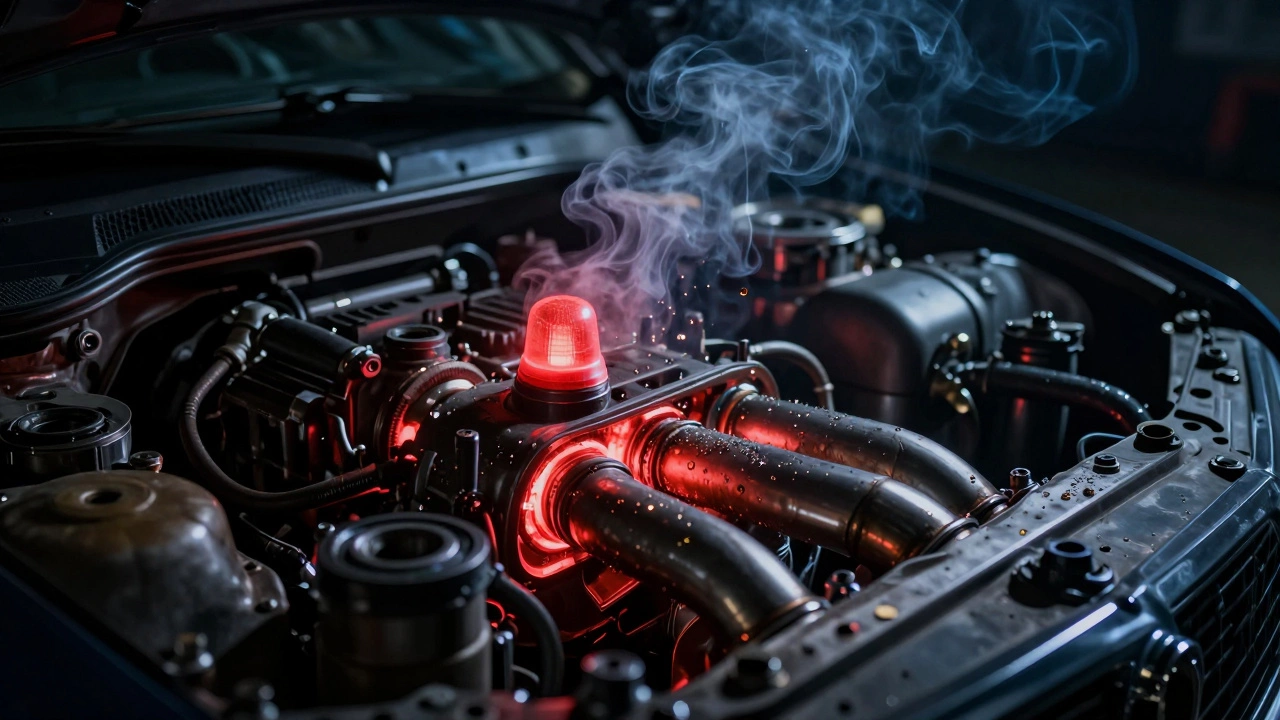
Meanwhile, piston rings lose their seal. Oil that’s supposed to stay in the sump starts leaking into the combustion chamber. You’ll start burning oil. Blue smoke from the tailpipe? That’s your engine eating itself. Fuel efficiency drops. Power fades. The engine feels sluggish, even if the accelerator is pressed all the way down.
After an hour: Catastrophic failure
By now, your engine is in freefall. The connecting rods-linking pistons to the crankshaft-can bend or snap under pressure. When that happens, it punches through the engine block. That’s not a repair. That’s a tow truck and a new engine. Some engines seize completely, locking up mid-drive. You’re not just stranded-you’re looking at a £2,500 to £5,000 bill, depending on your car.
And it doesn’t stop there. Metal shards from damaged bearings and rods get sucked back into the oil system. Even if you refill the oil, those shards keep circulating. They’ll chew up your new oil pump, your new bearings, your new engine. That’s why mechanics often say: “If you drove with low oil for more than 15 minutes, don’t just top it up-get it checked.”
What about synthetic vs. conventional oil?
Some drivers think synthetic oil will save them if they’re low. It won’t. Synthetic oil lasts longer and flows better in cold weather, but it doesn’t change the physics. If there’s not enough of it, even the best synthetic can’t create a cushion where there’s no oil. You might get an extra 10 minutes before failure, but you’re still heading toward disaster.
And don’t confuse low oil with old oil. A car with 100,000 miles and dirty, sludgy oil is a different problem. But if your oil level is low and the fluid looks clean, that’s a leak-or a burning problem. Either way, you need to find out why it’s dropping.
How to check your oil (and what to look for)
Checking oil is simple. Do it every two weeks. Here’s how:
- Turn off the engine and wait 5 minutes. Oil needs to settle back into the pan.
- Pull the dipstick, wipe it clean with a rag, then reinsert it fully.
- Pull it out again. The oil should be between the two marks. If it’s below the lower one, you’re low.
- Check the color. Dark brown? Normal. Black and gritty? Time for a change.
- Smell it. If it smells burnt, your engine is overheating.
Don’t wait for the warning light. That light comes on when you’re already dangerously low. By then, damage may have started.
Common causes of low oil
Why is your oil low in the first place? Here are the top three reasons:
- Oil leak: Check under your car for dark puddles. Common culprits: valve cover gasket, oil pan gasket, or a cracked oil filter housing.
- Oil burning: If your engine is consuming oil, you’ll see blue smoke on startup or under acceleration. Worn piston rings or valve seals are usually the cause.
- Infrequent checks: Many drivers don’t check oil at all. They assume the car will tell them. It won’t-until it’s too late.
If you’re losing half a quart every 1,000 miles, that’s normal for an older engine. If you’re losing a full quart every 500 miles, you’ve got a problem.

What to do if you’re low on oil
If you notice low oil before driving:
- Don’t start the engine. Add oil first.
- Use the same type and grade your car recommends (check your owner’s manual). Mixing types isn’t ideal, but better than running dry.
- Add a quarter quart at a time. Recheck after each addition. Overfilling can cause foaming and damage too.
- Once topped up, drive slowly to a mechanic. Don’t go on the highway.
If you’ve already driven with low oil:
- Stop driving immediately.
- Call a tow truck. Don’t risk further damage.
- Get an oil pressure test and compression test done. Those will tell you if internal damage has occurred.
Prevention is cheaper than repair
Checking your oil takes two minutes. Fixing a seized engine costs thousands. The math is simple.
Set a monthly reminder on your phone. Or better yet, make it part of your weekly routine-like filling your windshield washer fluid. If you drive more than 10,000 miles a year, check it every two weeks. If you drive less, once a month is enough.
Keep a bottle of your car’s recommended oil in your trunk. You never know when you’ll need it. A 1-quart bottle costs less than £5. A new engine costs more than your car’s monthly payment.
Final warning: Don’t gamble with your engine
People say, “My car ran fine for 20 miles with low oil.” Maybe. But they’re not telling you about the hidden damage. That ticking sound? The slight loss of power? The increased fuel use? Those are early signs of permanent wear.
Engine damage from low oil isn’t always obvious right away. It shows up months later as a noisy engine, poor performance, or sudden failure on a cold morning. By then, you’re paying for a mistake you could’ve prevented with 30 seconds of your time.
Your engine isn’t a magic box. It’s a精密 machine that needs care. Low oil isn’t a minor issue. It’s a countdown. And once the timer hits zero, there’s no undo button.
Can I just add oil without changing it?
Yes, you can top up oil between changes if the level is low. But only if the oil looks clean and isn’t black or gritty. If the oil is dirty or you’re losing oil quickly, topping up won’t fix the real problem-like a leak or worn seals. Always check the oil’s condition before adding more.
How often should I check my engine oil?
Check your oil every two weeks if you drive regularly, or once a month if you drive less than 500 miles per month. If your car is older than 8 years or has over 80,000 miles, check it weekly. Modern cars have oil life monitors, but they don’t measure oil level-only oil quality. Always use the dipstick.
What happens if I overfill the oil?
Overfilling can be just as bad as running low. Too much oil creates foam as the crankshaft churns through it. Foam doesn’t lubricate well. It can cause oil pressure drops, engine misfires, and even damage the catalytic converter. Always add oil slowly and recheck the dipstick after each quarter-quart addition.
Is it safe to drive if the oil light is on?
No. If the oil light comes on, stop driving immediately. It means oil pressure is dangerously low. Continuing to drive can destroy your engine in under a minute. Pull over safely, turn off the engine, and call for help. Don’t try to drive to the nearest garage.
Can low oil cause my car to stall?
Yes. Low oil can cause the engine to overheat or lose lubrication to critical components like the camshaft or lifters. This can lead to misfires, rough idling, or even a complete shutdown. If your car stalls and you’ve been ignoring low oil levels, engine damage is likely.