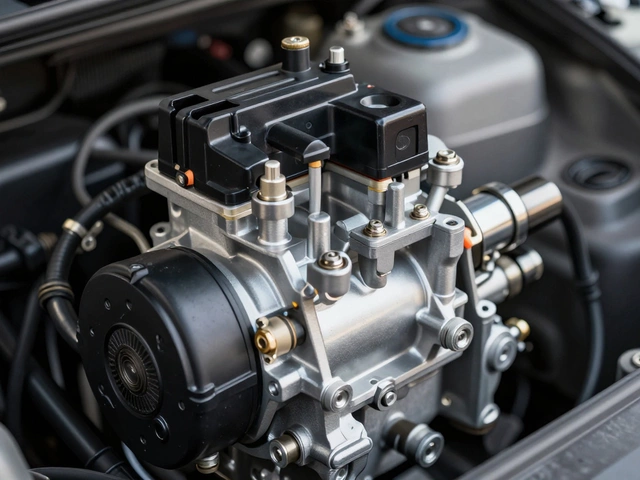
Fuel Pump Symptom Checker
Check the symptoms you're experiencing to see if your fuel pump might be failing. This tool helps identify potential issues based on common diagnostic signs.
Car doesn't start even when battery and starter are functional
Loss of power when accelerating or climbing hills
Rough running at speeds above 60 mph
High-pitched noise from rear of vehicle when fuel tank is low
Engine fails to start after being parked for several hours
P0171 or P0174 codes indicating lean fuel mixture
Unexpected drop in miles per gallon without driving changes
If your car sputters on the highway, struggles to start on a cold morning, or loses power when you step on the gas, it might not be your engine-it could be your fuel pump. Fuel pumps don’t usually fail with a bang. They fade out slowly, like a battery running low. But if you know what to look for, you can catch it before you’re stranded on the side of the road.
Engine Stalls or Won’t Start
The most obvious sign is when your car won’t start at all. You turn the key, hear the starter crank, but the engine just won’t fire. That’s not always the battery. If your fuel pump is failing, it can’t push enough gasoline to the injectors. The engine needs fuel, air, and spark to run. If one of those is missing, it won’t start. A weak pump might still deliver a few drops, but not enough to ignite the mixture properly.
Some people think it’s the spark plugs or the starter motor. But if you’ve checked those and everything looks fine, the fuel pump is next on the list. Try listening near the back seat or fuel tank when you turn the key to the ‘on’ position-before cranking. You should hear a brief humming sound for about two seconds. If you hear nothing, the pump might be dead.
Loss of Power Under Load
Have you noticed your car losing power when you’re accelerating hard-like when merging onto the highway or climbing a hill? That’s not normal. A healthy fuel pump delivers consistent pressure no matter how hard the engine is working. But a failing pump can’t keep up. It hits a wall under demand and drops pressure, starving the engine of fuel.
This isn’t just annoying-it’s dangerous. Imagine you’re passing another vehicle on a two-lane road and your car suddenly hesitates. That’s not a moment to gamble with. A fuel pump that can’t maintain pressure under load is on its last legs. It might work fine at idle, but when you need it most, it fails.
Engine Sputtering at High Speeds
Ever been cruising at 65 mph and suddenly your engine starts sputtering, like it’s skipping beats? Then it smooths out after you slow down? That’s a classic symptom. At higher speeds, the engine needs more fuel. A weak pump can’t keep up with the demand, so the fuel delivery becomes inconsistent. The result? Rough running, misfires, and a check engine light that might flash intermittently.
This isn’t the same as a dirty fuel filter. A clogged filter causes consistent problems. A failing pump gives you intermittent issues-sometimes it works, sometimes it doesn’t. That’s why people often ignore it, thinking it’s just a bad spark plug or a glitch. But it keeps getting worse.
Loud Whining Noise from the Fuel Tank
Most people don’t realize fuel pumps make noise. A healthy pump hums quietly-like a refrigerator running. But when the pump’s bearings wear out or the motor starts to fail, it starts to whine. That high-pitched whining sound coming from the rear of the car, especially when the tank is low, is a red flag.
Why does it get louder when the tank is low? Because the fuel acts as a coolant and lubricant for the pump. When the tank is nearly empty, the pump runs hotter and drier. That accelerates wear. If you hear that noise, don’t wait. Running on empty regularly kills fuel pumps faster than anything else.
Car Won’t Start After Sitting Overnight
Some fuel pumps lose their ability to hold pressure when the engine is off. That’s called pressure drop. A good pump maintains residual pressure in the fuel lines so the engine starts quickly. A failing one bleeds off that pressure. So when you come back out after work or after sleeping, the car turns over but won’t start-until you turn the key on and off a few times. Each time, you’re letting the pump rebuild pressure.
This is a telltale sign. It’s not the battery. It’s not the starter. It’s the pump losing its grip on fuel pressure. If you’ve noticed this pattern-especially if it’s gotten worse over weeks-you’re looking at a dying fuel pump.
Check Engine Light and Fuel Trim Codes
Your car’s computer monitors how much fuel is being injected. If the fuel pump can’t deliver enough, the engine runs lean-meaning too much air, not enough fuel. The computer detects this and tries to compensate by adding more fuel. That’s called ‘long-term fuel trim.’ If the system is maxing out its ability to add fuel, it triggers a code-usually P0171 (System Too Lean) or P0174 (Bank 2 Too Lean).
These codes can come from many things: vacuum leaks, bad sensors, clogged injectors. But if you’ve ruled those out, and your fuel filter is clean, the pump is the most likely culprit. A scan tool showing high fuel trim numbers at idle and under load is a strong indicator.
Lower Fuel Economy
It’s counterintuitive, but a failing fuel pump can make your car use more gas. Why? Because the engine is working harder to compensate for inconsistent fuel delivery. The computer keeps adding extra fuel to keep the mixture balanced, but it’s inefficient. You might notice your mileage dropping by 10-15% without changing your driving habits.
This isn’t the first symptom people notice. But if you’ve seen other signs-like sputtering or hard starts-and now your gas tank empties faster than usual, it’s another piece of the puzzle.
What Happens If You Ignore It?
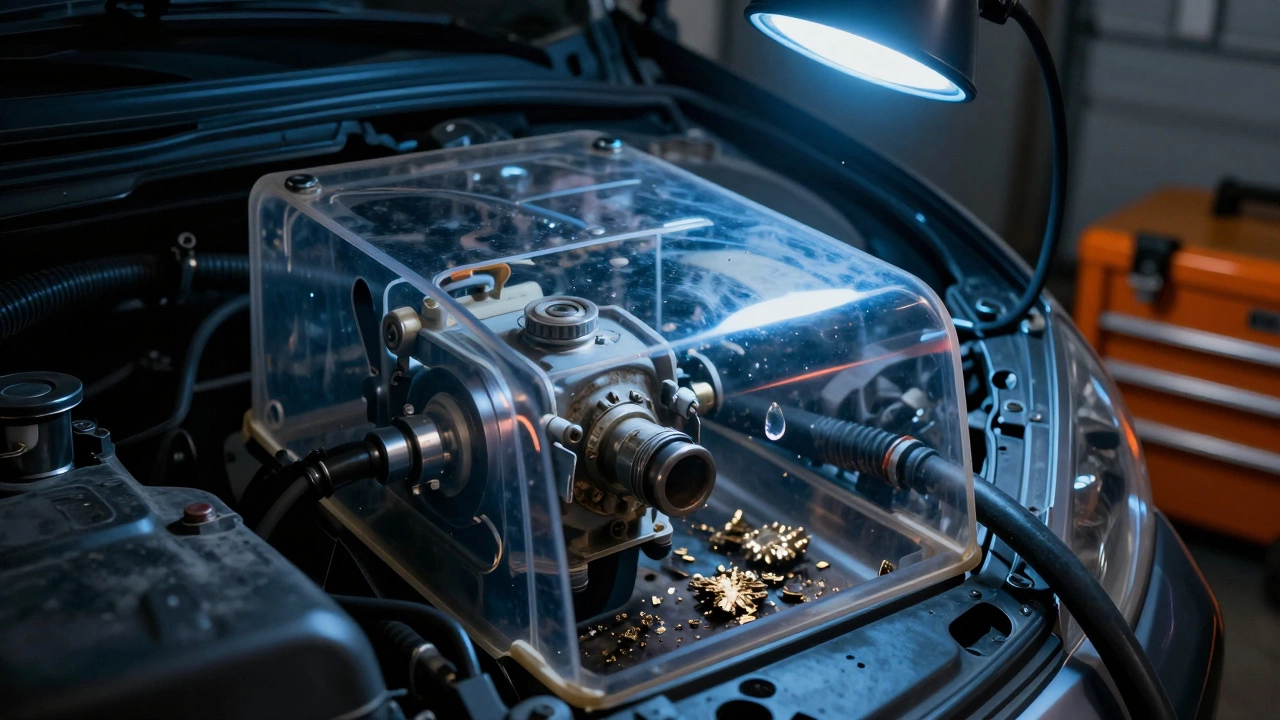
Ignoring a failing fuel pump doesn’t just mean you’ll get stranded. It can damage other parts. If the pump is running dry or overheating, metal shavings and debris can get pushed into the fuel lines and injectors. That can clog injectors or ruin the fuel pressure regulator. Replacing a fuel pump costs $300-$800. Replacing injectors? $800-$2,000.
And if the pump dies completely while you’re driving, the engine shuts off instantly. No warning. No coasting. You’re powerless on the road. That’s not just inconvenient-it’s risky.
How to Confirm It’s the Fuel Pump
Before you replace the pump, test it. You don’t need to guess. Most auto parts stores will lend you a fuel pressure gauge. Hook it up to the fuel rail (usually under the hood, near the injectors). With the engine running, you should see pressure between 45-65 psi, depending on your car. If it’s below 40 psi, the pump is weak.
Also, test it under load. Have someone rev the engine while you watch the gauge. Pressure should stay steady. If it drops when you accelerate, the pump can’t handle demand. That’s a clear failure.
Another quick test: listen for the hum when you turn the key to ‘on.’ No sound? Check the fuse and relay first. If those are fine, the pump is likely dead.
How Long Do Fuel Pumps Last?
Most fuel pumps last between 100,000 and 150,000 miles. But that’s not a guarantee. Running your tank low often, using dirty fuel, or driving in dusty conditions can cut that life in half. Some pumps fail at 50,000 miles. Others last 200,000. It depends on how you treat it.
One simple habit saves pumps: keep your tank at least a quarter full. It keeps the pump cool and lubricated. That’s the cheapest maintenance you can do.
What to Do Next
If you’re seeing multiple symptoms-hard starts, sputtering, noise, low pressure-it’s time to act. Don’t wait for it to die on the highway. Replace the pump before it leaves you stranded. If you’re doing the job yourself, replace the fuel filter at the same time. It’s cheap and easy. And if your tank is full of sediment, consider cleaning it before installing the new pump.
Use OEM or high-quality aftermarket pumps. Cheap pumps fail faster. You don’t want to do this job twice.