Air Filter Value & Risk Calculator
Your Driving Profile
Standard Paper Filter
Recommended- ✓ Consistent filtration until replacement
- ✓ No special cleaning required
- ✓ Unaffected by humidity
Polarized/Electrostatic Filter
High Risk- ✗ Charge degrades in humidity
- ✗ Requires specific cleaning agents
- ✗ Performance drops over time
Why this recommendation?
Enter your details to compare costs and risks
See how much you could save by choosing the right filter for your climate.
Is Your "High-Tech" Air Filter Actually Hurting Your Engine?
You’ve probably seen them in auto parts stores or online marketplaces. They look sleek, often with a metallic sheen or a distinct woven texture, and the marketing claims are bold: superior filtration, longer life, and better protection for your engine. These are polarized air filters, also known as electrostatic air filters or charged media filters. The idea sounds too good to be true, doesn't it? A filter that uses static electricity to trap microscopic particles without restricting airflow. It’s a clever concept, but like many automotive innovations, it comes with significant trade-offs that most manufacturers don’t highlight on the packaging.
If you’re considering upgrading from a standard paper filter to a polarized one, you need to understand the downsides before you buy. While they excel in specific industrial environments, their place in everyday passenger vehicles is questionable at best. In this guide, we’ll break down exactly why these filters might not be the upgrade you think they are, focusing on durability, maintenance, and real-world performance issues.
How Polarized Air Filters Work (And Why That’s a Problem)
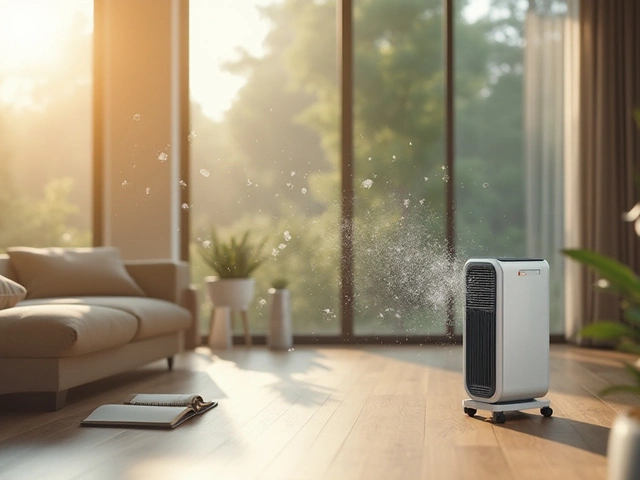
To understand the disadvantages, you first need to know what makes these filters different. Unlike traditional paper air filters that rely on physical density to block dirt, polarized filters use an electrical charge. Think of it like a balloon rubbing against your hair and sticking to the wall. The filter media is treated to hold a static charge, which attracts and holds dust, pollen, and soot particles that would otherwise slip through smaller pores.
This technology allows the filter to have larger physical gaps between its fibers, theoretically allowing more air to flow while still capturing fine particulates. However, this reliance on an invisible force-static electricity-is where the trouble begins. Static charges are fragile. They can be neutralized by moisture, high humidity, temperature fluctuations, and even the natural degradation of the materials over time. If the charge dissipates, the filter becomes little more than a loose mesh screen, offering minimal protection to your engine.
The Durability Issue: Moisture and Heat Are Enemies
One of the biggest disadvantages of polarized air filters is their sensitivity to environmental conditions. Cars operate in some of the harshest environments imaginable. We drive through rain, snow, humid summers, and dusty deserts. For a standard paper filter, moisture is a nuisance, but for a polarized filter, it can be fatal to its effectiveness.
- Humidity Neutralization: High humidity levels can discharge the static electricity embedded in the filter media. In places like Manchester, UK, where damp weather is common, or in tropical climates, the filter may lose its charge within weeks, not months.
- Heat Degradation: Under the hood, temperatures fluctuate wildly. Extreme heat can break down the chemical treatments used to create the electrostatic charge, reducing filtration efficiency long before the recommended replacement interval.
- Physical Fragility: Many polarized filters use synthetic meshes or thin metallic layers. These materials are less robust than dense paper or cotton gauze. A rough installation or a sudden vibration can tear the delicate media, rendering the filter useless.
If you live in a region with stable, dry conditions, this might not be a huge issue. But for the average driver facing seasonal changes, the reliability of the filtration process is compromised.
Maintenance Nightmares: Cleaning vs. Replacing
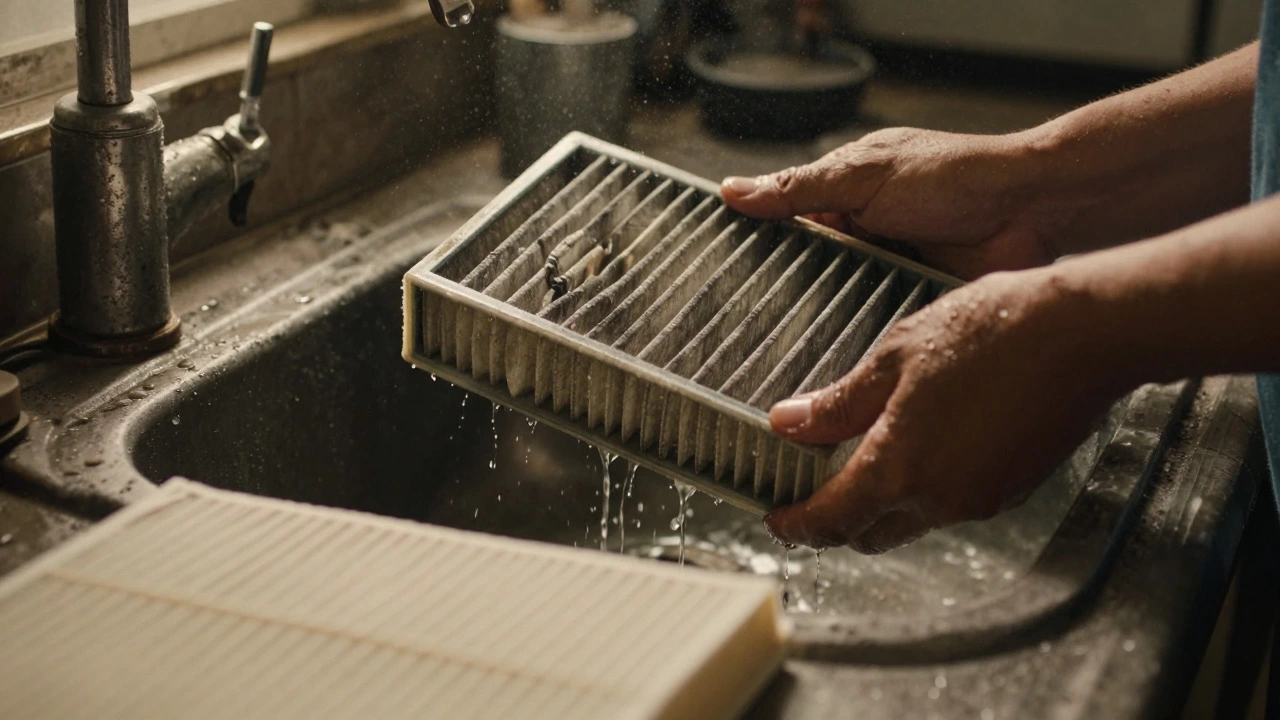
Marketing for polarized filters often emphasizes their "reusable" nature. They claim you can wash and reuse the filter multiple times, saving money in the long run. While technically true for some models, the practical reality is messy and risky.
Cleaning a polarized filter isn’t as simple as rinsing a paper filter (which you shouldn’t do anyway). You often need specific cleaning solutions to avoid damaging the electrostatic coating. Using the wrong soap, high-pressure water, or harsh chemicals can strip the charge permanently. Once that charge is gone, you haven’t just cleaned the filter; you’ve destroyed it.
Furthermore, recharging the filter is rarely straightforward. Some systems require specialized equipment to restore the static charge after washing. Most DIYers don’t have access to this gear, meaning the filter gradually loses effectiveness with each cleaning cycle. By the third or fourth wash, you’re likely running with a filter that offers worse protection than a cheap paper alternative.
Airflow Restrictions and Engine Performance
Proponents argue that polarized filters offer unrestricted airflow because their physical structure is less dense. However, independent tests often tell a different story. As the filter captures particles via electrostatic attraction, those particles clump together on the surface. Unlike paper filters, which distribute dirt throughout the depth of the media, polarized filters can develop clogged spots where static charges are strongest.
This uneven loading can lead to localized airflow restrictions. Over time, this creates turbulence in the intake manifold, potentially affecting fuel mixture ratios. Modern engines rely on precise air-fuel calculations managed by the ECU (Engine Control Unit). If airflow is inconsistent due to a failing filter, the ECU may compensate by altering fuel injection timing, leading to:
- Reduced fuel economy
- Slightly sluggish acceleration
- Increased emissions during the compensation phase
While the difference might be subtle in daily driving, it’s enough to negate any perceived performance benefits of the filter.
Cost vs. Value: Is It Worth the Premium?
Polarized air filters typically cost significantly more than standard paper filters. A basic paper filter might set you back $10-$20, while a polarized unit can range from $50 to over $100. When you factor in the potential need for cleaning supplies, the risk of premature failure, and the lack of measurable performance gains for most drivers, the value proposition crumbles.
For race cars or off-road vehicles operating in controlled, dusty environments, specialized high-flow filters (like oiled cotton gauze) make sense. But for a commuter car, truck, or SUV, the extra expense buys you anxiety, not advantage. Standard pleated paper filters have been refined over decades to offer an optimal balance of filtration efficiency, airflow, and cost. They are disposable, predictable, and reliable.
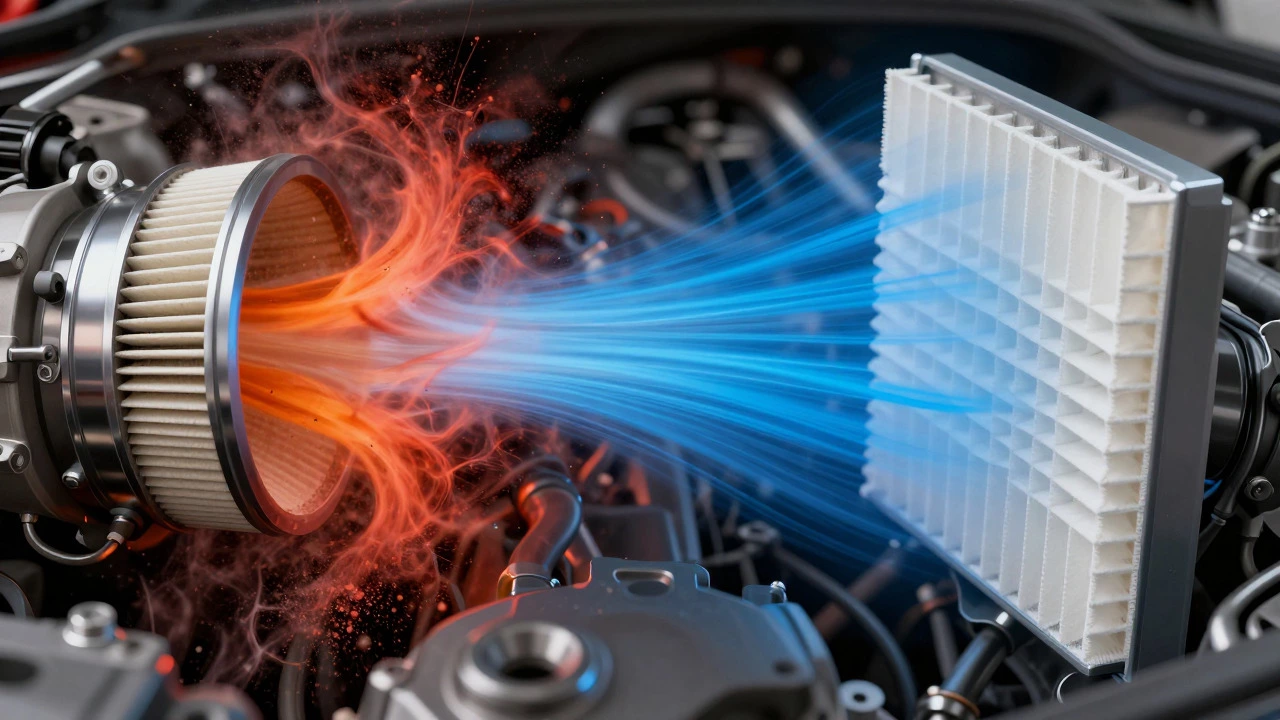
Comparison: Polarized vs. Standard Paper Filters
| Feature | Polarized/Electrostatic Filter | Standard Pleated Paper Filter |
|---|---|---|
| Filtration Mechanism | Electrostatic charge + physical barrier | Dense paper media (physical barrier) |
| Moisture Sensitivity | High (charge neutralizes) | Low (can clog if wet, but durable) |
| Lifespan | Variable (depends on environment/cleaning) | Predictable (15,000-30,000 miles) |
| Maintenance | Complex (special cleaners needed) | None (replace only) |
| Cost | High ($50-$100+) | Low ($10-$20) |
| Reliability | Decreases over time with use | Consistent until replacement |
When Might a Polarized Filter Make Sense?
It’s not all bad news. There are niche scenarios where polarized filters shine. Industrial HVAC systems, clean rooms, and certain marine applications benefit from their ability to capture ultra-fine particles without significant pressure drop. In these controlled environments, humidity and temperature are regulated, and maintenance protocols are strict.
However, under the hood of your daily driver, these controls don’t exist. Unless you’re running a specialized vehicle in a lab-like setting, the disadvantages outweigh the benefits. Stick to high-quality OEM-recommended paper filters or reputable aftermarket oiled cotton filters if you want genuine performance gains without the headaches.
Final Thoughts: Don’t Let Marketing Mislead You
The automotive aftermarket is full of products that sound brilliant on paper but fail in practice. Polarized air filters are a prime example. They solve a problem that most drivers don’t have-capturing sub-micron particles in a way that doesn’t restrict airflow-while introducing new problems related to durability, maintenance, and cost.
Your engine doesn’t need a science experiment; it needs consistent, clean air. A standard pleated paper filter does exactly that, reliably and affordably. Save your money, skip the polarized hype, and stick with proven technology that has kept engines running smoothly for decades.
Are polarized air filters better than paper filters?
For most consumer vehicles, no. While polarized filters can capture finer particles, they are less durable, more expensive, and sensitive to moisture and heat. Paper filters offer consistent performance and are cheaper to replace.
Can you wash a polarized air filter?
Some polarized filters are designed to be washed, but it requires specific cleaning agents to preserve the electrostatic charge. Improper cleaning can permanently damage the filter's effectiveness.
Do polarized air filters improve horsepower?
Generally, no. Any perceived gain is usually negligible and often offset by airflow inconsistencies caused by uneven particle accumulation. High-flow oiled cotton filters are a better choice for performance gains.
How long do polarized air filters last?
Their lifespan varies greatly depending on environmental conditions. In humid or dusty areas, they may lose effectiveness within 6-12 months, whereas paper filters typically last 15,000-30,000 miles consistently.
Why are polarized air filters so expensive?
The manufacturing process involves applying electrostatic charges to synthetic or metallic media, which is more complex than producing pleated paper. Additionally, marketing costs for "high-tech" features drive up the price.