2-into-1 Exhaust Power & Torque Estimator
Enter your vehicle's specifications below to estimate the typical performance changes associated with installing a properly designed 2-into-1 exhaust system.
Horsepower Change
Torque Curve Shift
You’ve probably heard the old mechanic’s tale: "A loud pipe is a fast pipe." But when you look at the engineering behind a 2-into-1 exhaust system, an exhaust configuration that merges two primary pipes from separate cylinders or banks into a single collector and outlet, the reality is more nuanced. Does it actually add power? Yes, but not for the reasons most people think. It’s not about volume; it’s about flow dynamics and scavenging.
If you are running a V-twin motorcycle, a small-block V8, or even a modified inline-4, switching to a 2-into-1 setup can unlock hidden potential in your engine. However, if you do it wrong, you might lose low-end torque and make your bike sound like a lawnmower. Let’s break down exactly how this works, where the power comes from, and what you need to know before spending your cash.
The Quick Verdict on Power Gains
Before we get into the physics, here is the straight answer. A properly designed 2-into-1 exhaust typically increases peak horsepower by 3% to 7% compared to a stock restricted system. On a 100-horsepower engine, that’s roughly 3 to 7 horses. For high-performance engines, gains can reach 10% or more.
- Peak Horsepower: Significant increase (high RPM range).
- Torque Curve: Often shifts higher in the RPM band. You might lose some low-end punch.
- Sound: Deeper, louder tone due to reduced backpressure and resonance changes.
- Weight: Usually lighter than heavy cast-iron stock manifolds.
The key phrase here is "properly designed." A cheap, poorly welded pipe with bad bends will choke your engine. A tuned header with smooth transitions will help it breathe.
How Scavenging Creates Free Horsepower
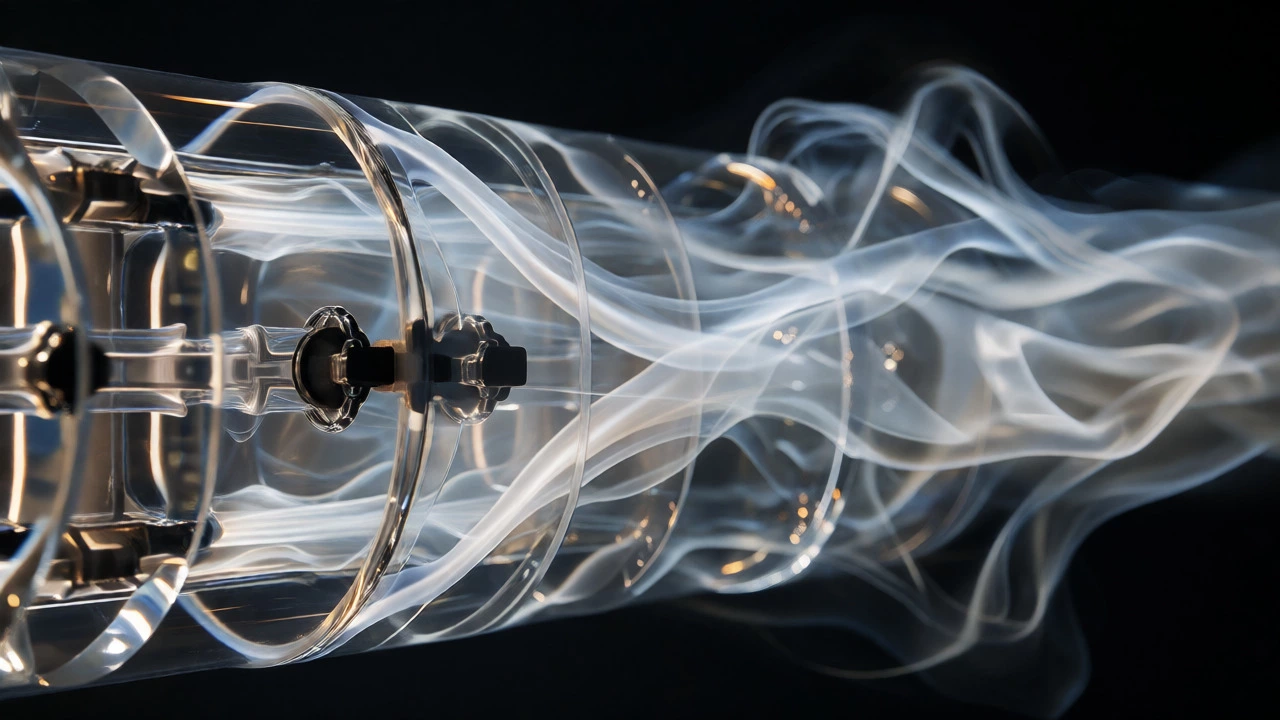
To understand why a 2-into-1 helps, you have to forget the idea that exhaust just flows out because of pressure. It’s actually pulled out by waves. This process is called exhaust scavenging, the use of negative pressure waves created by exiting exhaust gases to pull remaining gases out of the cylinder.
Here is the sequence of events inside your cylinder head:
- Exhaust Valve Opens: High-pressure gas rushes out into the primary tube.
- Pulse Travel: This pulse travels down the pipe. As it moves, it creates a vacuum behind it.
- Reflection: When the pulse hits the merge point (where the two pipes join), part of the wave reflects back up the pipe as a negative pressure wave.
- The Pull: If timed correctly, this negative wave arrives at the exhaust valve right before it closes, sucking out the last bit of burnt gas.
A 2-into-1 system is excellent at creating this effect because the two pulses from adjacent cylinders often interact constructively. In a V-twin, for example, firing intervals are uneven. A well-designed Y-pipe uses the second cylinder’s pulse to help scavenge the first one. This reduces the amount of leftover exhaust gas in the cylinder, allowing fresh air-fuel mixture to enter more efficiently. More oxygen means more fuel can be burned, which equals more power.
Backpressure vs. Flow Rate: Clearing Up the Myth
Many enthusiasts still obsess over "backpressure," thinking they need resistance to keep the exhaust moving. This is largely a myth for modern engines. What you actually want is minimal restriction and optimal velocity.
| Feature | Stock System | Straight Pipe | Tuned 2-into-1 |
|---|---|---|---|
| Restriction | High (catalytic converters, baffles) | Very Low | Optimized |
| Scavenging Efficiency | Low | Poor (loses pulse energy) | High (timed pulses) |
| Low-RPM Torque | Good | Poor | Moderate to Good |
| High-RPM Power | Limited | High | Highest |
| Cost | N/A (Factory) | Low | Medium to High |
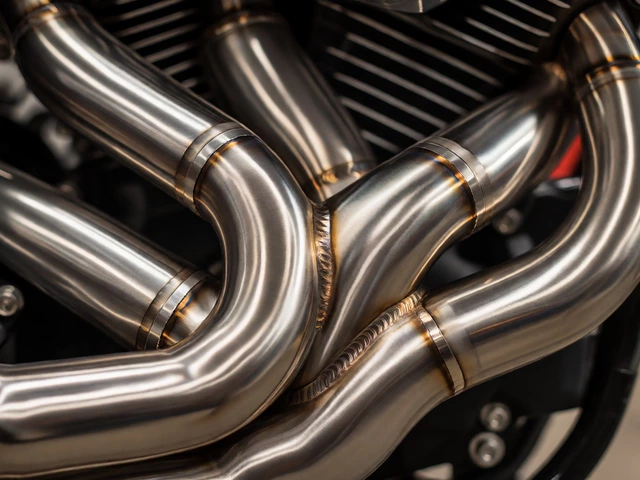
A straight pipe removes all backpressure, but it also kills the scavenging effect. Without the reflected waves helping to empty the cylinder, you end up with dilution of the incoming charge. The 2-into-1 header, a component consisting of two primary tubes merging into a single collector, strikes the balance. It allows free flow while maintaining enough geometry to generate useful scavenging waves.

Why 2-into-1 Beats 2-into-2 for Most Street Bikes
You might wonder why you shouldn’t just go full race-style with two separate outlets (2-into-2). While 2-into-2 systems offer incredible top-end power by minimizing interference between cylinders, they come with downsides for daily driving.
A 2-into-1 system is generally better for street use for three specific reasons:
- Simplicity: One muffler instead of two means less weight and fewer parts to rust or crack.
- Sound Control: Two pipes fighting each other acoustically can create a raspy, annoying noise. A merged system sounds smoother and deeper.
- Low-End Driveability: The shared collector maintains some backpressure at low RPMs, keeping torque available for city driving and passing.
Race bikes often use 2-into-2 because they spend almost no time idling or cruising at 2,000 RPM. They live in the redline. If you ride your bike to work, the 2-into-1 is the smarter choice.
Common Pitfalls That Kill Performance
Not all aftermarket exhausts are created equal. Buying the cheapest option often leads to disappointment. Here are the mistakes that prevent a 2-into-1 from delivering its promised horsepower.
Bad Welds and Sharp Bends
Turbulence is the enemy of flow. If the welds inside the header are rough, or if the pipes have sharp kinks, the exhaust gas slows down. You want smooth, mandrel-bent tubing. Look for TIG-welded joints that are ground smooth. A visible bump inside the pipe can cost you valuable airflow.
Oxygen Sensor Issues
Modern vehicles rely on O2 sensors, devices that measure the oxygen content in the exhaust stream to adjust fuel mixture. If you remove the catalytic converter or change the pipe length drastically, the ECU (engine control unit) might get confused. This can lead to a lean or rich condition, triggering check-engine lights or hurting performance. Many riders install an O2 sensor simulator or re-flash the ECU to fix this.
Ignoring Intake Balance
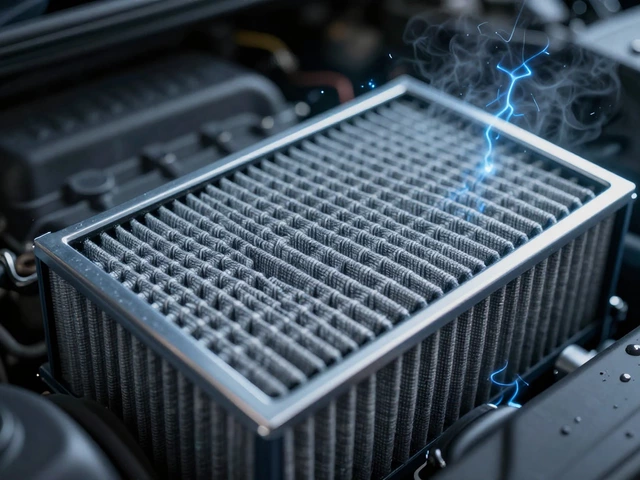
Adding an exhaust without touching the intake is like opening one window in a stuffy room. To get the most out of your new pipes, consider pairing them with a high-flow air filter or a short ram intake. The engine needs to breathe in as freely as it breathes out. If you restrict the intake, the exhaust gains are capped.
Real-World Examples and Data
Let’s look at some typical dyno results to see what this looks like in practice. Note that these numbers vary based on engine tuning and altitude.
Case Study: Harley-Davidson Sportster (883cc) * **Stock:** 55 HP @ 6,000 RPM. * **With Aftermarket 2-into-1 & Air Filter:** 62 HP @ 6,500 RPM. * **Gain:** +7 HP (+12%). * **Note:** Torque increased significantly in the mid-range, making the bike feel much stronger during acceleration.
Case Study: Honda CB750 (Inline-4) * **Stock:** 70 HP @ 9,000 RPM. * **With 2-into-1 Header:** 75 HP @ 9,500 RPM. * **Gain:** +5 HP (+7%). * **Note:** Peak power shifted higher. Low-end torque dropped slightly, requiring more gear shifting in stop-and-go traffic.
These examples highlight a crucial truth: the power band shifts. You aren’t just getting "more" power everywhere; you’re getting more power where the engine wants to run best.
Do You Need a Tune?
This is the million-dollar question. Can you bolt on a 2-into-1 and drive away? Technically, yes. Will it run optimally? Probably not.
When you reduce backpressure, the engine expels exhaust faster. This changes the volumetric efficiency curve. The factory computer was calibrated for the restrictive stock exhaust. With less restriction, the engine may run leaner than intended, especially at part-throttle.
For fuel-injected bikes, a simple piggyback tuner (like a Power Commander or Dynojet) can adjust fuel maps to compensate. For carbureted bikes, you might need larger main jets. Skipping the tune is the number one reason people say, "My exhaust didn’t add any power." It did, but the engine couldn’t access it because the fuel mixture was off.
Installation Tips for Maximum Gain
Getting the power isn’t just about buying the right part; it’s about installing it correctly.
- Use New Gaskets: Never reuse old crush gaskets. They leak exhaust gases before they even hit the pipe, killing scavenging and sounding terrible.
- Torque Specifications: Over-tightening bolts can warp flanges. Use a torque wrench and tighten in a star pattern.
- Check Clearance: Ensure the new pipes don’t rub against frame rails or footpegs when the suspension compresses. Heat expansion can cause contact later.
- Anti-Seize Compound: Apply copper anti-seize to studs and nuts. Exhaust heat makes steel seize quickly, making future removal a nightmare.
Also, allow the new exhaust to "break in." Some carbon buildup occurs initially, which can slightly alter flow. Check for leaks after the first 100 miles.
Is It Worth the Money?
For most enthusiasts, yes. A 2-into-1 exhaust offers a tangible improvement in throttle response, sound quality, and peak power. It transforms the character of the machine. However, if you are looking for massive gains, remember that the exhaust is only one piece of the puzzle.
If you want serious horsepower, combine the exhaust with intake upgrades and proper tuning. Think of it as upgrading the lungs of the engine. Alone, it helps. With better breathing (intake) and better brain (tune), it shines.
Does a 2-into-1 exhaust increase torque?
It depends on the RPM range. Typically, a 2-into-1 exhaust shifts the torque curve higher. You may lose a small amount of low-end torque below 3,000 RPM but gain significant torque in the mid-to-high range where most riding happens. Proper tuning can mitigate low-end losses.
Will a 2-into-1 exhaust make my bike louder?
Yes, almost always. Removing restrictions allows sound waves to escape more freely. However, many aftermarket systems include baffles to control decibel levels. A well-designed system produces a deeper, richer tone rather than a harsh, raspy noise.
Do I need to remap my ECU after installing a 2-into-1 exhaust?
For fuel-injected vehicles, it is highly recommended. Changing exhaust flow alters the air-fuel ratio detected by O2 sensors. Remapping ensures the engine runs at the optimal stoichiometric ratio, preventing lean conditions that can damage pistons and valves.
Is a 2-into-1 exhaust better than a full system?
"Full system" usually implies headers plus mufflers. A 2-into-1 refers specifically to the header configuration. You can have a 2-into-1 header with different muffler options. Generally, a complete 2-into-1 system (header + slip-on or full muffler) performs better than just swapping the muffler on stock headers.
Can a bad installation hurt my engine?
Directly, unlikely. Indirectly, yes. Exhaust leaks near the O2 sensor can send false readings to the ECU, causing poor drivability. Also, if the exhaust touches plastic components or wiring due to heat expansion, it can cause melting or shorts.