Oil Addition: What You Need to Know Before Adding Oil to Your Engine
When your car warns you about low oil addition, the act of topping up engine lubricant to maintain proper levels. Also known as oil top-up, it's a quick fix many drivers reach for—but it’s not always the right one. Adding oil isn’t like filling up your gas tank. If your engine is low on oil, it could mean a leak, burning oil, or worse—internal wear. Just pouring in more doesn’t fix the root problem, and it can hide damage until it’s too late.
Engine oil is more than just a lubricant. It’s a motor oil, a specialized fluid designed to reduce friction, cool engine parts, and clean internal components that breaks down over time. Even if you haven’t driven far, old oil loses its ability to protect. That’s why checking your oil level, the amount of lubricant in the engine, measured using the dipstick isn’t just about adding more—it’s about understanding what the level tells you. A dipstick reading below the minimum mark means something’s wrong. Is oil leaking from a gasket? Is the engine burning it due to worn piston rings? Or did you just forget to check for months and now you’re playing catch-up?
Many drivers think adding oil between changes is safe, even smart. But if you’re regularly topping up, you’re masking a bigger issue. A car that needs oil added every 1,000 miles isn’t just low on fluid—it’s likely losing it through a failing component. And adding the wrong type of oil? That can cause sludge, reduce efficiency, or even void your warranty. The oil change, the process of draining old oil and replacing it with fresh lubricant, typically every 5,000 to 10,000 miles exists for a reason: to remove contaminants and restore protection. Topping off doesn’t clean the engine. It just delays the inevitable.
Here’s the truth: if you’re adding oil often, you’re not saving money—you’re risking a $5,000 engine rebuild. That’s why the posts below don’t just tell you how to check your oil. They show you how to read the signs that mean it’s time for more than a top-up. You’ll learn what happens when you skip oil changes, why synthetic oil behaves differently than conventional, and how to spot leaks before they turn into disasters. You’ll also find out when adding oil is actually okay—and when it’s a red flag you can’t ignore. This isn’t about quick fixes. It’s about keeping your engine alive, safely and affordably.
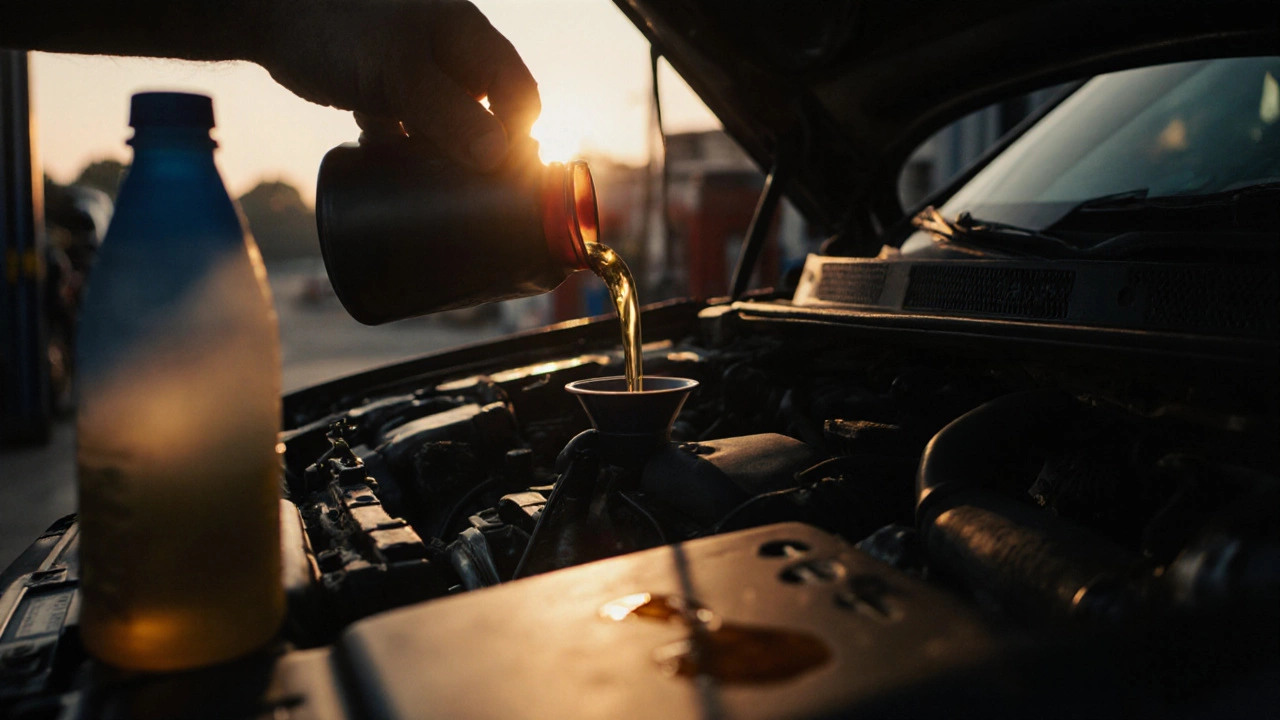
Does the Engine Need to Be Running When Adding Oil? Here's What Really Happens
Adding oil to a running engine is dangerous and inaccurate. Learn the correct way to check and add engine oil without risking overfill, foaming, or engine damage. Simple steps for every car owner.
November 17 2025