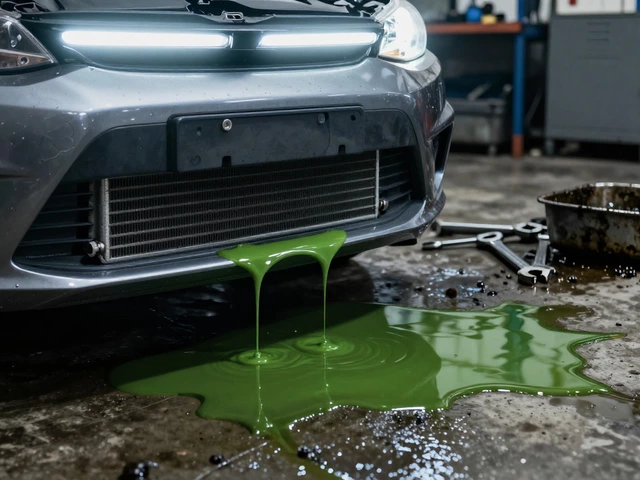
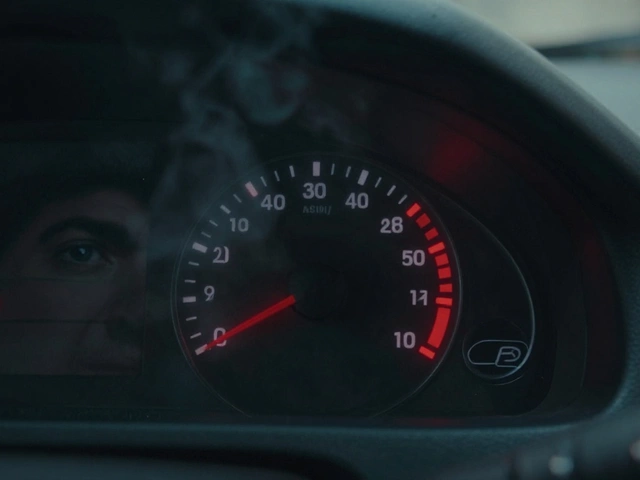
You notice white steam rising from under the bonnet. The temperature gauge spikes. Your mind races through worst-case scenarios involving seized engines and thousands in repair bills. The question isn't whether your car needs help anymore; the question is whether dropping cash on a new radiator actually solves the problem long-term. Many mechanics will tell you to swap it out immediately, while online forums suggest flushing the old one might suffice. The truth sits somewhere in between, depending entirely on the age of the vehicle, the nature of the leak, and how much longer you plan to drive this machine.
We aren't here to give you a sales pitch for a brand-new unit. Instead, we break down the actual numbers behind the cooling system, the longevity of different materials, and whether a rebuild makes more financial sense than a replacement. By the end, you should have a clear picture of the return on investment for a new Car Radiator versus other options.
The Hidden Damage Behind Overheating
Before deciding on a replacement, you must understand what happens when the cooling system fails. A radiator isn't just a box that holds liquid; it acts as a critical Heat Exchanger. It transfers heat from the engine coolant to the outside air. When this process stops, temperatures can climb past safe limits in minutes. Most modern engines cannot tolerate operating above 120°C for extended periods without warping the cylinder head or damaging gaskets.
If your warning light flickers, don't ignore it. Small leaks often turn into catastrophic failures rapidly. A minor seepage in the plastic tanks surrounding the metal core can look harmless today but leave you stranded tomorrow. Furthermore, corrosion inside the system spreads. If sediment builds up, it blocks flow channels and reduces efficiency even if the main tank doesn't leak. This hidden degradation is why some shops insist on a full replacement rather than a patch job.
Repair Versus Replace: The Cost Reality
The biggest factor driving your decision is budget. In the United Kingdom, prices vary significantly based on parts quality and garage labour rates. A complete overhaul involves the part itself plus fitting time. For many vehicles, especially older models, a second-hand unit remains an option. However, these carry risk since you rarely know the internal condition of used aluminium cores.
| Option | Estimated Cost Range (£) | Lifespan Expectation | Risk Level |
|---|---|---|---|
| Professional Weld Repair | £100 - £200 | 1-2 Years | Medium (Potential for re-leak) |
| New Aftermarket Unit | £200 - £400 + Labour | 5-7 Years | Low (Quality varies by brand) |
| OEM (Original Equipment) Part | £350 - £600 + Labour | 8+ Years | Very Low (Highest compatibility) |
| Reconditioned/Used Part | £80 - £150 + Labour | Unknown | High (History unknown) |
Notice the variance. An Aftermarket Part might save you money upfront, but cheaper manufacturing processes sometimes result in thinner aluminium fins that clog faster. On the other hand, OEM Parts cost more because they match factory specifications exactly, ensuring fitment and durability. If you plan to keep the car for five years or more, the extra cost of OEM usually pays off in reliability.
The Role of Materials in Durability
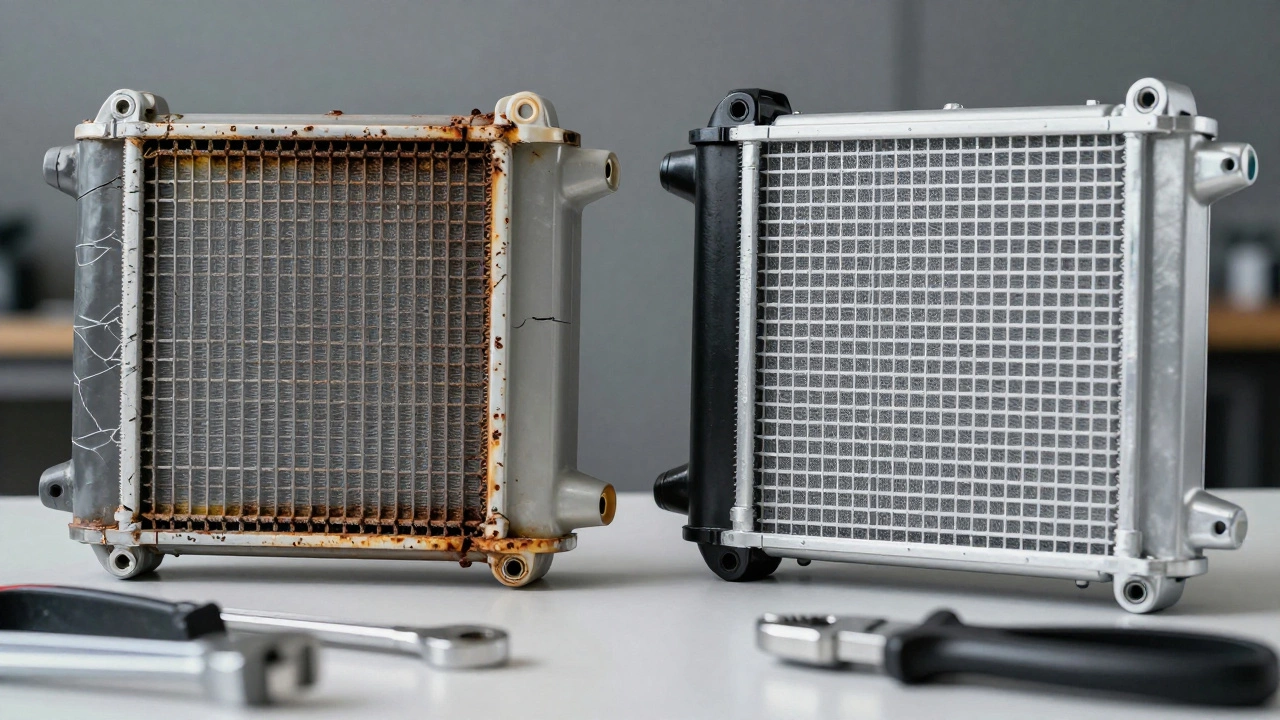
Older classic cars often utilised copper and brass construction, which handled repairs well. Modern vehicles almost exclusively use aluminium cores bonded to plastic side tanks. This shift happened to reduce weight and improve heat dissipation, yet it introduced a weak point. Plastic ages. It becomes brittle and cracks under vibration or thermal stress. Once those plastic seams split, welding often fails because the material degrades upon re-heating.
This explains why manufacturers design radiators as sealed units. They expect you to replace the whole assembly when one part fails. While a skilled specialist can sometimes bond plastic, the success rate drops significantly with age. If your car has high mileage, the internal core might still hold water while the external tanks fail repeatedly. Swapping the entire unit eliminates this uncertainty. You also get fresh seals and fittings that prevent future leaks around mounting points.
Impact on Resale Value and Reliability
Think about selling the car later. Potential buyers check the service history closely. A receipt showing a professional radiator replacement signals care, whereas a history note mentioning "temporary fix" suggests neglect. Even if the temporary fix works, it raises red flags regarding overall maintenance standards. A proper installation boosts confidence for the next owner.
Beyond resale, reliability affects daily life. Breakdowns due to overheating often lead to towing fees and roadside assistance charges. These secondary costs quickly outweigh the savings of choosing a repair over a replacement. One tow truck visit to the mechanic could easily set you back another £100. Therefore, a preventative replacement often minimizes total ownership costs across the life of the vehicle.
Additional Components That Should Be Checked
Replacing the radiator alone is insufficient if related components have worn out during the same period. Mechanics recommend changing the Coolant simultaneously. Old fluid loses its anti-corrosion properties and becomes acidic, damaging the new part immediately. You should also inspect the Thermostat. If it sticks closed, the new radiator cannot regulate heat effectively regardless of its condition.
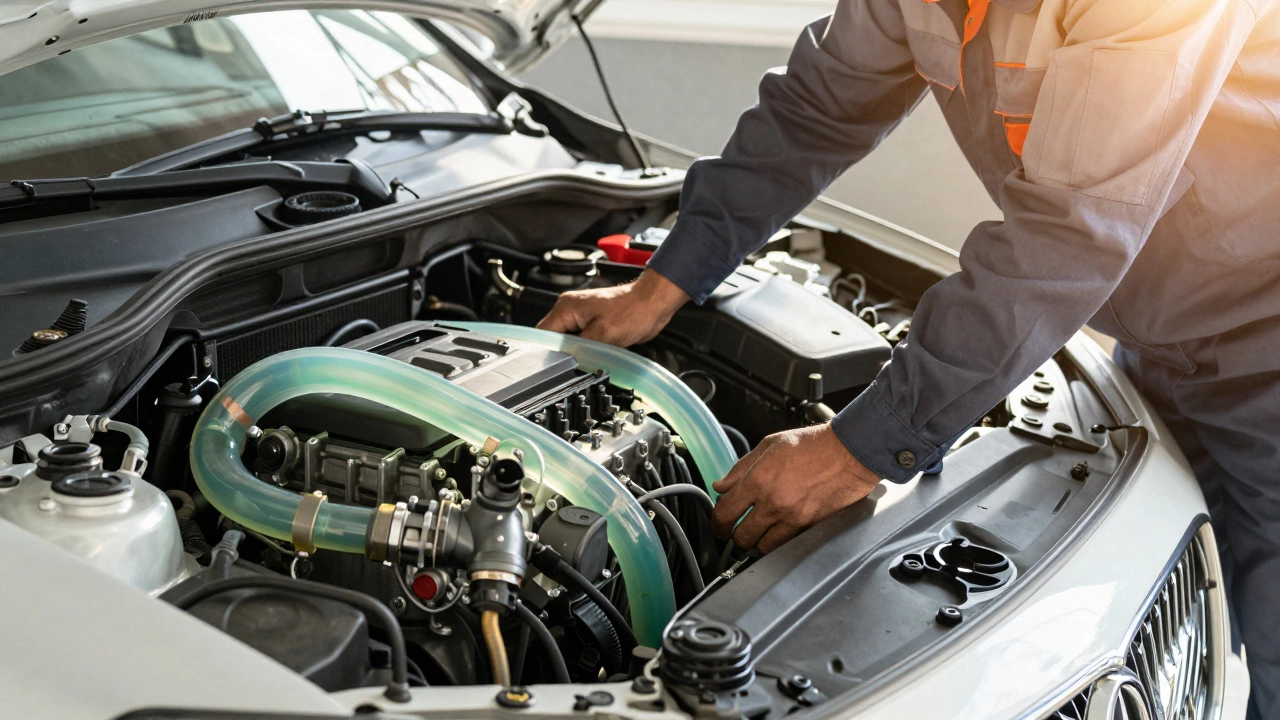
Furthermore, examine the Water Pump. Since this component forces fluid through the radiator, its failure causes overheating too. Often, water pump failure damages the adjacent thermostat housing. While you have the car open for radiator work, replacing these wear items prevents having to pay double labour charges later. Think of it as a refresh of the entire cooling loop rather than a single isolated fix.
When Does It Make Sense To Repair?
There are rare scenarios where keeping the original unit works. If you own a vehicle approaching the end of its roadworthy life, say over 15 years old with significant bodywork rust, investing in a premium OEM Part makes less sense financially. A basic aftermarket unit or a competent weld job might extend its life for a few more months until you trade it in.
Another exception involves very large heavy-duty trucks or agricultural machinery where a single radiator costs several thousand pounds. Here, rebuilding the core with a specialist is standard practice to avoid massive expense. For everyday passenger cars, vans, and standard SUVs, however, the price gap between repair and replacement has narrowed significantly. You rarely find a good reason to patch unless you absolutely cannot afford the swap right now.
Frequently Asked Questions
How long does a typical car radiator last?
Most modern radiators last between 8 to 10 years or roughly 100,000 miles. Plastic components degrade faster in hot climates or due to constant vibration. Regular coolant changes help extend this lifespan significantly.
Can I install a new radiator myself?
It depends on your mechanical skill. It requires draining fluids, removing supports, and refilling the system properly to remove air pockets. Mistakes here can cause overheating or bubbles in the cooling circuit. Professional fitting is safer for most drivers.
What are the signs my radiator is failing?
Key indicators include visible leaks beneath the car, green or orange fluid puddles, high engine temperature readings, or steam coming from the engine bay. Sweet smells of leaking antifreeze are also common warnings.
Is it better to buy a new or used radiator?
A new unit is almost always better. Used radiators may have internal corrosion or blocked passages you cannot see. Unless you are checking a used part visually and pressure-testing it yourself, a new warranty-backed part offers peace of mind.
Does changing the radiator affect warranty?
Using approved OEM parts maintains warranty validity. Cheaper alternatives might void claims related to cooling systems if the manufacturer proves inferior quality caused subsequent engine damage. Always check your dealership terms first.