Brake Safety & Cost Risk Calculator
Input Parameters
Safety Assessment & Cost Estimate
Warning Squeal Stage
Your brakes are signaling for attention.
Potential Cost Impact
| Component | Status | Est. Cost (£) |
|---|---|---|
| Brake Pads | Replace | £80 - £150 |
| Rotors (Per Axle) | Reusable | £0 |
| Calipers | Good | £0 |
| Wheel Bearings | Good | £0 |
| Total Estimated Repair | - | £80 - £150 |
Your car is making that high-pitched squeal again. You know what it means, but the mechanic shop is fully booked until next week, and you have to get to work tomorrow. The question isn't just about convenience; it's about physics and survival. Can you still drive if your brake pads are worn?
The short answer is yes, but with severe caveats. Driving on worn brake pads is like walking on a broken ankle. You can technically take steps, but every step risks a fall that could leave you unable to walk at all. In the context of brake pads, which are friction materials pressed against rotors to slow down a vehicle, 'worn' is a spectrum. It ranges from 'needs attention soon' to 'immediate danger.' Understanding where you sit on that spectrum determines whether you can safely reach a garage or if you need to call a tow truck right now.
Understanding Brake Pad Wear Stages
To decide if you can drive, you first need to diagnose the level of wear. Brake pads don't fail overnight; they degrade through distinct stages. Recognizing these stages helps you assess the risk accurately.
Stage 1: The Warning Squeal (3-5mm remaining) Most modern vehicles come equipped with wear indicators. These are small metal tabs embedded in the brake pad material. When the friction material wears down to about 3 to 5 millimeters, this tab scrapes against the brake rotor, creating a persistent squealing noise. At this stage, your braking performance is still largely intact. You can drive, but you should treat this as a urgent maintenance reminder rather than an emergency. Plan to visit a mechanic within the next few days.
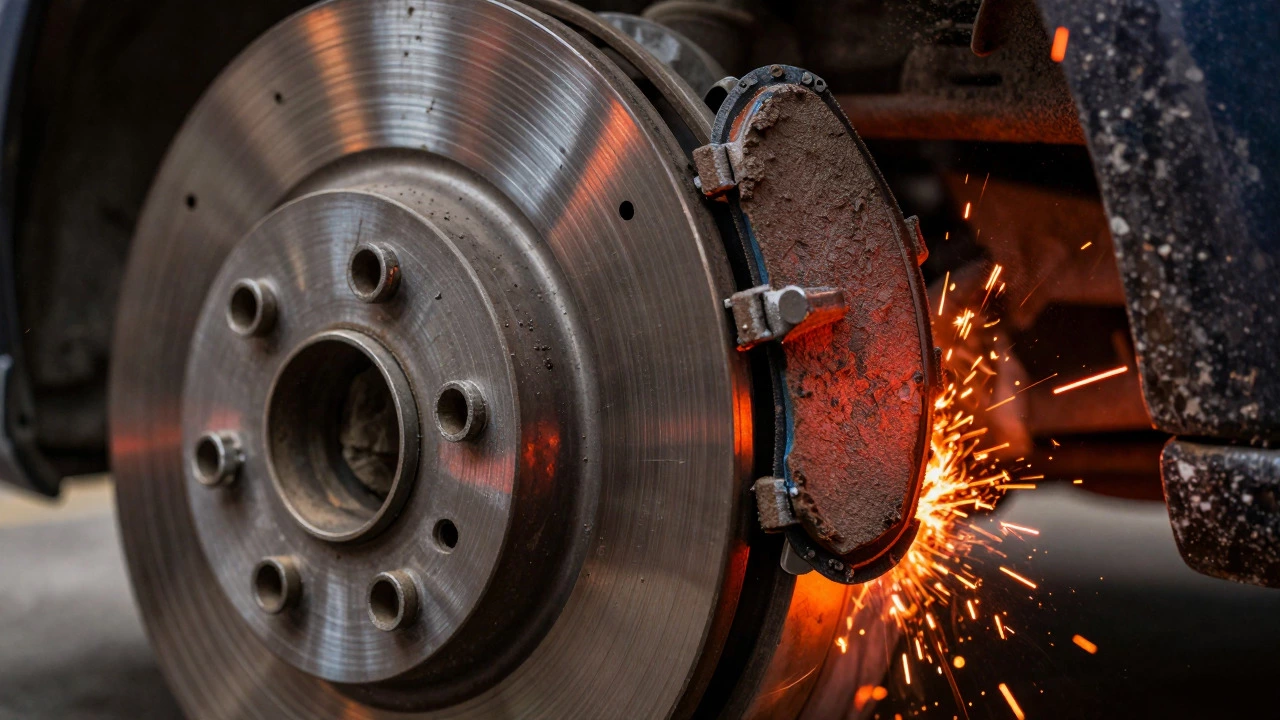
Stage 2: Grinding Metal (Less than 2mm remaining) If you ignore the squeal, the pad material eventually wears away completely. Now, the steel backing plate of the brake pad grinds directly against the cast iron or steel brake rotor. This produces a harsh, metallic grinding sound that vibrates through the steering wheel. This is no longer just a maintenance issue; it is damage control. Every mile driven in this state scores deep grooves into your rotors. While you can still stop the car, your stopping distance increases, and heat dissipation becomes inefficient.
Stage 3: Total Failure (0mm remaining) In extreme cases, the caliper piston may push past the limits of the backing plate, or the pad may disintegrate entirely. At this point, you have little to no friction on that wheel. The car will pull sharply to one side when braking, and pedal feel will become spongy or unresponsive. Driving here is reckless. The likelihood of total brake failure during hard braking is high.
The Hidden Costs of Delaying Replacement
Many drivers delay brake service because replacing pads seems expensive compared to changing oil. However, driving on worn pads creates a cascade of secondary damages that multiply the cost. Let’s look at the financial reality of ignoring the problem.
| Component | Timely Replacement Cost (Approx.) | Delayed/Damaged Replacement Cost (Approx.) | Risk Factor | |
|---|---|---|---|---|
| Brake Pads Only | £80 - £150 | £80 - £150 | Low | |
| Brake Rotors (Per Axle) | £0 (if reused) | £150 - £300 | High (if scored/warped) | |
| Calipers | £0 | £200 - £400 | Medium (if seized by debris) | |
| Wheel Bearings | £0 | £100 - £200 | Medium (if overheated) |
The biggest money pit is the brake rotor, also known as a disc. It is a heavy metal disc that rotates with the wheel and provides the surface for brake pads to clamp onto. Rotors are designed to be smooth. When steel-on-steel contact occurs, the rotor develops deep grooves, much like a record scratched by a needle. Once a rotor is scored beyond a certain depth (usually 1-2mm), it cannot be resurfaced (skived) and must be replaced entirely. Replacing four rotors alongside new pads can double or triple your repair bill.
Furthermore, excessive heat from dragging brakes can warp rotors. A warped rotor causes the steering wheel to shudder violently when you apply the brakes. This vibration isn't just uncomfortable; it indicates that the rotor has lost its structural integrity under thermal stress. Heat also travels to the wheel bearing and the brake caliper seals. Overheating can bake out the grease in wheel bearings, leading to premature failure, or melt the rubber seals in the caliper, causing fluid leaks and potential brake line failure.
Safety Implications: Stopping Distance and Control
Money aside, the primary function of brakes is safety. How does wear affect your ability to stop? The relationship between pad thickness and stopping power is non-linear. New pads provide maximum friction coefficient. As they wear, the effective area decreases slightly, but more importantly, the heat management changes.
Thinner pads have less mass to absorb heat. During repeated braking-such as driving down a steep hill or navigating heavy city traffic-worn pads overheat faster. When brake components exceed their optimal temperature range, a phenomenon called 'brake fade' occurs. The friction material loses its grip, and the pedal feels soft. You press harder, but the car doesn't slow down as expected. In an emergency situation, such as a child running into the street or a sudden cut-off by another driver, those extra two seconds of stopping distance can be the difference between a near-miss and a collision.
Additionally, uneven wear across wheels creates imbalance. If your front left pads are significantly thinner than the front right, the car will pull to the left when braking. This requires constant correction from the driver, increasing cognitive load and reaction time. In wet conditions, worn pads may struggle to bite effectively through water films on the rotor, further extending stopping distances.
How to Check Your Brake Pads Yourself
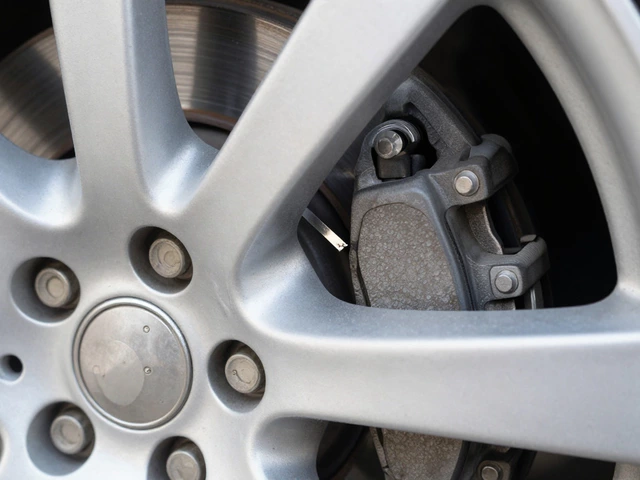
You don't need to be a mechanic to check your brake pad thickness. Most cars allow visual inspection through the spokes of the alloy wheels. Here is how to do it:
- Park on level ground and ensure the parking brake is engaged.
- Locate the brake assembly behind the wheel spokes. You will see a large metal disc (the rotor) and a caliper clamping around it.
- Identify the brake pad. It sits inside the caliper, sandwiched against the rotor. Look for the thick layer of dark grey material. This is the friction lining.
- Estimate the thickness. Compare the pad thickness to the rotor thickness. A new pad is typically 10-12mm thick. If the pad looks thinner than the rotor, or if you can see the metal backing plate clearly with very little material left, they are critically worn.
- Check for uneven wear. Ensure the inner and outer pads are wearing evenly. Significant disparity suggests a sticking caliper guide pin, which needs immediate attention.
If you have steel wheels, you won't be able to see the pads easily. In that case, listen for noises. A consistent squeak usually means 3-5mm remaining. A grinding roar means less than 2mm. If you hear nothing, assume they are fine, but schedule a professional inspection if it has been over 12 months since your last check.
Mitigation Strategies: Getting to the Mechanic Safely
If your pads are worn but not yet grinding, and you must drive to a repair shop, adopt defensive driving habits to minimize risk and further damage.
- Anticipate stops early. Look far ahead and begin slowing down well before traffic lights or junctions. This reduces the force applied to the brakes and generates less heat.
- Use engine braking. Downshift manually or use paddle shifters to let the engine slow the car. This takes significant load off the brake system.
- Avoid hard braking. Smooth, progressive pressure is better than sudden stomps. Hard braking generates intense localized heat, accelerating fade and warping risks.
- Keep distances wide. Increase following distance to at least 4-5 seconds. This gives you more time to react without relying solely on brakes.
- Drive shorter distances. Minimize unnecessary trips. Avoid highway speeds if possible, as higher kinetic energy requires more braking force to dissipate.
If you hear grinding, limit your speed to under 30 mph and avoid hills if possible. Consider calling a mobile mechanic who can come to your location, eliminating the need to drive further.
When to Tow Instead of Drive
There are specific scenarios where driving is inadvisable regardless of your confidence. Tow your vehicle if:
- The brake warning light is illuminated on the dashboard.
- You smell burning dust or chemicals after normal driving.
- The brake pedal goes all the way to the floorboard.
- The steering wheel vibrates severely during braking.
- You hear loud, continuous grinding noises.
Towing costs typically range from £50 to £100 for local distances. Compare this to the potential £500+ cost of damaged rotors, calipers, and bearings, plus the intangible cost of a potential accident. Often, the tow is the cheaper option.
How many miles can you drive on worn brake pads?
There is no fixed mileage limit because wear depends on driving style, vehicle weight, and terrain. However, once the wear indicator squeals (approx. 3-5mm left), you generally have 1,000 to 3,000 miles before critical failure. If you hear grinding, you should drive no more than a few miles to a safe location or mechanic, as rotor damage begins immediately.
What happens if you drive with no brake pads?
Driving with no brake pads means the metal backing plate rubs directly against the rotor. This causes rapid scoring of the rotor, overheating of the brake assembly, potential seizure of the caliper, and significantly increased stopping distances. Eventually, the brake fluid may boil, leading to complete brake failure where the pedal offers no resistance.
Is it dangerous to drive with squeaky brakes?
Squeaky brakes are a warning sign, not an immediate catastrophe. While not instantly dangerous, they indicate that your pads are nearing the end of their life. Continuing to drive ignores the manufacturer's built-in safety alert. The danger lies in delaying replacement until the pads wear out completely, leading to expensive repairs and reduced safety margins.
Can you replace brake pads yourself?
Yes, replacing brake pads is a common DIY task for intermediate mechanics. It requires jack stands, a lug wrench, a C-clamp to compress the caliper piston, and new pads. However, if you lack experience, improper installation can lead to uneven wear, brake drag, or failure. Always consult your vehicle's service manual and consider professional help if unsure.
How often should brake pads be replaced?
Brake pad lifespan varies widely, typically between 25,000 and 70,000 miles. City drivers with frequent stop-and-go traffic wear pads faster than highway commuters. Heavy vehicles and aggressive driving styles also accelerate wear. Regular inspections every 10,000 miles or annually are recommended to monitor thickness.