Air Filter Decision Assistant
You’ve just bought a new box of air filters is rectangular panels made of pleated media designed to trap airborne particles in heating and cooling systems. You stand in the aisle staring at two numbers: 11 and 13. Both look similar. Both promise cleaner air. But one might cost you more in energy bills, while the other might leave your lungs breathing dust. So, which is better? The honest answer is that neither is universally "better." It depends entirely on what’s happening inside your house and how powerful your furnace or AC unit actually is.
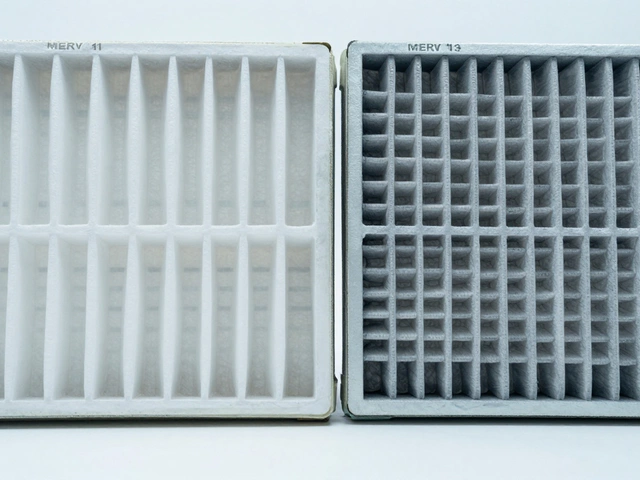
Choosing between MERV 11 is a Minimum Efficiency Reporting Value rating that captures medium-sized particles like mold spores and fine dust. and MERV 13 is a higher efficiency rating capable of trapping smaller pollutants including smoke, bacteria, and virus carriers. isn’t just about picking the highest number. It’s a balancing act between filtration power and airflow resistance. If you get this wrong, you could end up with a system that struggles to breathe, leading to higher electricity bills and potential equipment damage. Let’s break down exactly what those numbers mean for your wallet and your health.
Understanding the MERV Rating System
Before we pit 11 against 13, you need to know what you’re looking at. MERV stands for Minimum Efficiency Reporting Value. It’s a standard set by ASHRAE (the American Society of Heating, Refrigerating and Air-Conditioning Engineers) to rate how well an air filter traps particles of different sizes. Think of it as a sieve. A low MERV rating is like a coarse net that catches big debris but lets sand slip through. A high MERV rating is like a fine mesh screen that stops even the tiniest grains.
The scale runs from 1 to 20. Most residential homes use filters rated between 8 and 13. Ratings above 13 are usually reserved for hospitals or clean rooms because they restrict airflow so much that standard home HVAC systems can’t push air through them effectively. When you see MERV 11 or MERV 13 on the box, you are looking at specific performance metrics regarding particle size.
| Particle Size | Common Sources | MERV 11 Efficiency | MERV 13 Efficiency |
|---|---|---|---|
| Large Particles (3.0-10 µm) | Pollen, dust mite droppings, mold spores | ~65-90% | ~90-95% |
| Medium Particles (1.0-3.0 µm) | Fine dust, vehicle emissions, some bacteria | ~35-50% | ~75-85% |
| Small Particles (0.3-1.0 µm) | Smoke, tobacco residue, virus carriers | ~10-20% | ~40-50% |
As you can see, the jump from 11 to 13 makes a massive difference in the medium and small particle categories. MERV 11 is decent at catching pollen and pet dander. MERV 13 takes that a step further by significantly reducing smoke, bacteria, and finer dust. If you live in Manchester where dampness encourages mold growth, or if you have family members with severe allergies, that extra capture rate matters.
The Hidden Cost: Airflow and Static Pressure
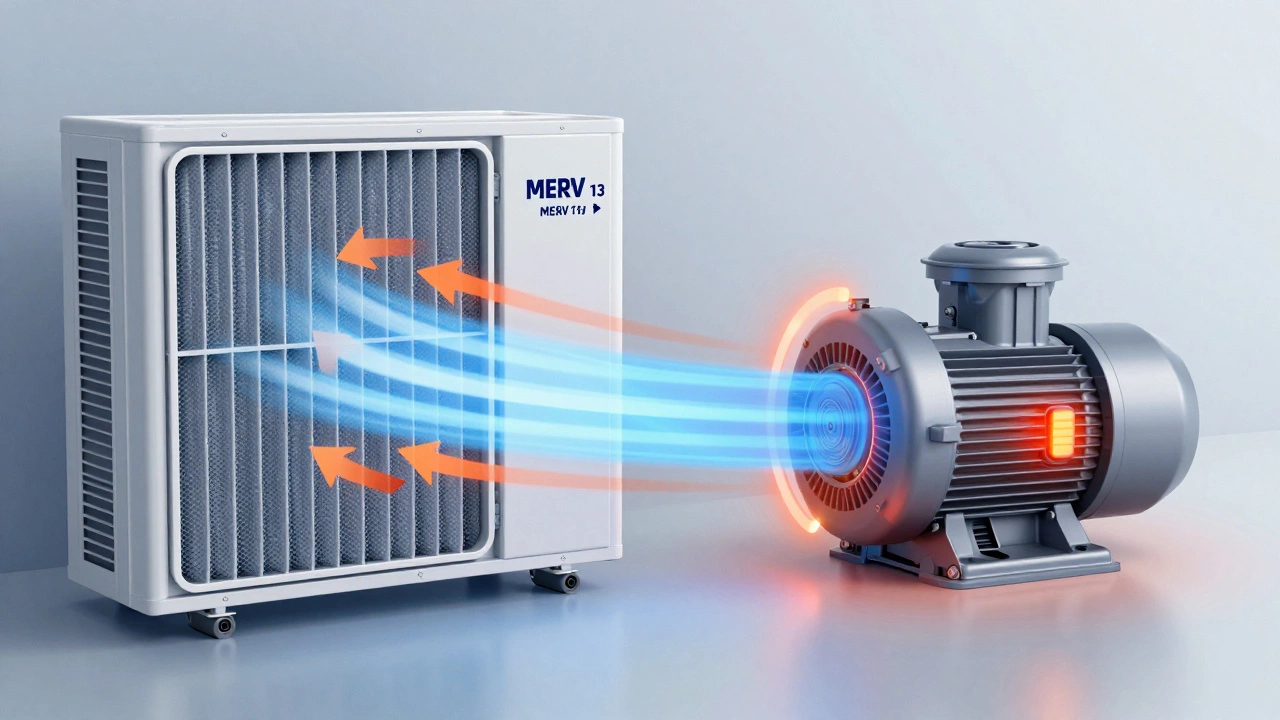
Here is the catch that most people miss. Better filtration means denser material. Denser material creates more resistance. In HVAC terms, we call this static pressure. Your furnace blower motor has to work harder to push air through a MERV 13 filter than it does through a MERV 11 filter. This is not a minor detail; it affects your entire system’s lifespan and efficiency.
If your system was designed for basic fiberglass or MERV 8 filters, installing a MERV 13 can choke it. The blower motor strains to maintain airflow. This leads to three problems:
- Higher Energy Bills: Your motor draws more electricity to overcome the resistance.
- Reduced Comfort: Less air reaches your vents, meaning rooms heat up or cool down slower.
- Equipment Failure: Over time, the strain can burn out the blower motor or cause ice to form on your AC evaporator coils due to lack of airflow.
MERV 11 offers a sweet spot for many older systems. It provides significantly better filtration than cheap throwaway filters without creating enough drag to trip safety switches or overwork the motor. MERV 13 is the gold standard for filtration, but only if your hardware can handle the load. Check your owner’s manual. If it says "do not exceed MERV 11," listen to it. Ignoring that warning is a fast track to a $500 repair bill.
Health Needs: Allergies, Asthma, and Pollution
Your choice should be driven by who lives in your house. Are you filtering for general cleanliness, or are you managing a medical condition? For the average household with no specific respiratory issues, MERV 11 is often sufficient. It removes the bulk of allergens like pollen and pet dander, keeping the air noticeably cleaner than unfiltered air.
However, if someone in your home suffers from asthma, severe allergies, or immune deficiencies, MERV 13 becomes much more attractive. These conditions are triggered by microscopic irritants. Smoke from cooking, outdoor wildfire smoke, and bacteria are all smaller particles that MERV 11 lets pass through relatively easily. MERV 13 captures a significant portion of these threats. In urban areas with high traffic pollution, the ability of MERV 13 to trap vehicle emissions makes it a healthier choice for indoor air quality.
Consider this scenario: You have a dog and a child with eczema. Pet dander is large enough for MERV 11 to catch, but the fine dust kicked up by walking shoes might aggravate the skin. MERV 13 handles both. The trade-off is checking your HVAC capacity first. If your system is modern and robust, go for the 13. If it’s an older unit running hot, stick to 11 and consider adding a standalone HEPA air purifier in the bedroom instead.
Filter Lifespan and Maintenance Frequency
There is another practical factor: how often you have to change the filter. Because MERV 13 filters have tighter pleats and denser media, they clog faster. A MERV 11 filter might last three months in a typical home. That same MERV 13 filter might become restricted after six weeks because it’s catching so much more stuff.
This impacts your budget in two ways. First, MERV 13 filters are generally more expensive upfront. Second, you buy them more often. Do the math. If a MERV 11 costs £10 every three months, that’s £40 a year. If a MERV 13 costs £15 every two months, that’s £90 a year. That’s a significant difference over time. Plus, forgetting to change a clogged MERV 13 filter is riskier. A blocked high-efficiency filter shuts down airflow completely, whereas a slightly dirty MERV 11 still allows some air passage.
To mitigate this, mark your calendar. Set a reminder for 6-8 weeks if you choose MERV 13. Visually inspect the filter monthly. If it looks grey and packed with dust, replace it immediately. Don’t wait for the scheduled date. Maintaining proper airflow is more important than squeezing extra life out of a clogged filter.
How to Decide: A Simple Checklist
So, how do you make the final call? Use this decision tree based on your specific situation.
Choose MERV 11 if:
- Your HVAC system is older than 10 years or lacks a dedicated return air fan.
- Your manufacturer’s manual specifies a maximum MERV rating of 11 or lower.
- You want good protection against pollen and pet dander without frequent filter changes.
- You are on a tight budget and want to minimize annual maintenance costs.
- You notice your vents blowing weak air when using higher-rated filters currently.
Choose MERV 13 if:
- Your HVAC system is modern, high-efficiency, and explicitly supports MERV 13+ filters.
- Household members have asthma, severe allergies, or compromised immune systems.
- You live near heavy traffic, industrial zones, or areas prone to wildfire smoke.
- You have pets that shed heavily and you want to reduce fine dander and hair.
- You are willing to replace filters every 6-8 weeks and pay a premium for cleaner air.
Alternatives and Hybrid Approaches
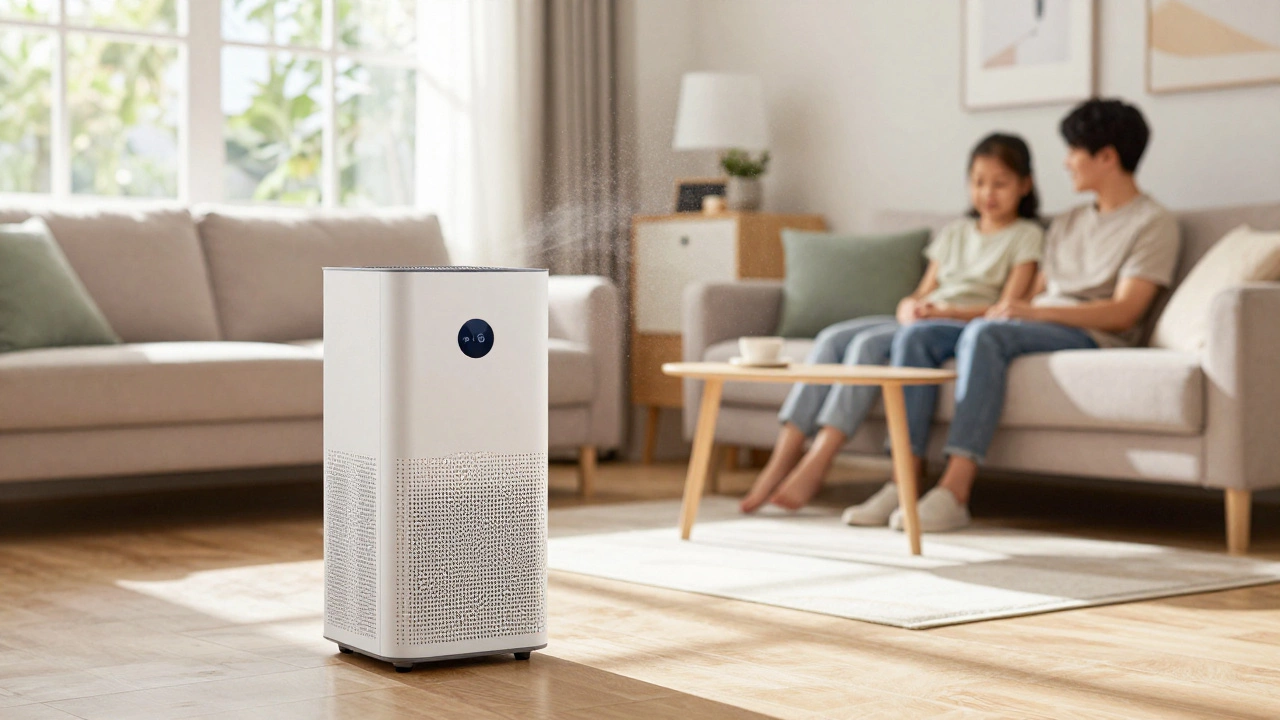
If you find yourself torn between the two, there is a third option. You don’t have to rely solely on your central HVAC filter. Many people install a MERV 11 in their furnace to protect the equipment and ensure good airflow, then add portable HEPA air purifiers in key rooms like the living room and master bedroom. HEPA filters are equivalent to MERV 17-19, offering superior filtration without taxing your central blower motor.
This hybrid approach gives you the best of both worlds. Your ducts stay clean from large debris thanks to the MERV 11, and the air in your immediate vicinity is scrubbed of microscopic pathogens by the portable units. It’s more expensive initially due to buying the purifiers, but it saves you from the risk of damaging your HVAC system and reduces the frequency of central filter replacements.
Another tip: ensure the filter fits perfectly. Gaps around the edges allow unfiltered air to bypass the media entirely. Whether you choose MERV 11 or 13, a poorly fitted filter is useless. Measure your slot carefully. If it’s loose, use foam tape to seal the perimeter. This simple step improves the effectiveness of any filter rating by ensuring all air passes through the media.
Can I use a MERV 13 filter in an older HVAC system?
It is generally not recommended. Older systems are not designed to handle the high static pressure created by dense MERV 13 filters. Using one can cause the blower motor to overheat, increase energy consumption, and potentially lead to coil freezing in AC units. Always check your owner's manual for the maximum recommended MERV rating before upgrading.
Does a higher MERV rating always mean cleaner air?
Yes, a higher MERV rating indicates the filter captures smaller and more particles. However, if the filter restricts airflow too much, your HVAC system may stop circulating air effectively, which can actually worsen indoor air quality by allowing stale air and moisture to build up. Balance is key.
How often should I replace a MERV 11 vs MERV 13 filter?
A MERV 11 filter typically lasts 3 months in a standard home, while a MERV 13 filter may need replacement every 6 to 8 weeks due to its higher particle capture rate. Homes with pets or high occupancy may require more frequent changes for both types. Always inspect filters monthly.
Is MERV 13 worth the extra cost?
For households with allergy sufferers, asthmatics, or those in polluted areas, MERV 13 is often worth the cost due to its ability to trap bacteria, smoke, and fine dust. For average users with no respiratory issues, MERV 11 provides excellent value by balancing filtration efficiency with lower cost and less frequent replacement.
What happens if I forget to change my MERV 13 filter?
A clogged MERV 13 filter severely restricts airflow, forcing your HVAC blower motor to work overtime. This can lead to higher energy bills, reduced heating/cooling performance, and eventual motor failure. In cooling mode, it can cause evaporator coils to freeze, potentially damaging the compressor.