Fuel Pump Diagnostic Assistant
Input Your Symptoms
Recommended Next Steps:
Enter your vehicle's symptoms to generate a diagnostic report.
You’re stuck on the side of the road. The engine cranks but won’t start, or maybe it hesitates violently when you hit the gas. You plug in your handy OBD2 code reader is a diagnostic tool that connects to a vehicle's onboard computer to retrieve error codes. and wait for the magic answer. The screen stays blank, or worse, it shows a code for something completely unrelated like an oxygen sensor. So, does that mean your fuel pump is fine?
The short answer is no. A standard code reader will not directly tell you if your fuel pump is mechanically broken. It can only tell you if the car’s computer has detected a problem with the fuel system’s electrical signals or pressure readings. Understanding this distinction saves you from buying a new fuel pump unnecessarily or ignoring a critical failure until it leaves you stranded again.
How OBD2 Scanners Actually See the Fuel System
To understand why your scanner might stay silent, you need to know what it’s actually looking at. Modern cars use sensors to monitor various systems. For the fuel system, the most relevant sensor is the fuel pressure sensor is a device that measures the pressure within the fuel rail and sends data to the ECU.. This sensor tells the Engine Control Unit (ECU) how much fuel is being delivered.
If the pressure drops below a specific threshold, the ECU triggers a Diagnostic Trouble Code (DTC). However, this doesn't happen instantly. The ECU waits to see if the condition persists over multiple drive cycles to avoid false alarms. If you have a failing fuel pump that still delivers *some* pressure, the ECU might never throw a code because the pressure hasn’t dropped far enough to trigger the alarm bell.
Here are the specific codes related to fuel pressure that your reader might catch:
- P0087: Fuel Rail/System Pressure Too Low. This is the big one. It suggests the pump isn’t keeping up, there’s a leak, or the regulator is faulty.
- P0088: Fuel Rail/System Pressure Too High. Usually points to a stuck pressure regulator rather than a bad pump.
- P0190-P0199: Fuel Volume/Pressure Sensor Circuit issues. These indicate the wiring or the sensor itself is broken, not necessarily the pump.
If you don’t see these codes, it doesn’t guarantee your pump is healthy. It just means the electronic brain hasn’t noticed a discrepancy yet.
The Silent Killers: Mechanical Failures vs. Electrical Signals
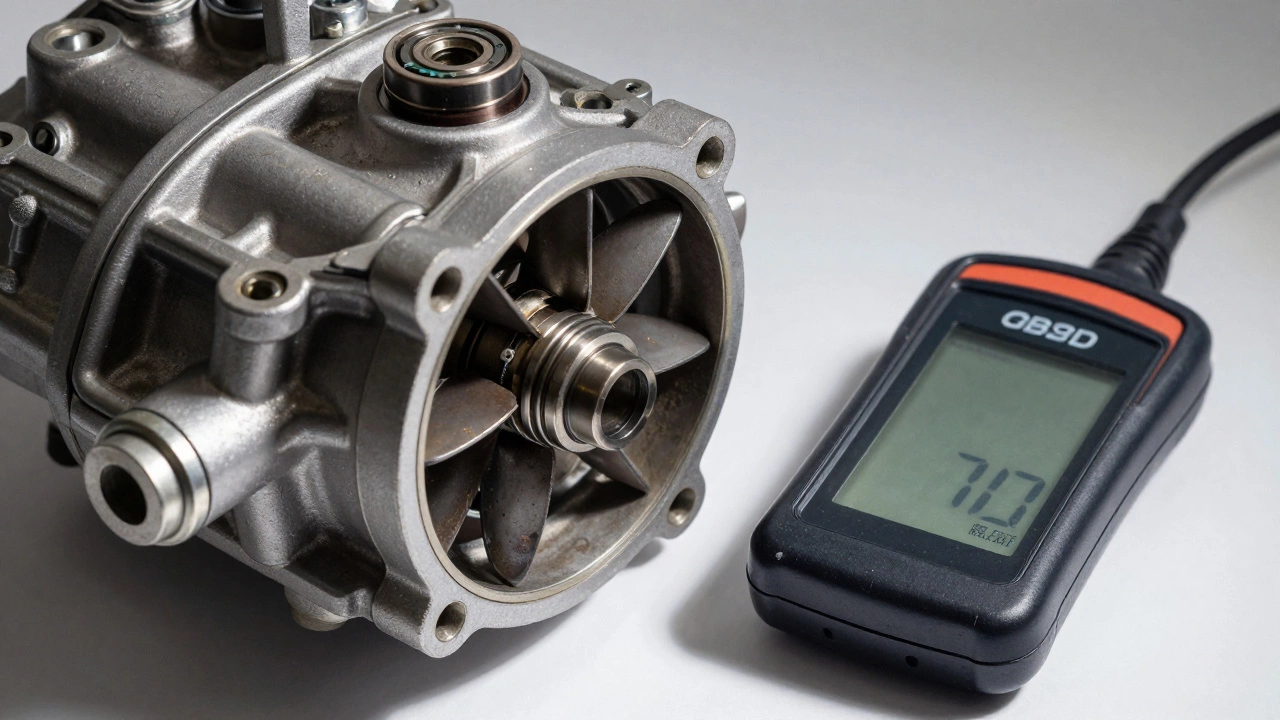
Fuel pumps fail in two main ways: electrically and mechanically. An OBD2 scanner is great at spotting electrical glitches but blind to mechanical wear.
Electrical Failure: If the pump motor shorts out or the relay fails, the ECU often detects a loss of communication or an abnormal current draw. In this case, you might get a code related to the fuel pump driver module or circuit malfunction. Here, the scanner is helpful.
Mechanical Failure: This is where scanners fail you. Inside the pump, there are impellers and bearings that wear down over time. As they degrade, the pump loses efficiency. It spins, so the electrical signal looks normal to the ECU. But it can’t push enough gallons per hour (GPH) to keep the engine fed under load. You’ll feel this as hesitation during acceleration or inability to maintain highway speeds, but the code reader will show “No Codes Found.”
| Failure Type | Symptoms | Likely OBD2 Code? | Scanner Reliability |
|---|---|---|---|
| Complete Electrical Short | No crank, no prime sound | Yes (Circuit Malfunction) | High |
| Worn Impeller/Bearings | Hesitation under load, lean running | Rarely (Maybe P0087 if severe) | Low |
| Clogged Filter | Gradual power loss | No | None |
| Bad Relay/Fuse | Intermittent starting | Sometimes | Medium |
Real-World Symptoms That Ignore the Scanner
Since the scanner isn’t the ultimate judge, you have to rely on your senses and basic physics. Here is what a bad fuel pump actually feels like compared to what the computer says.
The "Hot Start" Issue: Does your car start fine in the morning but struggle after sitting in the sun for an hour? Heat expands metal and thins fuel, making it harder for a weak pump to maintain pressure. The ECU might register a temporary lean condition, but if it clears quickly, no code is stored. You, however, remember the struggle.
Whining Noise: A healthy fuel pump makes a quiet hum. A dying pump screams. If you hear a high-pitched whine coming from the rear seat area (where the tank usually sits) that gets louder when you accelerate, the bearings are grinding. No amount of scanning will fix that noise, and no code will appear until the pump dies completely.
Surging or Stalling at Idle: If the car feels like it’s about to die when you stop at a light, then jerks forward, you likely have inconsistent fuel delivery. This is often a clogged filter or a pump struggling to overcome resistance. Again, the ECU sees fluctuating pressure but may not deem it severe enough to illuminate the Check Engine Light immediately.
The Only Way to Know: Testing Fuel Pressure
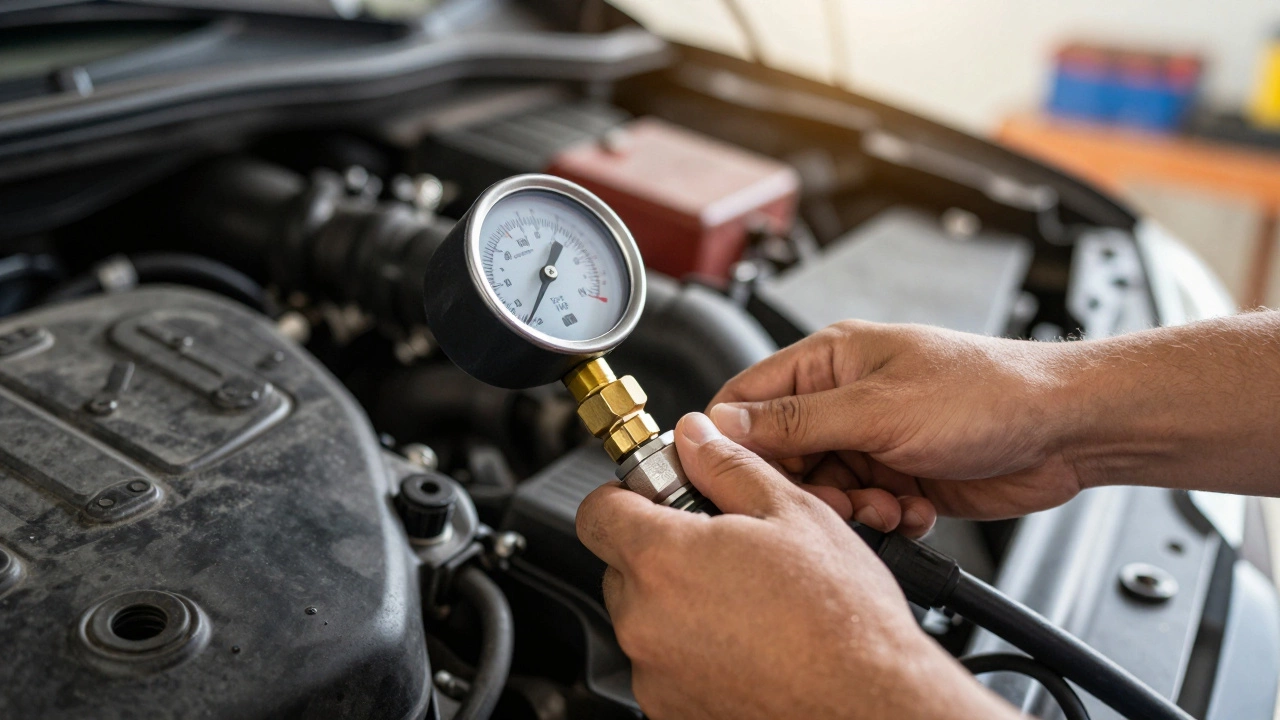
If you suspect a bad pump but have no codes, you need to perform a physical test. This requires a fuel pressure gauge is a mechanical tool used to measure the actual PSI of fuel in the rail.. Most auto parts stores rent these for free if you leave a deposit.
- Locate the Test Port: Find the Schrader valve on the fuel rail (similar to a tire valve). Remove the cap.
- Connect the Gauge: Screw the gauge onto the port securely.
- Prime the System: Turn the key to the "On" position (do not start) three times. Listen for the pump humming. Note the pressure reading.
- Compare to Specs: Look up your car’s specifications. A typical modern gasoline engine needs between 35 and 65 PSI. Diesel engines require significantly higher pressures (often 50+ PSI for older models, much higher for common rail).
- The Drop Test: Let the engine run for a minute, then turn it off. Watch the gauge. The pressure should hold steady for several minutes. If it drops rapidly, you have a leaking check valve in the pump or a leak in the lines.
If the pressure is lower than spec while running, or drops too fast when off, the pump (or its internal check valve) is guilty. This test provides definitive proof that a scanner cannot offer.
Don't Forget the Easy Culprits First
Before you drop $400 on a new fuel pump assembly, check the cheaper components. A scanner might point to "low pressure," but it can’t distinguish between a weak pump and a blocked path.
The Fuel Filter: On many cars, the filter is inline and replaceable. On others, it’s inside the tank and lasts forever. If yours is serviceable, change it. A clogged filter restricts flow just like a bad pump, causing identical symptoms and potentially triggering a P0087 code.
The Fuel Pressure Regulator: Located on the fuel rail or intake manifold, this valve bleeds off excess pressure. If it sticks open, pressure drops. If it sticks closed, pressure spikes. Replacing a regulator costs a fraction of a pump swap.
Electrical Connections: Corrosion at the pump connector in the trunk or under the rear seat can cause voltage drop. The pump tries to spin but lacks the power. A multimeter test here can save you from pulling the tank.
When to Trust the Scanner
There are scenarios where the code reader is your best friend. If you see a P0087 code, combined with a confirmed low pressure reading from your gauge, you have a solid diagnosis. The scanner identified the symptom; the gauge identified the cause.
Additionally, live data mode on advanced scanners can show real-time fuel trim values. Long-term fuel trims above +10% indicate the engine is running lean, forcing the ECU to add more fuel to compensate. While this doesn’t prove the pump is bad, it confirms the engine is starving for fuel, narrowing your search to air leaks or fuel delivery issues.
Can a cheap $20 code reader detect a bad fuel pump?
A basic code reader can only read stored trouble codes. If the fuel pump failure hasn't triggered a specific code like P0087, the reader will show nothing. Cheap readers also lack live data features, which could help diagnose fuel trim issues indirectly.
What does P0087 mean for my fuel pump?
P0087 stands for "Fuel Rail/System Pressure Too Low." It suggests the pump isn't delivering enough pressure, but it could also be caused by a clogged filter, a bad fuel pressure sensor, or a leaking fuel line. Always verify with a pressure test before replacing the pump.
Why does my car hesitate but have no check engine light?
Hesitation without a light often indicates mechanical wear in the fuel pump or a partially clogged fuel filter. The ECU may not detect the issue if the pressure drop isn't severe enough to cross the threshold for setting a permanent fault code.
Is it safe to drive with a suspected bad fuel pump?
It is risky. A failing pump can stall unexpectedly, especially under load or on highways, creating a safety hazard. Additionally, running lean due to low fuel pressure can overheat and damage the catalytic converter, leading to much more expensive repairs.
How do I test the fuel pump without removing the tank?
You can test electrical continuity at the pump connector using a multimeter and listen for the priming hum with a mechanic's stethoscope or a screwdriver held to your ear. However, the only way to confirm mechanical performance is via a fuel pressure gauge connected to the rail test port.