Suspension Noise Diagnostic Tool
Hearing a strange noise from your car? Select the type of sound and when it happens to get an instant preliminary diagnosis.
Diagnosis
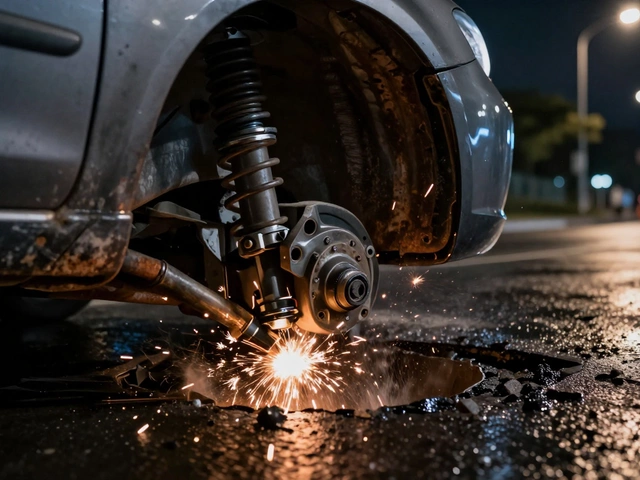
You’re cruising down a familiar stretch of road when suddenly-clunk. Or maybe it’s a high-pitched squeak every time you hit a speed bump. If your car has started talking back with weird noises, your suspension is likely trying to tell you something important. It’s not just annoying; it’s a warning sign that parts are wearing out or failing. Ignoring these sounds can lead to unsafe driving conditions and much pricier repairs later on.
| Noise Type | When It Happens | Likely Culprit | Urgency |
|---|---|---|---|
| Clunking or Knocking | Over bumps, potholes, or turning | Worn ball joints, control arm bushings, or strut mounts | High - Safety Risk |
| Squeaking or Squealing | Bouncing over small bumps or cold starts | Dry bushings, worn shock absorbers, or lack of lubrication | Medium - Comfort/Performance |
| Rattling or Rattling | At low speeds or over rough roads | Loose sway bar links, heat shields, or broken springs | Low/Medium - Annoyance/Damage |
| Grinding or Growling | While turning or accelerating | Wheel bearings (often mistaken for suspension) | High - Tire/Wheel Damage |
The Clunk: When Metal Hits Metal
A loud clunking noise is one of the most common complaints from drivers. This deep, hollow sound usually happens when you go over a bump or turn the steering wheel sharply. Think of it like shaking a box of loose tools. If everything was tight, it would be silent. But if a tool comes loose, it bangs around.
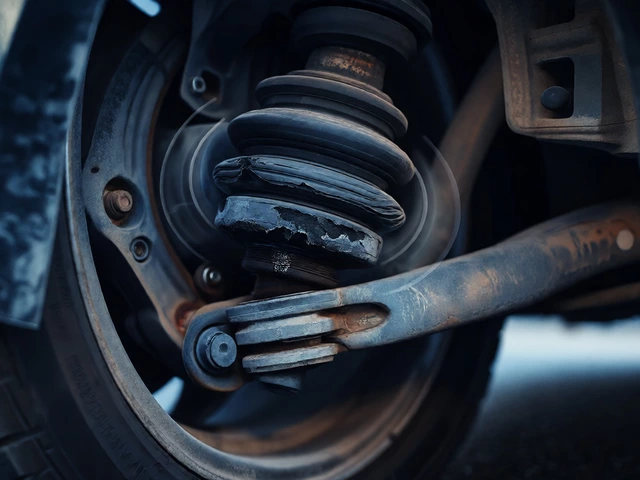
In your car, the "loose tools" are often the ball joints, which connect the control arms to the steering knuckles. When the rubber boot protecting them tears, grease leaks out, and dirt gets in. The joint wears down, creating play. That play turns into a knock every time the suspension compresses. Another frequent offender is the sway bar link. These thin metal rods stabilize your car during turns. When their end links wear out, they rattle and clunk, especially at low speeds over uneven pavement.
If you hear this noise, don’t ignore it. Worn ball joints can eventually separate, causing the wheel to collapse. That’s not just a repair bill; it’s an accident waiting to happen. Check the boots first-if they’re cracked or missing, the joint is likely gone.
Squeaks and Groans: The Dry Rubber Problem
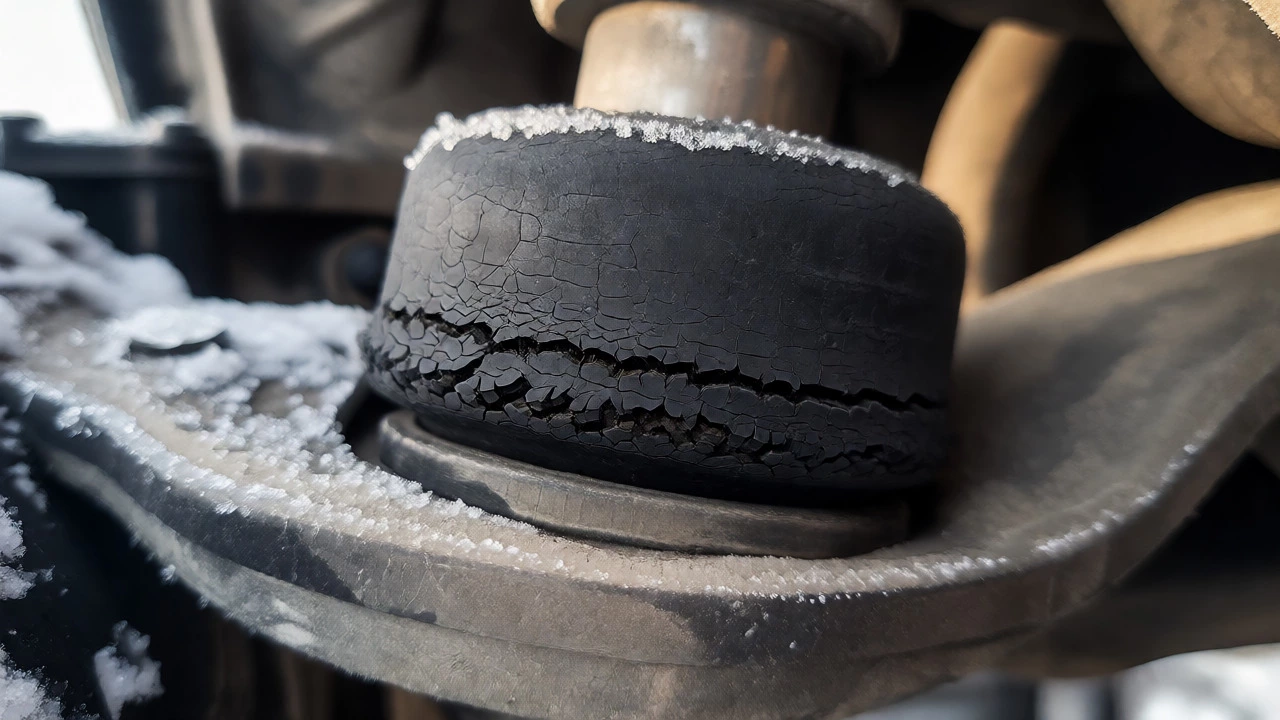
Have you ever walked across a dry wooden floorboard that creaks? Your car’s suspension does something similar when its rubber components dry out. Control arm bushings are rubber sleeves that cushion the movement between metal parts. Over time, exposure to sun, salt, and temperature changes causes the rubber to harden and crack.
When these bushings lose flexibility, they no longer absorb vibration quietly. Instead, they emit a high-pitched squeak or groan whenever the suspension moves up and down. This is particularly noticeable in winter when the rubber is colder and stiffer. Sometimes, a quick spray of silicone-based lubricant can silence the noise temporarily. But if the rubber is visibly cracked, replacement is the only permanent fix.
Don’t confuse this with brake squeal. Brake noise usually happens when you press the pedal. Suspension squeaks happen when you bounce the car or drive over bumps, regardless of braking.
Rattles: Loose Ends and Broken Springs
A persistent rattle is maddening. It sounds like something is loose in the trunk, but you’ve already checked. Often, the culprit is under the car. Heat shields attached to the exhaust system can rust and loosen, vibrating against the pipes. While not strictly suspension, they’re often mistaken for it because the noise location feels similar.
However, true suspension rattles often come from broken coil springs. If a spring fractures, the sharp edge can poke through its protective coating and scrape against the strut housing or tire. You might also hear a metallic ping as the broken pieces shift slightly during cornering. Inspect the springs visually for any signs of breakage or severe corrosion. A broken spring isn’t just noisy; it reduces ride height and handling stability.
Another source of rattling is loose lug nuts or wheel weights. Before blaming the suspension, tighten your wheels. It’s a free check that saves hours of diagnostic frustration.
Growls and Humming: Is It Really the Suspension?
Sometimes, what feels like a suspension problem is actually a wheel bearing issue. Wheel bearings allow the wheel to spin freely with minimal friction. When they wear out, they produce a growling or humming noise that increases with speed. Unlike suspension knocks, which are tied to road surface irregularities, bearing noise is constant once you reach a certain speed.
Here’s a simple test: drive straight at 30-40 mph. Listen carefully. Then gently steer left and right while maintaining speed. If the noise changes volume when you turn, it’s likely a bad wheel bearing on the opposite side of the turn. For example, if the noise gets louder when you turn right, the left bearing is probably failing. This distinction matters because replacing a bearing is different from replacing shocks or struts.
How to Diagnose the Noise Yourself
You don’t need expensive equipment to start diagnosing suspension noises. Here’s a practical approach:
- The Bounce Test: Park on a flat surface. Push down hard on each corner of the car and release. It should rebound once and settle. If it bounces multiple times, your shock absorbers or struts are worn out. Worn shocks don’t always make noise immediately, but they degrade handling and can cause secondary noises from other components working harder.
- The Visual Inspection: Look under the car for oil leaks. Shock absorbers and struts have hydraulic fluid inside. If you see wet, oily residue on the body of the strut, it’s leaking and needs replacement.
- The Road Test Variation: Drive slowly over a known bump. Note the exact moment the noise occurs. Does it happen on compression (going down) or extension (coming up)? Compression noises often point to lower control arm bushings or ball joints. Extension noises might indicate worn strut mounts or top hats.

Why Ignoring Suspension Noises Costs More
It’s tempting to live with a slight squeak or occasional clunk. But suspension components work together as a system. When one part fails, others compensate, leading to accelerated wear. For instance, a worn ball joint puts extra stress on the tie rod ends. Eventually, those fail too. Then the alignment goes off, causing uneven tire wear. Suddenly, you’re paying for new tires, tie rods, and alignment services-all because you ignored a $50 ball joint three months ago.
Moreover, safety is paramount. A failed component at highway speeds can result in loss of control. In the UK, where road surfaces vary from smooth motorways to cobblestone city centers, suspension health directly impacts your ability to stop and steer predictably.
Frequently Asked Questions
Can I drive with a clunking noise?
Short-term, yes, but cautiously. Avoid high speeds and aggressive maneuvers. Long-term, no. A clunk indicates significant play in critical steering or suspension components. Continuing to drive can lead to catastrophic failure, such as a separated ball joint, which could cause the wheel to detach.
Is squeaking always a sign of bad suspension?
Not always. Squeaking can come from brake pads, belts, or even interior trim. However, if the squeak correlates with vertical movement (bumps), it’s likely suspension-related, specifically dry bushings or worn shocks. Try spraying a little silicone lubricant on visible rubber bushings. If the noise stops, you’ve identified the source.
How much does it cost to fix suspension noises?
Costs vary widely based on the part and labor rates. Replacing sway bar links might cost £100-£200 per pair. Ball joints range from £150-£400 per side including labor. Full strut replacements can run £300-£600 per axle. Always get a detailed quote specifying parts vs. labor.
Do all cars make some noise?
Yes, minor creaks in extreme cold or over large potholes are normal. However, consistent, rhythmic, or loud noises are not. Modern cars are engineered for quiet operation. If the noise is new or worsening, it warrants investigation.
Can bad alignment cause suspension noises?
Alignment itself doesn’t typically cause knocking or squeaking. However, misalignment causes uneven tire wear, which can create a humming or grinding noise. Additionally, if alignment issues stem from worn suspension parts, those underlying parts will make noise. Fix the parts first, then align.
Next Steps: What to Do Now
If you’ve identified a suspicious noise, here’s your action plan:
- Document the Noise: Record a video or audio clip while driving safely. Note the speed, road condition, and steering input. This helps mechanics diagnose faster.
- Check Basic Items: Ensure tires are properly inflated and lug nuts are tight. Remove any debris stuck in tread patterns.
- Visit a Trusted Mechanic: Bring your recording. Ask them to inspect ball joints, tie rods, bushings, and shocks. Request a written estimate before authorizing repairs.
- Prioritize Safety-Critical Repairs: Address ball joints, tie rods, and major strut failures immediately. Cosmetic or minor squeaks can wait if budget is tight, but don’t delay indefinitely.
Remember, your suspension is your car’s interface with the road. Keeping it healthy ensures smoother rides, better fuel efficiency, and safer stops. Listen closely next time you drive-you might catch a problem before it becomes a crisis.