Engine Oil Health Diagnostic Tool
Select the symptoms your vehicle is exhibiting to determine the urgency of the situation.
What are you noticing?
Please select a symptom to see the diagnosis
Diagnostic Assessment
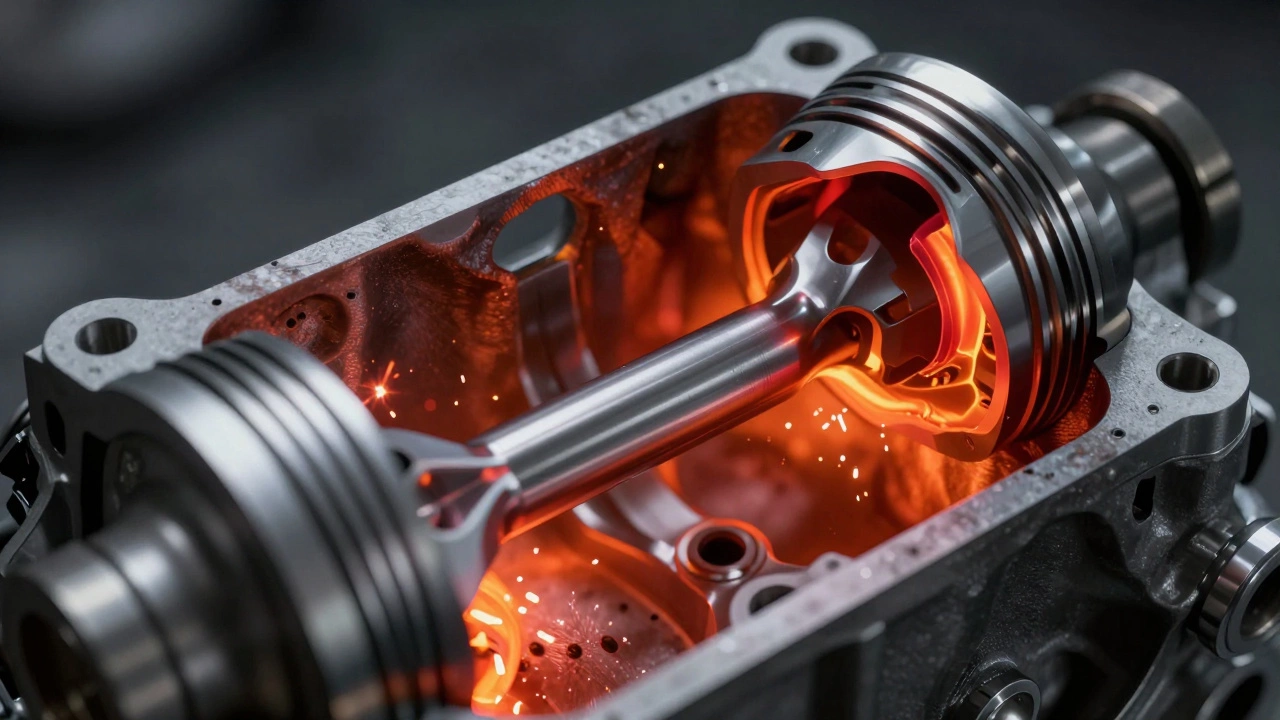
The first thing to understand is that Engine Oil is a viscous lubricant designed to reduce friction between moving metal parts within an internal combustion engine. Without it, metal rubs against metal at thousands of revolutions per minute. This generates heat so intense it can weld pistons to cylinder walls in a matter of seconds. If you're seeing a flickering light or smelling something burnt, you're already in the danger zone.
The Immediate Warning Signals
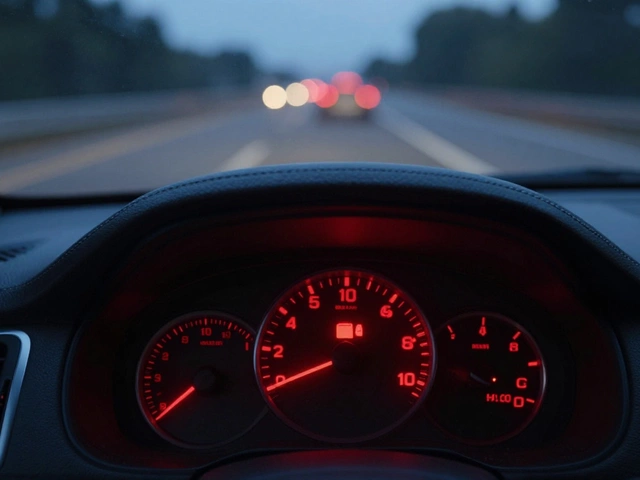
Your car won't just stop out of nowhere; it will give you a series of clues. The most obvious is the Oil Pressure Light. This isn't just a "low level" warning; it's a "no pressure" warning. When this red oil can symbol pops up on your dashboard, it means the Oil Pump is no longer able to push oil to the top of the engine. If you keep driving with this light on, you're essentially gambling with the life of your car.
Another red flag is the sound of ticking or tapping. This usually happens in the top part of the engine where the Valve Train is located. When oil is low, the hydraulic lifters can't maintain the correct gap, leading to a rhythmic clicking sound. It sounds like a sewing machine on steroids. If you hear this, pull over immediately. The engine is telling you that the oil isn't reaching the critical components at the top of the block.
Why Your Engine Starts Overheating
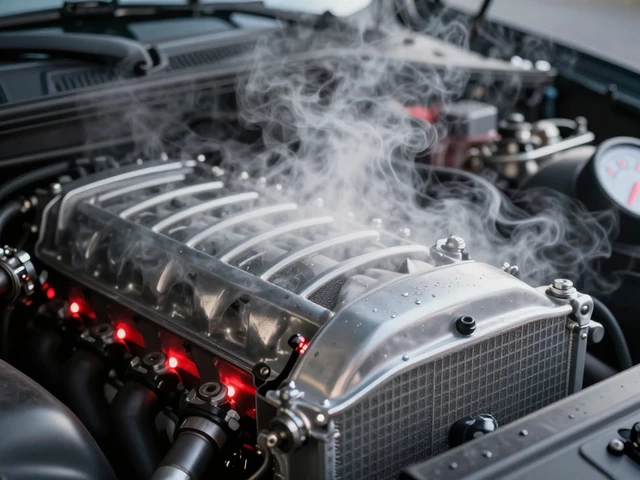
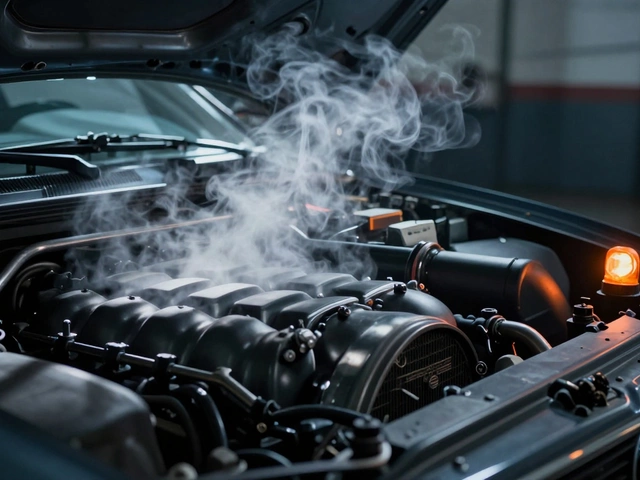
You might think the Cooling System is the only thing keeping your car cool, but oil plays a massive role. Oil absorbs heat from the pistons and carries it away to the Oil Pan where it can cool down. When oil levels drop, the friction increases exponentially. More friction means more heat, and eventually, the coolant can't keep up. Your temperature gauge will start climbing into the red, even if your radiator is working perfectly.
In severe cases, you'll smell burning oil. This happens because the remaining oil is being overworked and heated past its flash point. It's a pungent, acrid smell that differs from the sweet scent of leaking coolant. If you see a plume of blue smoke coming from the exhaust, that's a sure sign that oil is leaking past the Piston Rings and burning in the combustion chamber.
The Performance Drop and Engine Knock
As the oil disappears, you'll notice your car feels "sluggish." The engine has to work harder to move parts that are no longer gliding on a thin film of lubricant. You might feel a hesitation during acceleration or notice that the engine struggles to maintain a steady idle. This is the beginning of the end; the internal components are beginning to warp from the heat.
Then comes the "knock." Engine Knocking is a deep, metallic thudding sound. This occurs when the bearings-which are essentially thin shells of metal-wear through completely. Once the bearing fails, the crankshaft actually bangs against the engine block. At this point, the damage is usually permanent. You're no longer looking at a simple top-up; you're looking at a full rebuild.
Comparing the Stages of Oil Loss
| Stage | Symptom | Engine Condition | Urgency |
|---|---|---|---|
| Mildly Low | Oil level below min mark on dipstick | Increased wear on bearings | Check within 24 hours |
| Dangerously Low | Ticking sounds, Oil light flickers | Incomplete lubrication of valve train | Stop immediately |
| Critical Failure | Loud knocking, Engine overheating | Metal-on-metal contact, bearing failure | Catastrophic / Engine Seizure |
How to Properly Check Your Oil
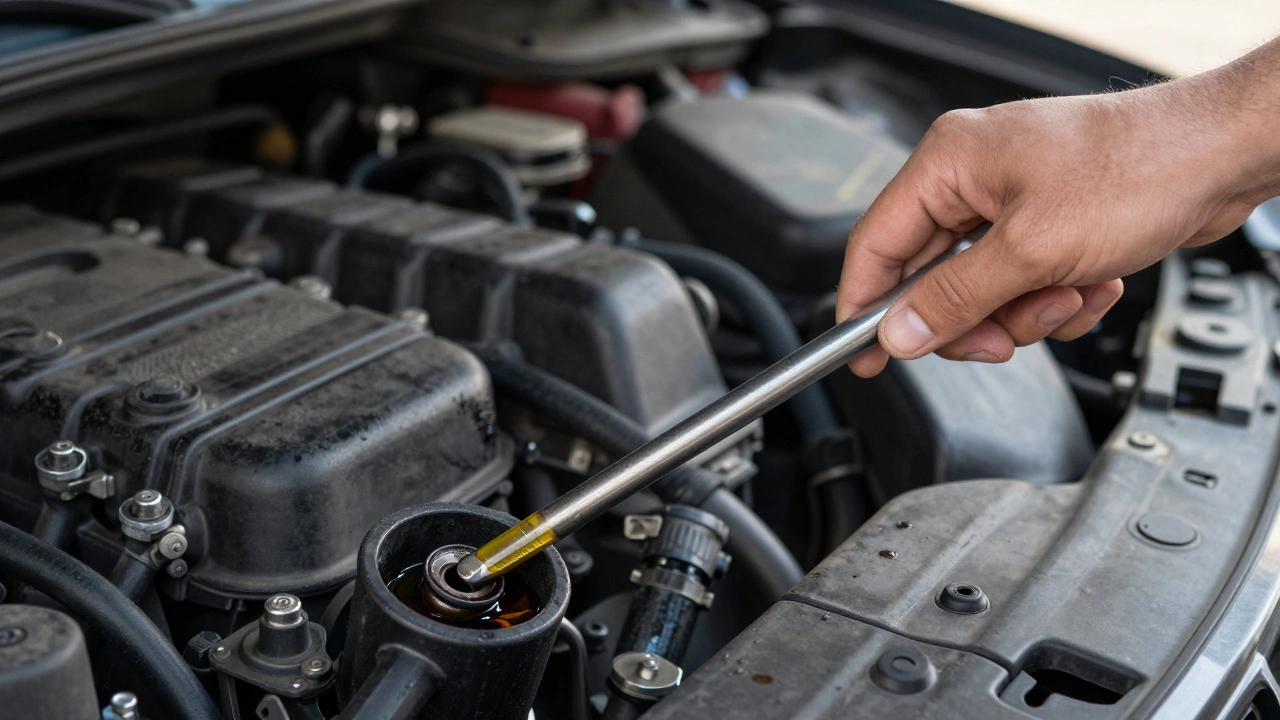
Don't trust the electronic sensor alone. The old-school dipstick is still the most reliable way to see what's happening. Park your car on level ground and let the engine cool for about 10 minutes. This allows the oil to drain back down into the Sump so you get an accurate reading. Pull the dipstick out, wipe it clean with a lint-free rag, reinsert it fully, and pull it out again. If the oil level is below the bottom dot, you're in the danger zone.
When adding oil, don't just pour it in. Add a small amount, wait a minute, and check the dipstick again. Overfilling your oil can be just as bad as underfilling it. Too much oil can cause the crankshaft to whip the oil into a foam, which creates air bubbles. Air doesn't lubricate, so you can actually experience oil starvation even with a full sump if the oil is foaming.
Common Causes of Sudden Oil Loss
If you're losing oil faster than normal, you likely have one of three problems. First, external leaks. Check the ground where you park for dark brown spots. Often, a perished Valve Cover Gasket is the culprit. Second, internal leaks. If you see blue smoke, your piston rings or valve stem seals are likely worn, allowing oil to enter the combustion chamber.
Third, there's the issue of "oil consumption." Some modern engines, especially those with turbochargers, naturally burn a small amount of oil. However, if you're adding a litre every few hundred miles, something is wrong. Check your PCV Valve (Positive Crankcase Ventilation). If this valve clogs, it can build up pressure in the crankcase, forcing oil past seals and into the intake manifold.
Quick Checklist for Oil Health
- Check the Dipstick: Do this weekly or before every long trip.
- Monitor the Dashboard: Never ignore a flickering oil light, even for a second.
- Look for Leaks: Inspect your driveway for drips.
- Listen for Changes: Be alert for new ticking or knocking sounds.
- Watch the Exhaust: Blue smoke equals burning oil.
Can I drive a short distance if the oil light is on?
No. The oil light indicates a lack of oil pressure. Within seconds, critical engine components can overheat and weld together. Even a 5-minute drive can cause permanent damage to your bearings and camshafts. Pull over and add oil immediately.
What is the difference between oil consumption and an oil leak?
An oil leak is when oil escapes the engine and drips onto the ground or coats the exterior of the block. Oil consumption is when oil enters the combustion chamber and is burned along with the fuel, often leaving blue smoke from the tailpipe.
Does synthetic oil prevent low oil levels?
Synthetic oil doesn't stop leaks, but it is more stable at high temperatures and resists breaking down. This can reduce the amount of oil burned in some engines, but you still need to check levels regularly regardless of the oil type.
Why does the engine sound louder when oil is low?
Oil acts as a cushion between moving parts. Without that cushion, you hear the actual impact of metal hitting metal. This is most noticeable in the top of the engine where the valves and lifters operate.
Will adding oil fix a knocking sound?
If the knocking started because of low oil, adding oil might stop the sound if the damage is minimal. However, if you hear a deep "rod knock," the bearings are already destroyed. Adding oil won't fix a physically worn-out bearing; you'll need a mechanical repair.