Adding Engine Oil: What You Need to Know Before You Pour
When you’re adding engine oil, the process of topping up or refilling the lubricant that keeps your engine running smoothly. Also known as motor oil top-up, it’s one of the simplest car maintenance tasks—but do it wrong, and you risk serious damage. Most drivers think oil is something you only change every 5,000 miles, but low oil levels can kill your engine faster than you think. You don’t need to wait for the warning light. Checking and adding oil regularly is like checking your tire pressure—it’s basic, it’s cheap, and it saves you thousands.
Engine oil, a specialized fluid designed to reduce friction, cool parts, and clean debris inside your engine breaks down over time, especially in stop-and-go traffic or extreme heat. Even if you’re not due for a full oil change, your oil level can drop due to leaks, burning, or normal consumption. Cars with high-mileage engines often burn oil faster—some lose a quarter of a liter every 1,000 miles. That’s why checking your dipstick every few weeks isn’t optional. It’s insurance.
Oil level, the amount of oil sitting in your engine’s sump, measured by the dipstick should always sit between the minimum and maximum marks. Too little, and your engine parts start grinding. Too much, and the crankshaft whips the oil into foam, starving critical components of lubrication. Both scenarios lead to overheating, loss of power, or worse—total engine failure. And no, pouring in whatever oil is lying around won’t work. You need the right viscosity (like 5W-30 or 10W-40) and type (synthetic, semi-synthetic, or mineral) for your car. Check your manual. Don’t guess.
Adding engine oil isn’t magic. It’s measuring, matching, and monitoring. You need a clean funnel, the correct oil grade, and a few minutes of your time. If you notice you’re adding oil more than once a month, you’ve got a leak or a bigger problem. Don’t ignore it. That’s why the posts below cover everything from how to spot oil leaks to why synthetic oil behaves differently than conventional oil, and what happens when you skip oil changes entirely. Whether you’re new to car care or you’ve been doing it for years, these guides give you the real facts—not the myths. No fluff. Just what you need to keep your engine alive.
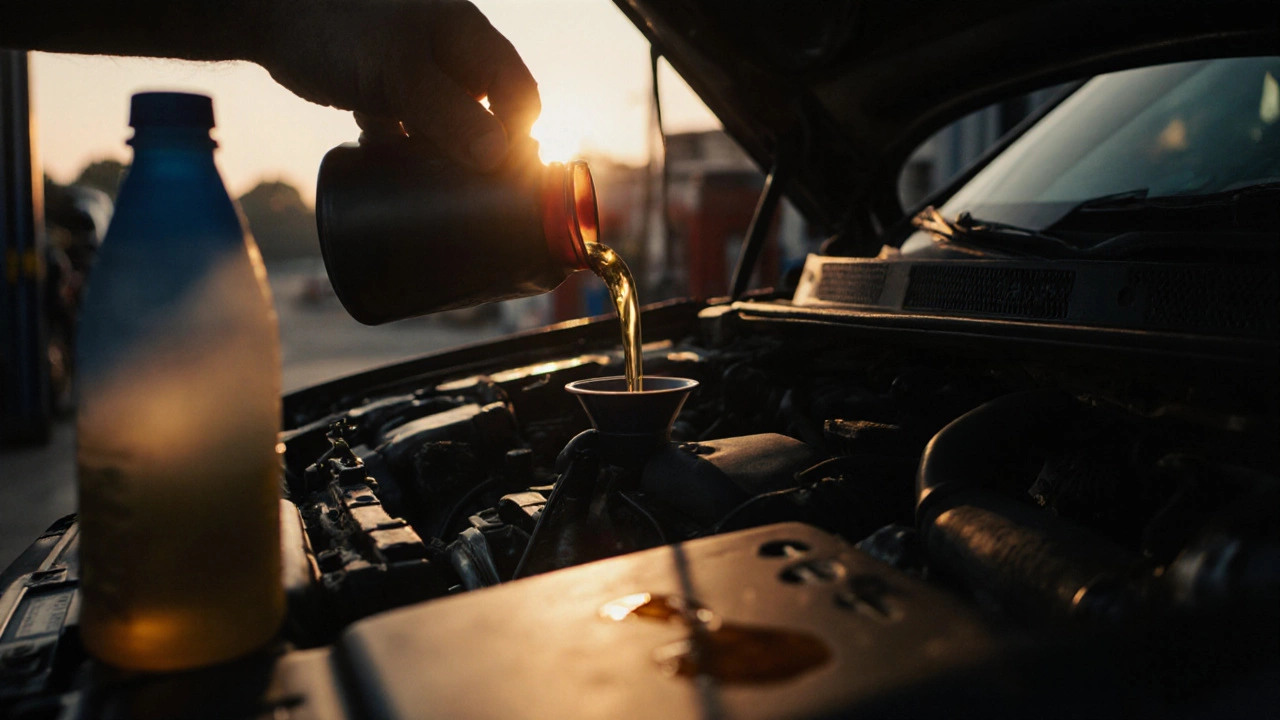
Does the Engine Need to Be Running When Adding Oil? Here's What Really Happens
Adding oil to a running engine is dangerous and inaccurate. Learn the correct way to check and add engine oil without risking overfill, foaming, or engine damage. Simple steps for every car owner.
November 17 2025