Suspension Symptom Checker
Select the symptoms you are experiencing with your vehicle to receive a preliminary diagnosis and severity assessment.
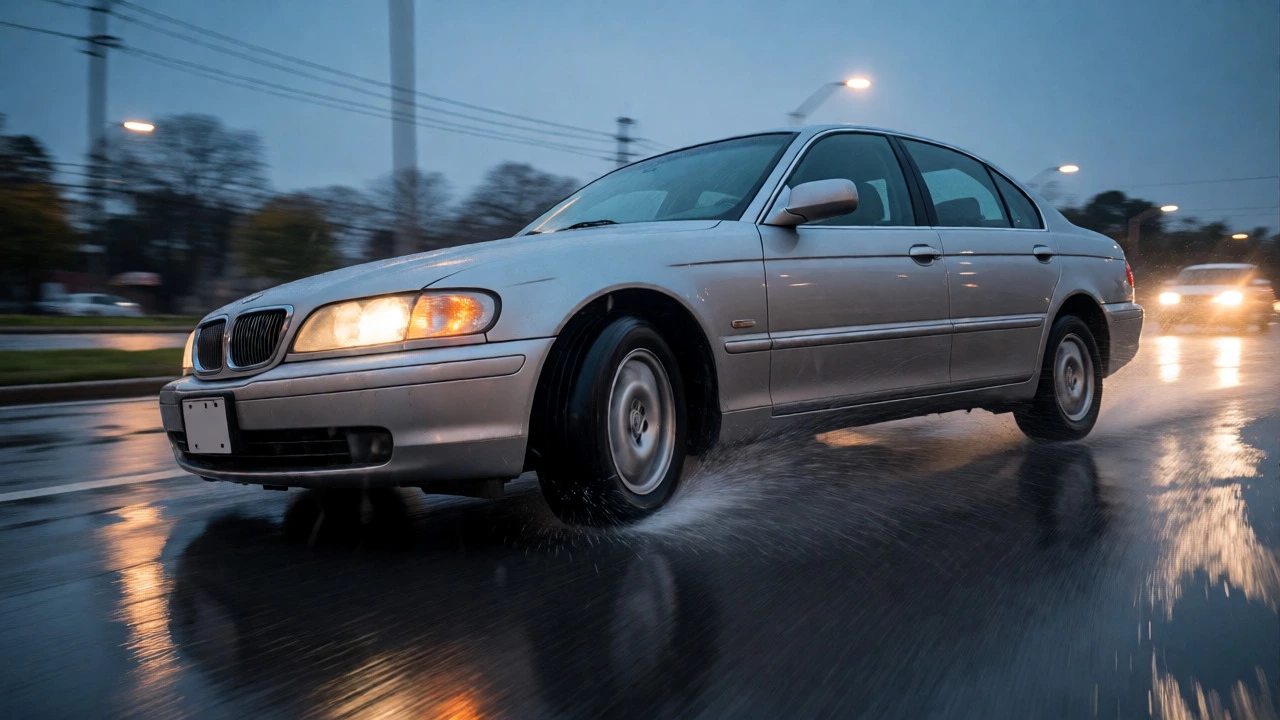
You’re driving down a familiar stretch of road, maybe the one with those nasty potholes near the corner shop. Suddenly, your car feels weird. It bounces like a rubber ball or wanders into the next lane when you hit a bump. Most drivers ignore this, assuming it’s just "how the car drives." But that bounce? That’s usually shock absorbers crying for help. If they’re worn out, you aren’t just losing comfort; you’re losing control. And in wet conditions, that can be the difference between stopping safely and sliding past the junction.
Shocks are part of your vehicle’s suspension system, which also includes springs, struts, and control arms. While people often say "shocks" and "struts" interchangeably, they do different jobs. Struts hold up the car and keep the wheel aligned. Shocks dampen the oscillation of the springs. When either fails, your tires lose contact with the road. Here is how to tell if yours are on their last legs before you end up in a ditch.
The Bounce Test: A Quick DIY Check
You don’t need a mechanic’s lift to get a preliminary answer. There is a classic trick called the bounce test. Park your car on flat ground. Walk to each corner of the vehicle. Push down hard on the bumper or fender until it bottoms out, then let go instantly.
Watch what happens. A healthy suspension will rebound once and settle immediately. If your car bounces two, three, or four times like a pogo stick, the damping fluid inside the shock is gone. The piston isn’t resisting the spring’s energy anymore. This test works best on older cars where wear is obvious. On newer cars with stiff sport suspensions, it might be harder to spot, but excessive bouncing is never good news.
Visual Clues Under the Wheel Arch
Sometimes, the damage is visible if you know where to look. Grab a flashlight and crouch down by each wheel. Look at the shock absorber body (the cylinder). What should you see?
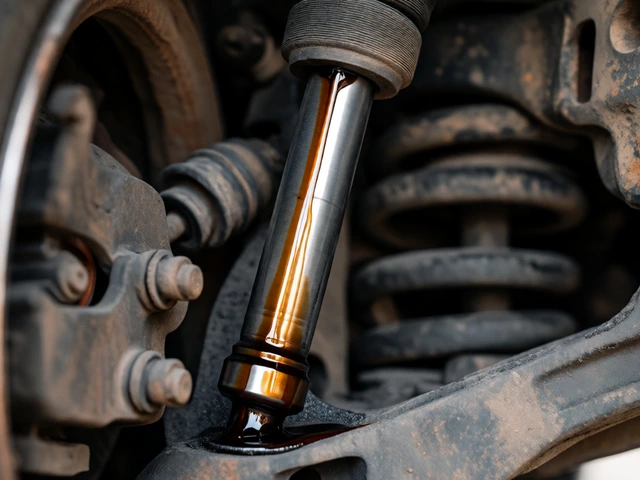
- Oil Leaks: This is the smoking gun. If you see dark, oily residue running down the shaft or pooling around the base, the internal seal has failed. Without oil, there is no friction to stop the bounce. Replace them immediately.
- Bent Shafts: Did you recently hit a curb or a deep hole? A bent piston rod means the shock cannot move smoothly. It will bind or leak almost instantly.
- Dust Patterns: Clean shocks are dusty all over. Dirty, oily spots indicate active leaking. Conversely, if a section is unusually clean while the rest is dirty, oil might be washing away the dust as it leaks.
- Torn Boots: Many shocks have rubber dust boots. If these are ripped, dirt gets into the seals, accelerating failure. You might not need to replace the shock yet, but you definitely need to replace the boot.
How Your Car Behaves on the Road
Your hands and ears tell you more than your eyes sometimes. Worn shocks change the dynamics of driving in subtle ways that accumulate over time. Here are the specific sensations to watch for:
Nose Diving: When you brake hard, does the front of your car dip significantly? Healthy shocks resist this weight transfer. If the nose drops aggressively, your front shocks are weak. This increases stopping distance because the rear tires lose traction and the front tires overload.
Rear Squat: Accelerate quickly from a stoplight. Does the back of the car squat down? This puts too much weight on the rear wheels and lifts the front wheels off the road, reducing steering response. It’s dangerous if you’re trying to turn while accelerating.
Body Roll: Take a roundabout at normal speed. If you feel like you’re tipping over in a boat, the shocks aren’t controlling the sway. This makes passengers dizzy and makes the driver nervous. More importantly, it delays the car’s return to level, meaning you’re slower to react to the next curve.
Steering Wander: On straight roads, especially with slight crowns or ruts, does the car drift left or right without you touching the wheel? Worn shocks allow the tires to hop slightly on uneven surfaces. This breaks the consistent grip needed for stable steering.
Tire Wear Patterns Tell the Story
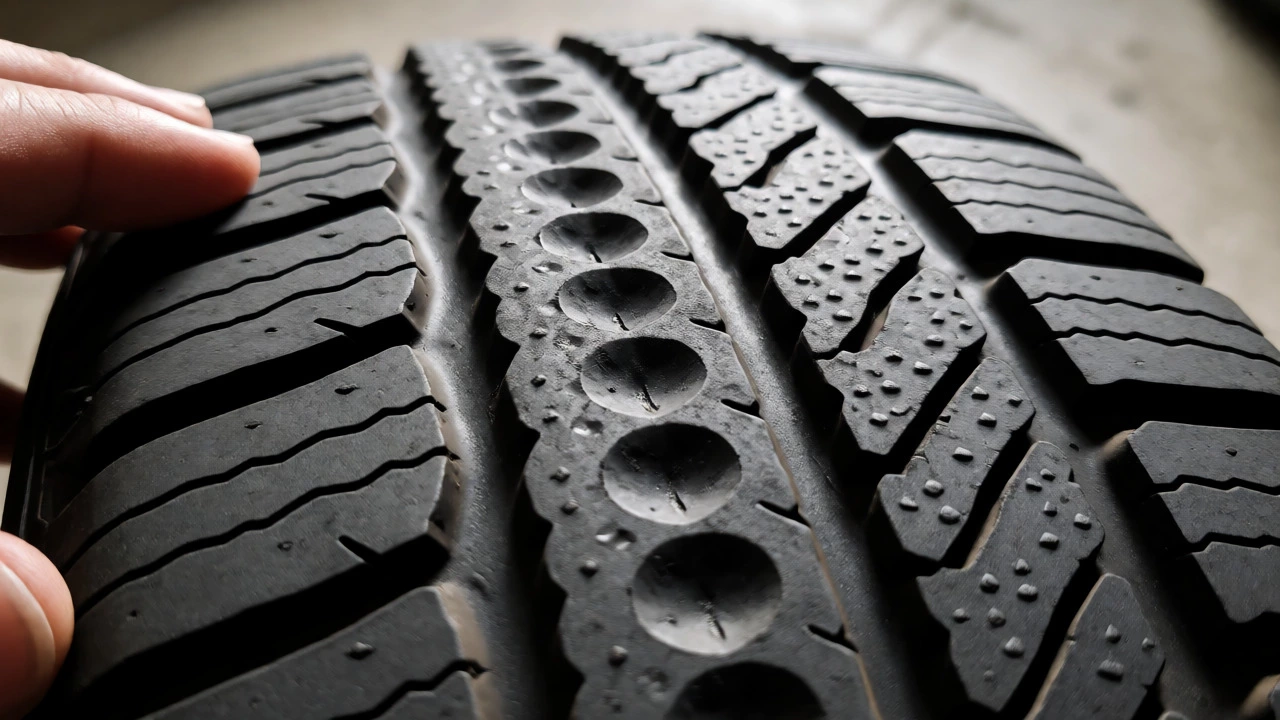
Check your tire treads. This is often the first sign owners notice before they hear noises. Healthy tires wear evenly across the width. Damaged shocks cause a specific pattern called cupping (or scalloping).
Cupping looks like patches of high and low spots on the tread, similar to a golf ball surface. It happens because the tire is literally hopping on the road surface due to lack of damping. Each hop leaves a small patch of extra wear. You can feel this by running your hand over the tread. If it feels rough and uneven rather than smooth, your shocks are likely compromised. Cupped tires are noisy-they create a constant hum that changes with speed-and they reduce wet grip significantly.
Noises and Vibrations
A failing shock doesn’t always stay silent. Listen for these sounds:
- Clunking or Knocking: Often heard when going over bumps. This could be the shock bottoming out completely because the travel limit is exceeded, or a loose mounting bolt caused by vibration.
- Squeaking: Dry bushings or metal-on-metal contact inside the strut assembly can cause squeaks when turning or compressing.
- Wind Noise: If the shock shaft is bent or the mount is broken, air turbulence around the wheel well might increase wind noise at highway speeds.
| Symptom | Likely Shock Issue | Severity |
|---|---|---|
| Excessive bouncing after a bump | Loss of damping fluid/seal failure | High - Safety Risk |
| Oily residue on shock body | Internal seal breach | Medium - Monitor Closely |
| Cupped tire wear | Chronic under-damping | Medium - Costly Tires |
| Nose dive during braking | Weak front shocks | High - Stopping Distance |
| Clunking over bumps | Bottoming out or loose mounts | Low/Medium - Inspect Mounts |
When to Replace: Pairs or All Four?
Mechanics will almost always recommend replacing shocks in pairs-both fronts or both rears. Why? Because if one side is worn, the other is likely close behind. Replacing just one creates an imbalance. One side absorbs impact well, the other doesn’t. This causes the car to pull to one side under braking and accelerates wear on the new unit.
If your car has high mileage (over 60,000 miles) and both sets are original, consider doing all four. It ensures uniform handling characteristics. However, if only the rear shocks are blown and the fronts are tight, doing just the rear pair is acceptable, provided you monitor the fronts closely.
Consequences of Ignoring Bad Shocks
It’s tempting to drive on bad shocks because the car still moves. But here is what you risk:
Longer Stopping Distances: Tests show that worn shocks can increase braking distance by up to 2 meters on dry pavement and even more on wet roads. In an emergency, those meters matter.
Reduced Tire Life: Cupping destroys tires prematurely. You’ll buy new tires twice as often.
Stress on Other Components: Shocks protect other parts. When they fail, springs, CV joints, and wheel bearings take extra abuse. A £50 shock repair now might save you a £300 CV joint repair later.
Driver Fatigue: Fighting a wandering car requires constant micro-corrections. You arrive home more tired than necessary.
Final Thoughts on Diagnosis
If you suspect your shocks are done, don’t rely solely on the bounce test. Combine it with visual inspection and tire check. If you see oil, feel cupping, or experience nose diving, book an inspection. Suspension components are cheap compared to the cost of an accident or ruined tires. Keep your car planted, safe, and comfortable by addressing these signs early.
Can I drive with bad shocks?
Yes, you can drive short distances, but it is unsafe. Bad shocks increase stopping distances and make the car unpredictable in wet weather or emergencies. Avoid high speeds and long trips until repaired.
How long do shock absorbers last?
Typically, shocks last between 50,000 and 100,000 miles. However, harsh driving conditions, frequent potholes, and heavy loads can shorten this lifespan significantly.
What is the difference between shocks and struts?
Struts are structural parts of the suspension that support the vehicle's weight and maintain alignment. Shocks are non-structural dampers that control spring movement. Struts are more expensive and complex to replace.
Do bad shocks affect fuel economy?
Indirectly, yes. Poor suspension leads to increased rolling resistance and erratic aerodynamics due to body roll. Additionally, premature tire wear reduces efficiency. Keeping shocks in good condition helps maintain optimal fuel consumption.
Is it worth repairing old shocks?
For most modern cars, no. Replacement units are relatively affordable and offer better performance. Rebuilding is mostly reserved for classic cars or specialized off-road vehicles where original parts are unavailable.