Brake Caliper Cost Estimator
- Always replace in pairs: Front or rear axles should be done together for safety.
- Pads are mandatory: You cannot install new calipers without fresh pads.
- Check rotors: If they are grooved or thin, replacing them now saves money later.
- Fluid flush: Old fluid causes corrosion inside new parts. Highly recommended.
Estimated Cost Breakdown
*Estimates based on UK market averages for 2026. Actual costs may vary by location and specific vehicle model complexity.
You hear that annoying squeal or feel the steering wheel pull to one side, and your mechanic drops the bomb: you need a new brake caliper is the hydraulic component that squeezes brake pads against rotors to stop your vehicle. The question on everyone’s mind isn’t just "what is it?" but "how much will this hurt my wallet?" It is a valid concern. A single brake caliper replacement can range from a manageable £150 to a staggering £800+, depending entirely on your car, where you live, and who does the work.
Getting a vague estimate like "it depends" is frustrating. You want numbers. You want to know if you are being quoted fairly. This guide breaks down the real costs of brake calipers in 2026, separating parts from labor, and explaining why some cars cost triple others to fix.
The Quick Breakdown: What You Will Pay
Before we get into the weeds, here is the snapshot most people look for. These figures include both the part and the labor for a standard passenger vehicle in the UK market as of mid-2026.
| Vehicle Type | Economy Sedan/Hatchback | Mainstream SUV/Crossover | Luxury/Performance Car |
|---|---|---|---|
| Front Caliper | £180 - £350 | £250 - £450 | £400 - £900+ |
| Rear Caliper | £150 - £300 | £200 - £400 | £350 - £700+ |
| All Four Calipers | £600 - £1,200 | £800 - £1,600 | £1,500 - £3,000+ |
Notice the gap between economy and luxury? That is not just brand snobbery; it is engineering complexity. Let’s dig into what drives these prices up or down.
Part vs. Labor: Where Does the Money Go?
When you see a quote, it is usually split into two buckets: the hardware and the hours. Understanding this split helps you negotiate or decide whether to DIY.
The Hardware (The Caliper Itself)
A brake caliper assembly consists of the piston, seals, housing, and sometimes integrated parking brake mechanisms. Prices vary wildly based on quality and origin.
- OEM (Original Equipment Manufacturer): These are made by the company that built your car (e.g., Bosch, Brembo, Akebono). They fit perfectly and last long. Expect to pay 20-40% more than aftermarket options. For a Toyota Camry, an OEM front caliper might be £120-£180 per unit.
- Aftermarket/Value Brands: Brands like Centric or Wagner offer solid performance at a lower price point. They are great for daily drivers where extreme track performance isn't needed. Prices here might drop to £80-£120 per unit.
- Performance/Big Brake Kits: If you drive a Porsche 911 or a modified Subaru WRX, you might need multi-piston calipers. These aren't just replacements; they are upgrades. A single six-piston caliper for a performance car can easily exceed £500 for the part alone.
The Labor (The Mechanic's Time)
In the UK, independent garages typically charge between £80 and £120 per hour. Dealerships can charge £150+ per hour. Replacing a caliper isn't just swapping a bolt-on part. It involves:
- Removing the wheel and unbolting the old caliper.
- Bleeding the brake lines to remove air bubbles (critical for safety).
- Purging the old fluid and refilling with fresh DOT 4 or DOT 5.1 fluid.
- Often, replacing the brake pads and resurfacing or replacing the rotor simultaneously (since installing new pads on warped rotors causes vibration).
A professional job usually takes 1.5 to 2.5 hours per axle. So, labor alone could add £150-£300 to your bill before you even touch the part cost.
Why Some Cars Cost More to Fix
If you own a German luxury sedan, brace yourself. Here is why your bill looks different from your neighbor’s Ford Fiesta.
Complexity of Design
Many modern rear calipers integrate the electronic parking brake motor directly into the caliper body. This means you cannot simply rebuild the caliper; you must replace the entire unit. Furthermore, these motors require specific diagnostic tools to retract the piston safely. Without the right software, the mechanic can damage the actuator. This adds "programming time" to the labor bill.
Accessibility Issues
On some compact cars, the rear caliper is tucked behind the subframe or requires removing suspension components to access. On larger SUVs, the sheer size of the brakes means heavier tools and more physical effort. Mechanics charge for difficulty, not just time.
Brand Premiums
Dealership parts departments mark up OEM parts significantly. If you take a BMW X5 to a main dealer, you are paying for the badge, the warranty, and the specialized training. An independent specialist might use the exact same Bosch-made caliper but sell it for 30% less because their overhead is lower.
Repair vs. Replace: Is There a Middle Ground?
You might hear a mechanic suggest "rebuilding" a caliper. Is this cheaper? Sometimes, but rarely worth it anymore.
Rebuilding involves disassembling the caliper, replacing the rubber seals and pistons, and cleaning the bores. A rebuild kit costs £20-£40. However, the labor to tear it down and put it back together often equals the cost of buying a new remanufactured caliper. Plus, aluminum housings can crack internally over time. In 2026, most reputable shops recommend full replacement for reliability. Remanufactured calipers come pre-assembled, tested, and warrantied, offering the best balance of cost and peace of mind.
Hidden Costs That Catch People Off Guard
Never ask for "just the caliper" without asking about the rest of the system. Brakes are a linked ecosystem. Ignoring related components leads to quick failure and higher bills later.
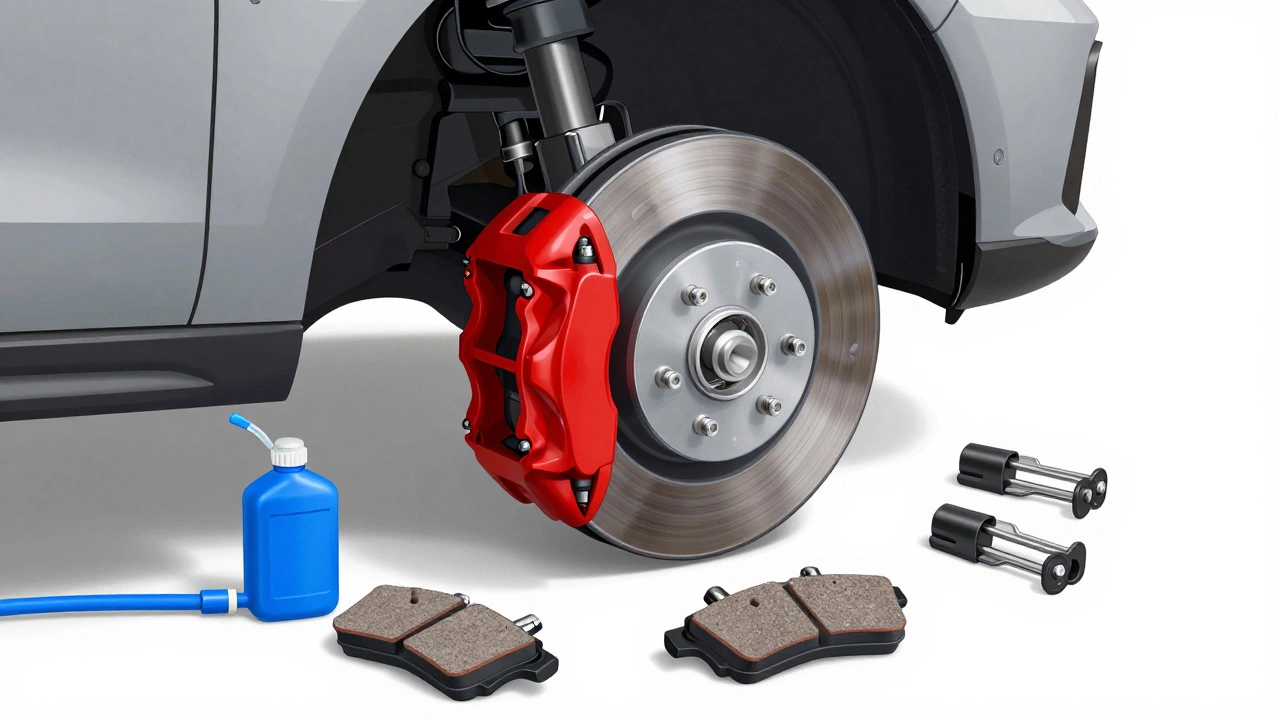
- Brake Pads: You must replace pads when changing calipers. Old pads won't seat correctly on a new rotor/caliper setup. Add £50-£150 for a set of quality pads.
- Rotors (Discs): If your rotors are worn below minimum thickness or have deep grooves, they must go. Resurfacing is cheap (£30-£50) but only works if there is enough metal left. New rotors run £80-£200 per pair.
- Brake Fluid Flush: Old fluid absorbs moisture, leading to corrosion inside the new caliper. A flush costs £40-£80. Skipping this risks corroding your new investment within months.
- Hardware Clips: Small spring clips that hold the pads in place. They snap easily during removal. Always replace them (£10-£20).
DIY: Can You Save Money Doing It Yourself?
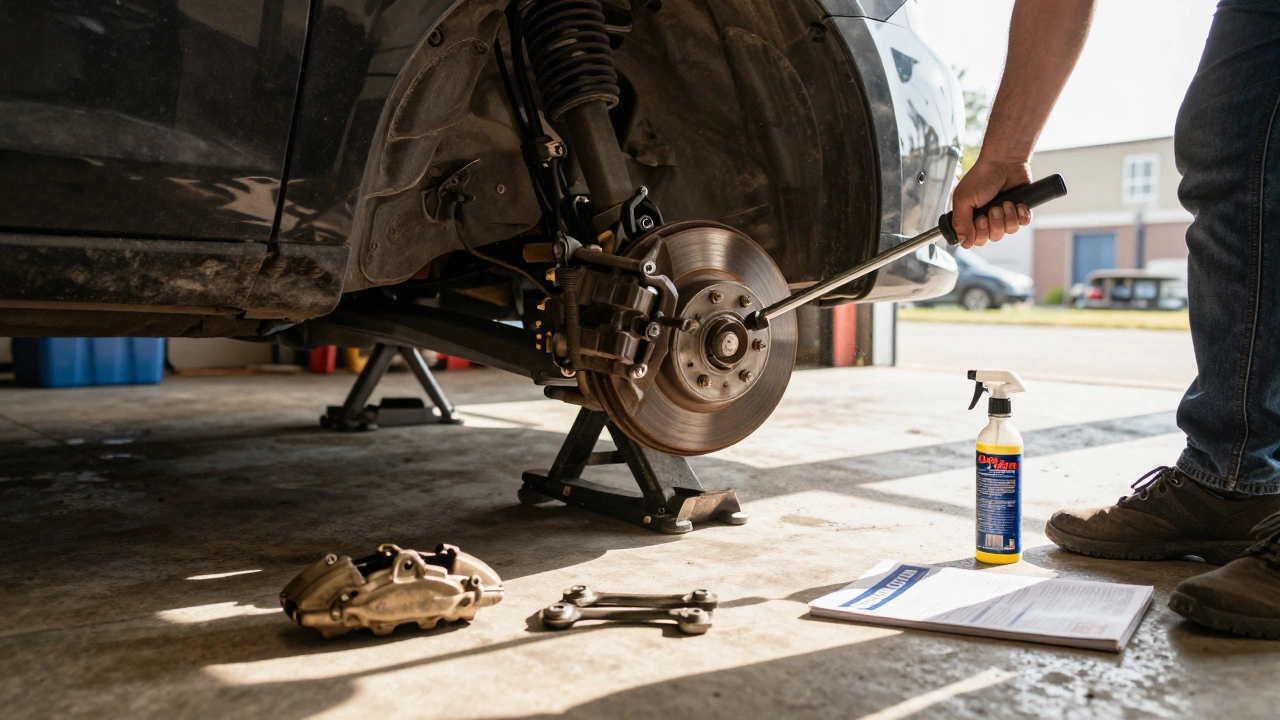
If you have basic mechanical skills, a floor jack, jack stands, and a torque wrench, you can save significant money. For a front caliper on a common car like a Honda Civic or VW Golf, the part cost is roughly £100-£150. By doing it yourself, you avoid the £150+ labor charge.
Warning: Do not attempt this if you are uncomfortable with bleeding brakes. Air in the brake lines means soft pedals and potentially no stopping power. If you mess up the bleed, you’ll end up paying a mechanic to fix it anyway. Also, ensure you torque the bolts to specification. Loose calipers can detach while driving-a catastrophic failure.
Signs You Need a New Caliper (Don't Wait Until It Fails)
Catching the issue early prevents collateral damage. Watch for these symptoms:
- Pulling to one side: When braking, the car drags left or right. This suggests a stuck caliper piston on one side.
- Uneven pad wear: One pad is thin, the other is thick. The caliper isn't moving evenly.
- Dragging sensation: The car feels sluggish even when you're not braking. A seized caliper keeps constant pressure on the rotor.
- Fluid leaks: Wetness around the wheel hub or inside the tire. Brake fluid is corrosive and eats rubber bushings.
- Noise: Grinding or scraping sounds indicate the pads are gone and the metal caliper bracket is hitting the rotor.
How to Get a Fair Quote
Don't just accept the first number you hear. Here is how to protect your wallet:
- Get three estimates: Visit one dealership, one independent specialist, and one general garage. Compare line items.
- Ask for "Parts and Labor" separately: This reveals if they are inflating the part price or the hourly rate.
- Specify OEM vs. Aftermarket: Ask explicitly: "Is this an OEM Bosch/Brembo part or an aftermarket generic?" Generic parts are fine for budget builds, but OEM is better for longevity.
- Check for bundled deals: Many shops offer a "front brake service" package that includes pads, rotors, and calipers at a slight discount compared to individual items.
Can I replace just one brake caliper?
Technically yes, but it is not recommended. Brake systems are designed to work in pairs (left and right). Replacing only one can lead to uneven braking force, causing the car to pull to one side. Most mechanics insist on replacing both calipers on the same axle to ensure balanced stopping power and consistent wear on new pads.
How long do brake calipers last?
With proper maintenance, brake calipers can last 70,000 to 100,000 miles. However, exposure to road salt, moisture, and debris can cause premature seizing. Regularly checking for smooth operation during brake pad changes extends their life significantly.
Is it safe to drive with a bad brake caliper?
No. A stuck caliper can overheat the rotor, warp it, and even cause brake fluid to boil, leading to total brake failure. It also increases stopping distances, putting you and others at risk. Address caliper issues immediately.
Why are rear brake calipers sometimes more expensive?
Rear calipers often integrate the electric parking brake motor, making them complex electromechanical units rather than simple hydraulic devices. Additionally, accessing rear calipers can require more disassembly of suspension components, increasing labor time.
Do I need to replace rotors when getting new calipers?
Not always, but usually yes. If your rotors are worn, warped, or scored, new calipers and pads won't perform well on them. Inspect rotors for thickness and surface condition. If they are near the minimum limit or show deep grooves, replace them to ensure optimal braking performance.