Clutch Compatibility & Stress Estimator
Determine if your clutch setup is adequate for your engine's torque output. Based on industry standards, clutches require a safety margin of roughly 1.5x over engine torque to prevent slip.
Configure Your Setup
Analysis Results
Enter data to see stress levels...
Recommendation
-
Why?
Explanation appears here.
The "Snappy" feeling comes from reduced rotational inertia, not added horsepower. Replacing a worn unit simply recovers lost efficiency.
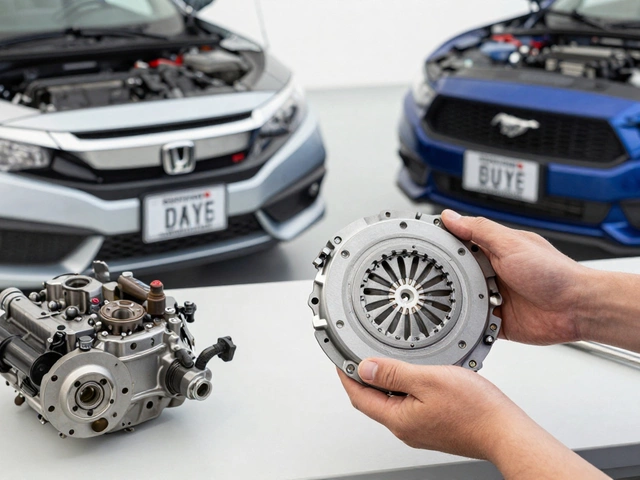
Here is the short answer: zero. Installing a new Clutch Kit is an assembly of parts including a pressure plate, disc, and release bearing designed to engage and disengage power transfer from the engine to the wheels. It does not create energy. It simply transfers the energy your engine produces. If you spend hundreds of pounds upgrading this component expecting a faster 0-60 mph time solely from the swap, you are setting yourself up for disappointment. But here is where things get interesting.
You might have heard friends in the car meet say their car feels 'snappier' after a clutch job. Is that real? Or is it just expectation bias? Understanding the relationship between mechanical grip and engine output helps you stop chasing ghosts. You want to know exactly where your money goes before dropping cash on parts in Manchester.
The Physics of Engine Output
To understand why a clutch doesn't make power, we need to look at where power comes from. Horsepower is a unit of measurement representing the rate at which work is done. It is generated inside your cylinder head through combustion. When fuel burns, it pushes pistons down. Those pistons spin the crankshaft. That rotation is force.
Imagine a water pump. The motor spins the blades. Water moves out. Now imagine a pipe connecting the pump to your garden hose. If you upgrade the pipe to a wider, stronger version, does the pump suddenly push more water? No. It still pushes the same amount. The pipe just handles the flow better without bursting.
Your Engine is the source of mechanical power generation through internal combustion. A standard 1.6-litre petrol block makes roughly 120 bhp. A modified 1.6-litre block can make 180 bhp. The engine changes inside the casing-cams, turbo, intake. The clutch sits outside that boundary. It is a link in the chain, not the power station.
What a Clutch Actually Does
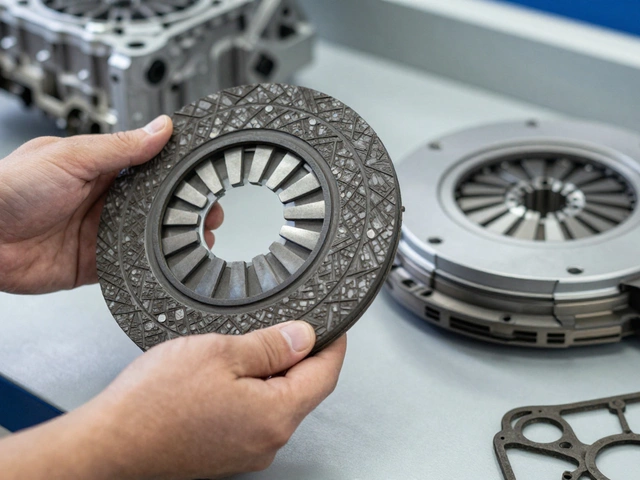
The primary job of the clutch assembly is connection management. When you press the pedal, the linkage separates the engine from the gearbox. When you release it, they lock together. Inside, there is a Flywheel, Pressure Plate, and the Friction Disc.
Think of these three components as a sandwich. The flywheel is the bottom slice of bread (attached to the engine). The pressure plate is the top slice (attached to the housing). The friction disc is the filling. The pressure plate squeezes the disc against the flywheel to stop slipping.
If the friction material wears thin, the squeeze isn't strong enough. Slipping happens. The engine revs high, but the car speed stays low. You are burning rubber instead of moving metal. This is where the confusion starts. Drivers replace a worn-out clutch with a new one, and suddenly the old sluggishness is gone. They assume the new part added power. In reality, they just stopped losing power.
Recovering Lost Gains
This concept is crucial. An old, glazed friction disc creates drag and allows slippage. When you drive normally, you might lose 10% of your potential torque to heat because the surfaces aren't gripping perfectly.
When you fit a brand-new OEM replacement, you regain that lost traction. On a dyno test, the numbers at the rear wheels might look higher. Why? Because less energy is being wasted as heat between the plates. It feels like a power boost because the car responds instantly. The throttle becomes precise. Launch control improves. But you haven't changed the peak output of the engine. You've removed the leak in the bucket.
| Feature | Standard Replacement | High-Performance Kit |
|---|---|---|
| Torque Capacity | Matches original specs | Increased by 30-100% |
| Engagement Point | Smooth, gradual | Snap, abrupt |
| Dust Generation | Low (organic) | Moderate (Kevlar/Ceramic) |
| Ride Quality | Comfortable for city driving | Jarring, harsh vibrations |
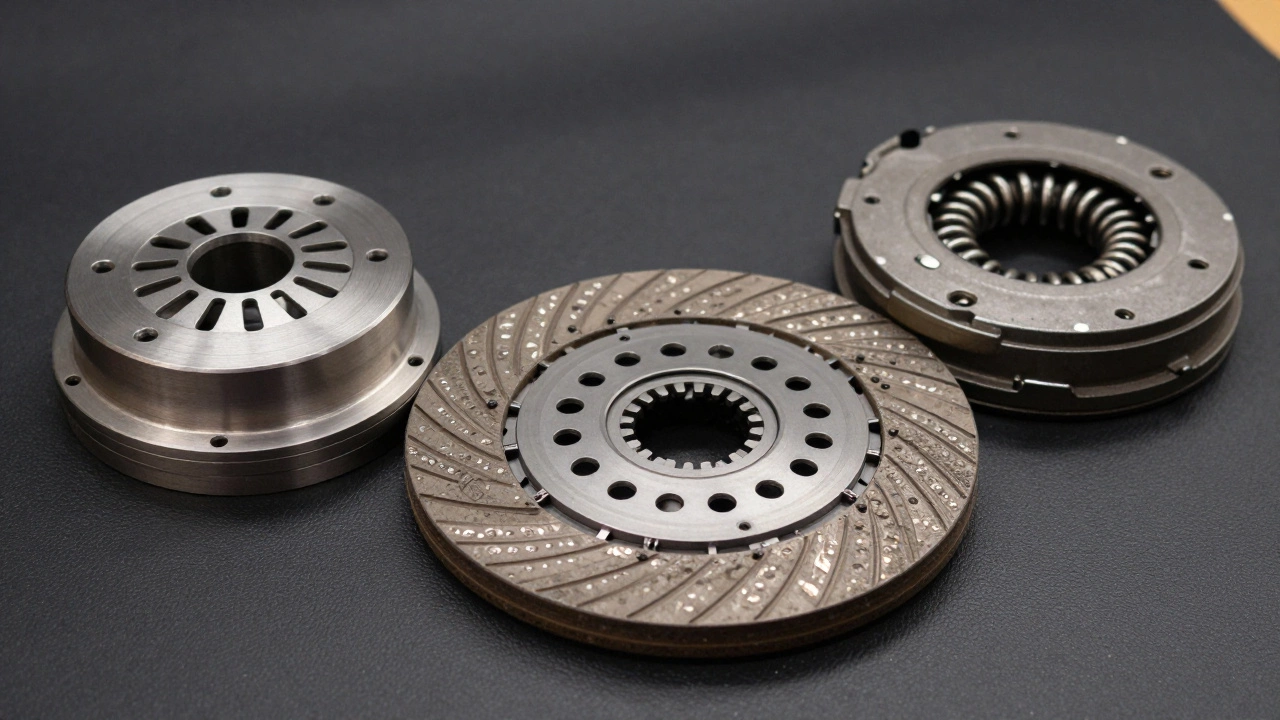
Look closely at that table. A standard replacement maintains reliability. It restores health. A high-performance kit, like those using multi-plate ceramic discs, holds significantly more load. These are vital if you have added forced induction. If you bolt a massive turbo onto a BMW E90 330i but keep the stock clutch, you will destroy it. The clutch won't break immediately; it will start smoking. Smoke means the friction surface is reaching its thermal limit.
Why People Think Clutches Make Power
There is another psychological factor. When you change a heavy iron flywheel for a lightweight steel one, the engine rotates quicker. The rotational mass decreases. Lower inertia means less effort to accelerate the spinning weight.
This mimics horsepower. The engine doesn't breathe more air, but it breathes faster. Revving up becomes easier. Drop a gear, and the RPM shoots up instantly. Drivers feel this surge in responsiveness and label it 'more horse'. Technically, it's reduced rotational inertia, not increased combustion efficiency. It is similar to fitting lighter wheels. The car feels sharper, but the engine hasn't changed.
When Do You Actually Need an Upgrade?
In most daily commuter scenarios in the UK, a standard organic disc is sufficient. You drive to work, park, and return home. You rarely redline the engine. You don't do standing starts on traffic lights competitively.
However, specific situations demand a different setup. Track days are the big one. Heat builds up rapidly during repeated hard shifts. Street clutches cannot dissipate that heat fast enough. They warp. Warp equals vibration. Vibration equals premature wear.
Another scenario is towing. Heavy loads require high torque at low speeds. If the clutch slips under load, you overheat the system. A heavier-duty setup handles the stress without the risk of failure halfway through a journey. Always prioritize durability over marginal performance if you value getting home safely.

How to Actually Increase Horsepower
If you are looking for genuine numbers, focus on airflow and fuel. These are the ingredients for combustion. Here is the hierarchy of gains:
- Forced Induction: Adding a turbocharger or supercharger forces more air into the combustion chamber. This provides the biggest jump.
- ECU Remapping: Adjusts ignition timing and fuel delivery to match hardware changes. Essential for unlocking potential.
- Exhaust Systems: Reduces backpressure, allowing gases to escape faster, improving breathing at high RPM.
- Intake Manifold: Cleaner, smoother air flow results in more consistent combustion events.
These modifications increase the input. Then, and only then, does the Drivetrain need to transfer engine torque to the road surface via axles and wheels. If you upgrade the engine first without checking the clutch rating, you create a bottleneck. The engine pushes harder than the clutch can hold. The result is catastrophic failure of the transmission input shaft.
A good rule of thumb is calculating torque limits. Stock clutches usually handle about 1.5 times their rated torque before slipping permanently. If your modified engine creates 300 lb-ft, aim for a clutch rated at least 450 lb-ft. Safety margins protect your wallet.
Installation Matters More Than Brand
I've seen expensive aftermarket clutches fail in weeks because the install was sloppy. Alignment tools matter. Torque settings on the pressure plate matter. Flywheel flatness matters.
One common mistake is reusing a warped flywheel. The flywheel face must be machined smooth or replaced entirely. Even a slight ripple causes chatter at half-clutch engagement. This chatter feels like the clutch is bad. Sometimes it is just the mating surface. Mechanics sometimes blame the disc when the issue lies with the mounting points. Always inspect the mating surfaces with a dial indicator.
Also, consider the Release Bearing (often called the throw-out bearing). It slides on the input shaft spline. If this seizes, the clutch never fully disengages. First gear grinding follows. This part costs very little compared to the rest of the assembly. Always replace it as preventative maintenance.
Maintenance also involves checking fluid levels. Hydraulic systems rely on clutch master and slave cylinders. Old fluid degrades rubber seals. Leaks cause soft pedals. A soft pedal leads to incomplete engagement. Incomplete engagement leads to slip. Slip kills the clutch. Fluid checks are cheap insurance against failure.
Real World Expectations
So, what should you tell your mates at the garage? Tell them the truth. If you buy a competition-grade race clutch, expect to walk on eggshells in traffic. Start-stop motion gets jarring. Your wife won't enjoy the ride. These parts sacrifice comfort for holding capacity.
A hybrid dual-friction disc offers a middle ground. Organic feel for the street, but with metallic properties for track usage. Companies like XTR or Luk produce these. They bridge the gap. They don't add horsepower, but they give you confidence that you can use the horsepower you already have without slipping.
Ultimately, treat the clutch as a protection device. It is the weak link designed to fail before the gearbox internals do. If it slips heavily, listen to it. It's saving your transmission from damage. Replacing it restores function. Upgrading it prepares you for future plans. Neither adds magic, but both keep your vehicle moving forward.
Does changing a clutch improve gas mileage?
No. A new clutch restores efficiency lost by slipping, but it does not reduce the engine's thirst for fuel. If anything, aggressive driving with a sport clutch may lower MPG due to higher RPM shifts.
Can a heavy clutch damage my transmission?
A clutch with too much bite force can shock gears during shifts. Lightweight flywheels help mitigate this by reducing rotational inertia. Standard replacements generally pose no risk to the gearbox.
Is there a warranty on aftermarket clutches?
Most reputable brands offer 1-year warranties covering manufacturing defects. Wear-and-tear items like the friction disc are often excluded unless installed professionally following manufacturer guidelines.
How long does a standard clutch last?
Typical life spans vary wildly. Highway driving can yield 100,000 miles. Stop-start city traffic around Manchester might burn through a disc in 40,000 miles depending on driver habits.
Should I upgrade my clutch before turbocharging?
Yes. Forced induction spikes torque significantly beyond the engine's displacement limits. A stock clutch will likely slip under launch conditions once you tune for boost.