Suspension Upgrade Advisor
Configure Your Vehicle Profile
Select your preferences and click "Get Recommendation" to find the ideal suspension upgrade for your needs.
Driving over potholes, gravel, or uneven city streets shouldn't feel like a punishment. If your current setup turns every speed bump into a jarring experience, you are likely dealing with worn-out components or a system designed for highway cruising rather than rough terrain. Finding the suspension for bumpy roads isn't just about buying the most expensive parts; it is about matching the right technology to your specific driving conditions and vehicle type.
Understanding How Suspension Handles Rough Terrain
Before picking parts, you need to understand what actually happens when a wheel hits a bump. The suspension system has two main jobs: keeping the tire in contact with the road for safety, and isolating the cabin from the impact for comfort. On smooth highways, stiff springs and firm dampers keep the car stable. On bumpy roads, that same stiffness transfers every vibration straight into your spine.
The key player here is the damper, commonly known as a shock absorber or strut. It controls the rate at which the spring compresses and rebounds. If the damping is too soft, the car will bounce excessively after hitting a bump. If it is too hard, the impact feels sharp and harsh. For rough surfaces, you generally want a setup that allows quick compression to absorb the hit, followed by controlled rebound to settle the vehicle without oscillation.
Top Suspension Types for Rough Conditions
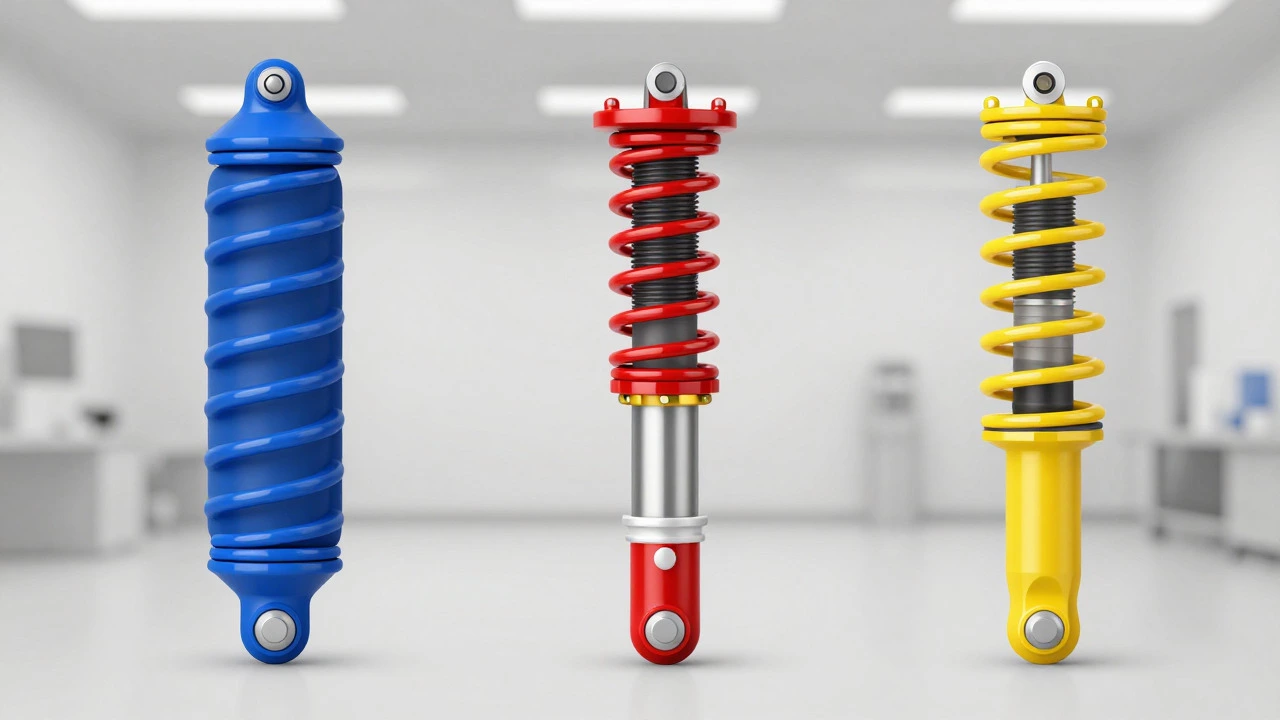
Not all suspensions are created equal. Depending on your budget and vehicle, three main types stand out for handling poor road quality.
| Suspension Type | Comfort Level | Durability | Cost | Best Use Case |
|---|---|---|---|---|
| Air Suspension | Very High | Moderate (Complex) | High | Luxury cars, heavy trucks, varied terrain |
| Monotube Shocks | High | High | Moderate | Off-roading, performance, consistent heat dissipation |
| Progressive Rate Springs | Moderate-High | High | Low-Moderate | Daily drivers, mixed city/highway use |
| Coilover Kits | Adjustable | High | Moderate-High | Tuning enthusiasts, track + street mix |
Air Suspension: The Ultimate Comfort Solution
If money is no object and maximum comfort is the goal, Air Suspension is the gold standard. Instead of steel springs, these systems use compressed air bags (air springs) to support the vehicle's weight. The beauty of air suspension lies in its adjustability. You can raise the ride height for deep ruts or lower it for stability. More importantly, modern electronic air suspension systems can detect road conditions via sensors and automatically adjust the stiffness of each corner independently.
This technology is common in high-end SUVs and luxury sedans. However, it comes with a caveat: complexity. Air compressors, valves, and lines can fail, leading to expensive repairs. In colder climates, moisture in the lines can freeze, causing issues. But when working correctly, nothing matches the floating feeling of an air-suspended vehicle over broken pavement.
Monotube Shock Absorbers: The Off-Road Choice
For those who tackle serious dirt tracks, gravel roads, or rocky trails, Monotube Shock Absorbers are often superior to traditional twin-tube shocks. In a monotube design, the piston and fluid are contained in a single tube under high nitrogen pressure. This separation prevents the oil and gas from mixing, which reduces foaming and fade during heavy use.
Because they dissipate heat better, monotube shocks maintain consistent performance even after repeated impacts on bumpy terrain. They also offer larger pistons, which provide more surface area for damping control. Brands like Fox, Bilstein, and King dominate this space. While they tend to be firmer than stock shocks, their ability to handle large bumps without bottoming out makes them ideal for rough roads.
Progressive Rate Springs: The Balanced Approach
If you don't want to overhaul your entire suspension, upgrading to Progressive Rate Springs is a smart move. Unlike linear springs that have the same stiffness throughout their travel, progressive springs get stiffer as they compress. This means small bumps are absorbed softly because the initial coils are loose, but large impacts engage the tighter inner coils to prevent bottoming out.
This design offers a compromise between daily comfort and load-bearing capacity. It’s particularly useful if you carry cargo or tow occasionally but still drive on bad roads. Companies like Eibach and H&R specialize in these applications.
Key Components Beyond Shocks and Springs
Replacing shocks alone won’t fix a harsh ride if other components are worn. A holistic approach ensures the new suspension works as intended.
- Bushings: Rubber bushings isolate vibrations from the chassis. Hard polyurethane bushings improve handling but transmit more noise and vibration. For bumpy roads, stick with high-quality rubber or hydraulic bushings that offer some compliance.
- Control Arms: Worn ball joints or bushings in control arms cause clunking and instability. Upgrading to forged aluminum control arms can improve geometry and durability, especially if you lift the vehicle.
- Sway Bars: Anti-roll bars reduce body roll during cornering but can make the ride stiffer over uneven surfaces. Some setups allow you to disconnect the sway bar electronically or mechanically for off-road use, significantly improving comfort on bumpy trails.
- Tires: Your tires are the first point of contact. Lower profile tires feel every pebble. Wider tires with higher sidewalls (all-terrain or mud-terrain) act as secondary suspension, absorbing impacts before they reach the metal components.
Choosing Based on Vehicle Type
The "best" suspension depends heavily on what you drive. A sedan has different needs than a pickup truck.
Sedans and Hatchbacks: Focus on comfort-oriented coilovers or upgraded monotube shocks with softer valving. Avoid lowering springs unless they are specifically designed for comfort (like Eibach Pro-Kit). Keep the ride height near factory settings to protect the undercarriage from scraping.
SUVs and Crossovers: These vehicles benefit greatly from adjustable coilovers or air suspension kits. Many modern SUVs come with adaptive damping systems (like Magnetic Ride Control or CDC). If yours has failed, repairing the original system is often cheaper and more effective than replacing it with aftermarket parts.
Trucks and Jeeps: Durability is key. Long-travel leaf springs or heavy-duty coilovers are standard. If you frequently haul loads, consider helper springs or air bags that activate only when loaded, preventing sagging while maintaining empty-load comfort.
Installation and Tuning Tips
Even the best parts perform poorly if installed incorrectly. Here are critical steps to ensure optimal results:
- Wheel Alignment: Always get a four-wheel alignment after changing suspension components. Incorrect camber or toe angles will cause rapid tire wear and unpredictable handling.
- Break-in Period: New shocks and struts need time to seat properly. Drive gently for the first 100 miles. Avoid hard braking or aggressive cornering during this period.
- Check Fluid Levels: If installing monotube shocks, ensure they are filled correctly. Air bubbles in the fluid drastically reduce performance.
- Test and Adjust: If you have adjustable dampers, start with medium settings. Test on your typical route. Soften the rebound if the car bounces too much; stiffen the compression if it feels wallowy.

Common Mistakes to Avoid
Many drivers make costly errors when trying to improve ride quality. One major mistake is assuming stiffer equals better. Stiff suspensions handle corners well but punish you on bad roads. Another error is mixing old and new parts. Replacing only front shocks while leaving rear ones worn creates an imbalance that can lead to dangerous handling characteristics.
Also, beware of cheap generic brands. Suspension is a safety-critical system. Investing in reputable brands like Bilstein, KYB, Gabriel, or Monroe ensures reliability and proper engineering standards. Cheap shocks may save money upfront but often fail within a year, leaving you back at square one.
Future Trends in Suspension Technology
The industry is moving towards active and semi-active systems. Electromagnetic dampers, such as GM’s Magnetic Ride Control or BMW’s Integral Active Steering, adjust damping forces thousands of times per second based on real-time road data. These systems offer the best of both worlds: sporty handling and luxurious comfort. As these technologies become more affordable and available as retrofit kits, they will likely become the go-to solution for anyone seeking the ultimate ride on bumpy roads.
Additionally, solid-state batteries and improved electric motor efficiency are enabling lighter vehicles, which naturally require less robust suspension components, further enhancing ride quality. Keeping an eye on these developments can help you future-proof your investment.
What is the best suspension for daily driving on potholes?
For daily driving on roads with frequent potholes, upgraded monotube shock absorbers combined with progressive rate springs offer the best balance. They absorb impacts effectively without compromising handling. If budget allows, an air suspension kit provides superior isolation and adjustability.
Do air suspensions break down easily?
Air suspensions are more complex than steel spring systems, making them prone to issues like compressor failure, valve leaks, or bag punctures. However, modern systems are quite reliable if maintained regularly. Using desiccant dryers to remove moisture from the air lines can significantly extend lifespan.
Can I install softer shocks on my sports car?
Yes, but caution is needed. Sports cars rely on stiff suspension for precise handling. Installing overly soft shocks can cause excessive body roll and reduced cornering grip. Look for adjustable coilovers that allow you to soften the ride for daily use while stiffening them for spirited driving.
How long do good shock absorbers last?
Quality shock absorbers typically last between 50,000 to 100,000 miles, depending on driving conditions. Rough roads, heavy loads, and frequent towing accelerate wear. Signs of failure include leaking fluid, excessive bouncing, or uneven tire wear.
Is it worth upgrading from leaf springs to coilovers?
Upgrading from leaf springs to coilovers improves ride comfort and articulation significantly, especially for off-road use. However, it requires substantial fabrication and expense. For light-duty trucks used mostly on paved roads, retaining leaf springs with upgraded shocks is often more cost-effective.