Spark Plug Replacement Calculator
Estimated Replacement Cost
Spark plug set: £6-£15
Professional installation: £40-£80
Total: £46-£95
Enter your vehicle details to see recommendations
Every car owner has faced the moment: the engine sputters, the check engine light flickers, and you wonder - should you clean those spark plugs or just swap them out? It sounds simple, but the answer isn’t black and white. Too many people guess, and end up wasting money or risking engine damage. Let’s cut through the noise.
What spark plugs actually do
Spark plugs are the ignition system’s final step. They take high-voltage electricity from the coil and create a tiny, precise spark across a small gap. That spark ignites the air-fuel mixture in the cylinder. One misfiring plug can reduce fuel economy by 10%, increase emissions, and even cause your engine to shake at idle. Modern engines often have four, six, or even eight of them. They’re not expensive individually, but they’re critical.
Most spark plugs today last between 60,000 and 100,000 miles. Platinum and iridium-tipped plugs last longer than standard copper ones. But even the best plugs don’t last forever. Carbon, oil, and combustion byproducts build up over time. That’s where the cleaning vs. replacement debate starts.
When cleaning spark plugs might work
Some people swear by cleaning old spark plugs with a wire brush, carb cleaner, or even sandblasting them. It sounds like a smart way to save cash - and in rare cases, it can help.
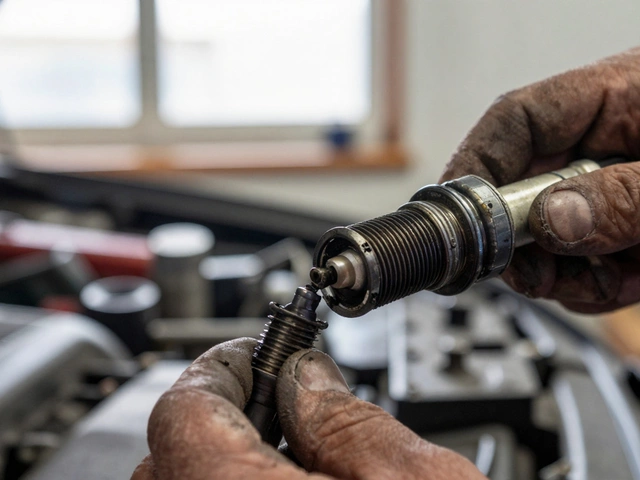
If your plugs are only lightly fouled - say, from short trips, a rich fuel mixture, or a minor oil leak - and they’re not worn out, cleaning can restore performance. I’ve seen this in older UK cars with 80,000 miles where the owner didn’t drive much. The deposits were mostly dry carbon, not baked-on gunk. A gentle scrub with a spark plug cleaner tool and a wire brush brought back smooth idling.
But here’s the catch: cleaning only works if the plug’s electrodes are still within factory gap specs. If the gap is too wide (over 1.3mm on most modern engines), or if the center electrode is worn down like a pencil tip, no amount of cleaning will fix it. You’re just polishing a broken part.
Why replacement is almost always the better choice
Here’s what most mechanics in Manchester see: a plug that’s been in for 80,000 miles. The insulator is cracked. The ground electrode is eroded. The gap has widened beyond tolerance. The threads are corroded. Even if you clean it, the spark won’t be strong enough. The engine will still misfire.
Modern spark plugs are engineered for precision. The gap is set at the factory to within 0.001 inch. That’s thinner than a human hair. After 60,000 miles, the electrodes wear down. The gap widens. The voltage needed to jump that gap increases. Your ignition coil has to work harder. Eventually, it fails - or the plug just stops firing.
And here’s the real kicker: a spark plug costs between £3 and £15, depending on the type. Labour to remove and install them? Usually £40-£80 total. That’s less than a tank of petrol. Replacing them is cheaper than risking damage to your catalytic converter, which can cost over £1,000 to replace.
There’s also the issue of torque. If you’ve ever tried to reinstall a cleaned plug, you know how easy it is to cross-thread the hole. A new plug comes with the right thread coating and torque specs. A cleaned one? You’re guessing.
What you should do instead
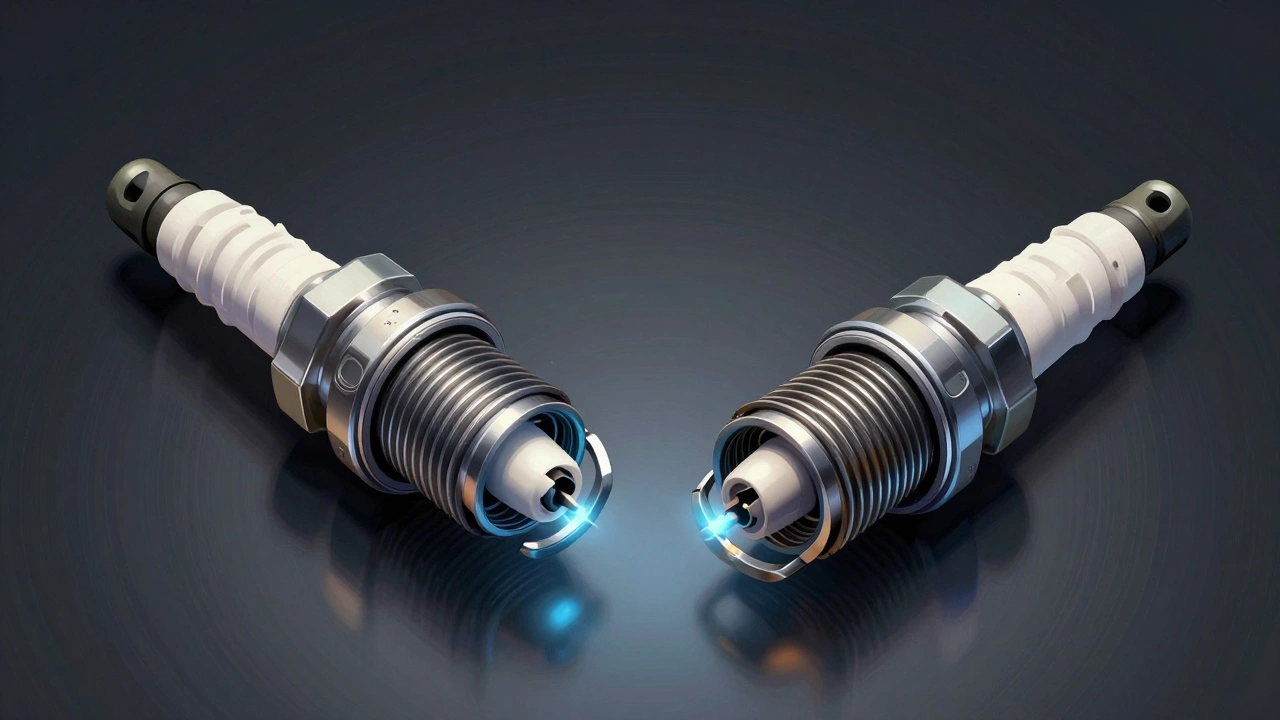
Don’t clean spark plugs unless you’re doing a diagnostic test - and even then, only if they’re being removed anyway.
Follow your manufacturer’s replacement schedule. If your manual says 100,000 miles, don’t wait until the engine misfires. By then, you’ve already damaged the coil pack or stressed the ECU. Replace them at the recommended interval - even if they look fine.
Here’s a simple rule: if your car is over 60,000 miles and you’ve never changed the spark plugs, replace them. Now. Not next month. Not when you have time. Right now.
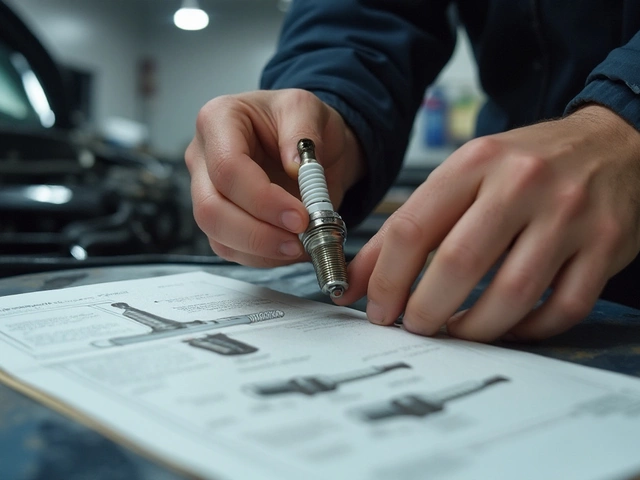
And if you’re replacing them, get the right type. Don’t swap iridium for copper just because it’s cheaper. Your engine was designed for a specific heat range and electrode material. Using the wrong plug can cause pre-ignition, knocking, or even piston damage.
Signs you need new spark plugs
- Engine hesitates or stumbles during acceleration
- Hard starting, especially in cold weather
- Increased fuel consumption - you’re filling up more often
- Rough idle or shaking at stoplights
- Check engine light with misfire codes (P0300-P0308)
These aren’t vague symptoms. They’re direct signs your ignition system is failing. And spark plugs are the most common cause.
What happens if you ignore them
Let’s say you drive a 2018 Ford Focus with 90,000 miles. You ignore the slight misfire. You think, “It’s still running.”
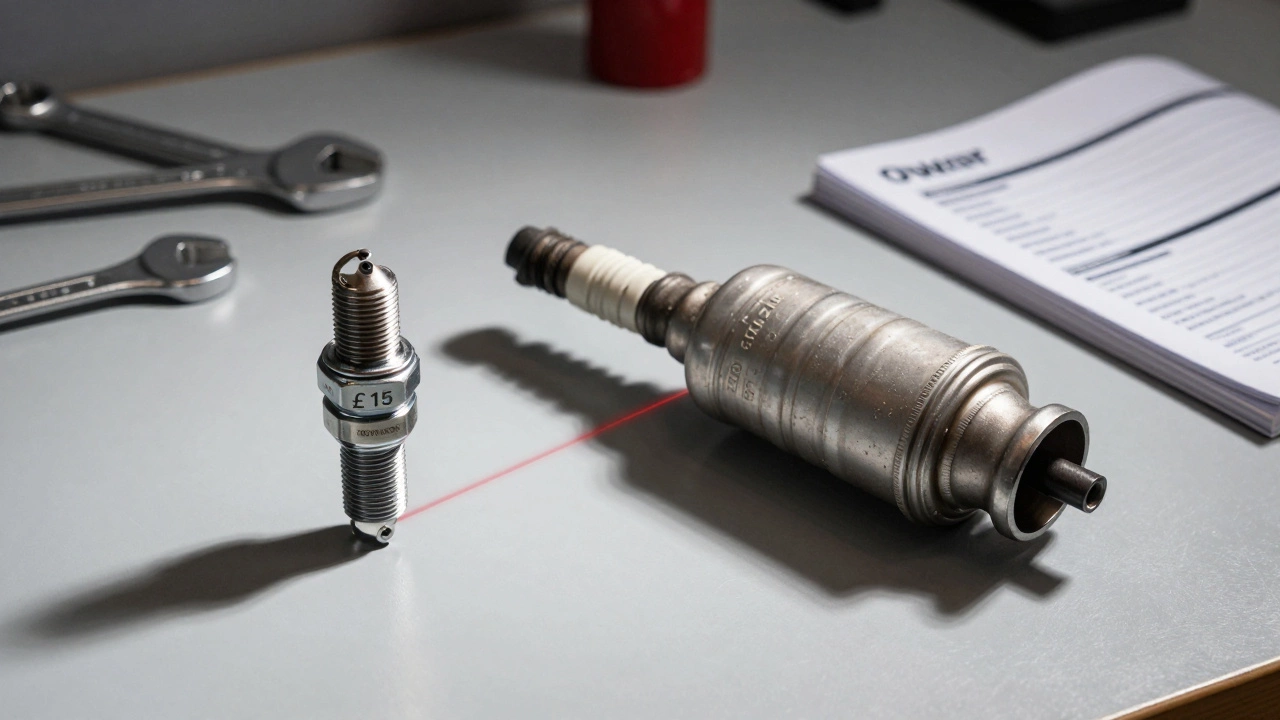
Three months later, the misfire gets worse. The unburned fuel floods into the catalytic converter. It overheats. The ceramic honeycomb inside melts. Now you’re facing a £1,200 repair instead of a £60 plug change.
Worse, the engine’s computer starts adjusting fuel mixtures to compensate. Over time, it can throw off your air-fuel ratio. That leads to carbon buildup on valves and injectors. More repairs. More money.
Spark plugs are cheap insurance. Ignoring them is like ignoring brake pads until you hear metal grinding. You’re not saving money - you’re just delaying the bill.
How to choose the right spark plugs
Not all spark plugs are the same. Here’s what to look for:
- Material: Copper (cheapest, shortest life), Platinum (good balance), Iridium (longest life, best performance)
- Heat range: Too cold = fouling. Too hot = pre-ignition. Match your car’s spec.
- Thread size and reach: Wrong length can hit the piston. Double-check your manual.
- Gap: Most modern plugs come pre-gapped. Don’t adjust unless the manual says to.
Brands like NGK, Denso, and Bosch are reliable. Avoid no-name brands on eBay. They often use inferior materials and inconsistent tolerances.
Final verdict
Should you clean spark plugs? Only if you’re already removing them and they’re not worn out. And even then, it’s a temporary fix.
Should you replace spark plugs? Yes - every 60,000 to 100,000 miles, depending on your car. It’s one of the most cost-effective maintenance tasks you can do. You’ll get smoother starts, better fuel economy, fewer breakdowns, and avoid expensive collateral damage.
Don’t try to extend their life with cleaning. Don’t wait until it’s too late. Replace them on schedule. Your engine will thank you.
Can I clean spark plugs with WD-40?
No. WD-40 is a water-displacing lubricant, not a cleaner. It leaves a residue that can interfere with the spark. Use a dedicated spark plug cleaner or carb cleaner, and always let the plug dry completely before reinstalling. Even then, cleaning won’t fix worn electrodes.
How often should I replace spark plugs?
Most modern cars need new spark plugs every 60,000 to 100,000 miles. Copper plugs last 20,000-30,000 miles. Platinum plugs last 60,000-80,000. Iridium plugs can go 100,000+ miles. Always check your owner’s manual - some engines, like turbocharged ones, require more frequent changes.
Is it worth buying expensive iridium spark plugs?
Yes, if your car came with them. Iridium plugs offer better ignition, longer life, and improved fuel efficiency. If your manual recommends them, stick with them. If your car originally had copper plugs, upgrading to iridium won’t hurt - but you won’t see major gains unless your engine is tuned for higher performance.
Can I drive with a bad spark plug?
You can, but you shouldn’t. A single misfiring plug can damage your catalytic converter, overload the ignition coil, and cause long-term engine issues. Even if the car seems to run fine, the damage is happening silently. Replace faulty plugs within a few days, not weeks.
Do I need to gap spark plugs myself?
Most modern spark plugs come pre-gapped. Only adjust the gap if your manual says to, or if you’re installing a plug that’s not the exact OEM replacement. Use a feeler gauge, not a wire brush. Over-adjusting can damage the delicate iridium or platinum tip.