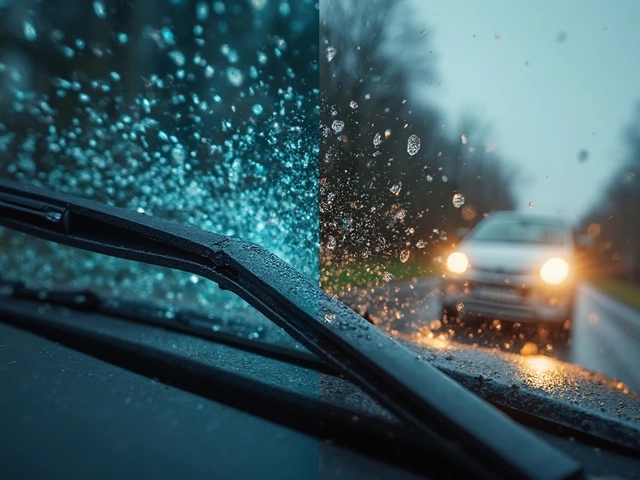
UK vs US Automotive Terminology Converter
Shopping for parts in the UK? Use this converter to find the correct local terms for your vehicle components to ensure you get the right fit and the best results from search engines.
Quick Summary: UK vs US Terms
- US Term: Windshield wipers
- UK Term: Windscreen wipers
- The Glass: Windshield (US) $\rightarrow$ Windscreen (UK)
- The Fluid: Windshield washer fluid (US) $\rightarrow$ Screen wash (UK)
Why the terminology matters for car owners
If you're just chatting with friends, calling them windshield wipers isn't a big deal. However, when you're shopping for parts online or visiting a local motor factor, using the right terms saves you a lot of headache. If you search a UK-based site like Euro Car Parts or Halfords for "windshield blades," you might get a few results, but "windscreen blades" will give you the exact fit for your specific make and model.
The difference extends beyond just the wipers. For instance, the fluid you pour into the reservoir isn't typically called "washer fluid" here; it's almost always referred to as screen wash. If you ask for "wiper fluid," the shop assistant will get you, but "screen wash" is the local shorthand.
Understanding the components of a windscreen wiper system
To really get a handle on how things work in the UK automotive world, it helps to break down the system. A windscreen wiper isn't just one piece of rubber; it's a coordinated system of a few key parts.
First, you have the wiper blade. This is the consumable part that actually touches the glass. It consists of a metal frame and a rubber strip. Over time, the rubber degrades due to UV exposure and temperature swings, which is why you'll see streaks across your vision during a heavy downpour.
Then there's the wiper arm. This is the heavy-duty metal piece that pushes the blade across the glass. While blades are replaced every year or two, the arm usually lasts the life of the car unless it gets bent or the spring tension fails.
Finally, there is the wiper motor. This electric motor converts the switch's signal into the rhythmic back-and-forth motion. If your wipers suddenly stop moving or move at a snail's pace, it's usually the motor or the linkage that has failed, not the blade.
| Component | UK Name | Purpose | Lifespan |
|---|---|---|---|
| Rubber Strip | Wiper Blade | Clears water/debris | 6-12 Months |
| Metal Lever | Wiper Arm | Provides pressure | Life of Vehicle |
| Electric Unit | Wiper Motor | Drives the movement | 5-10 Years |
Types of blades you'll find in British shops
When you go to replace your blades in England, you'll notice they aren't all the same. Depending on your car-whether it's a small hatchback or a large estate-you'll choose between three main types.
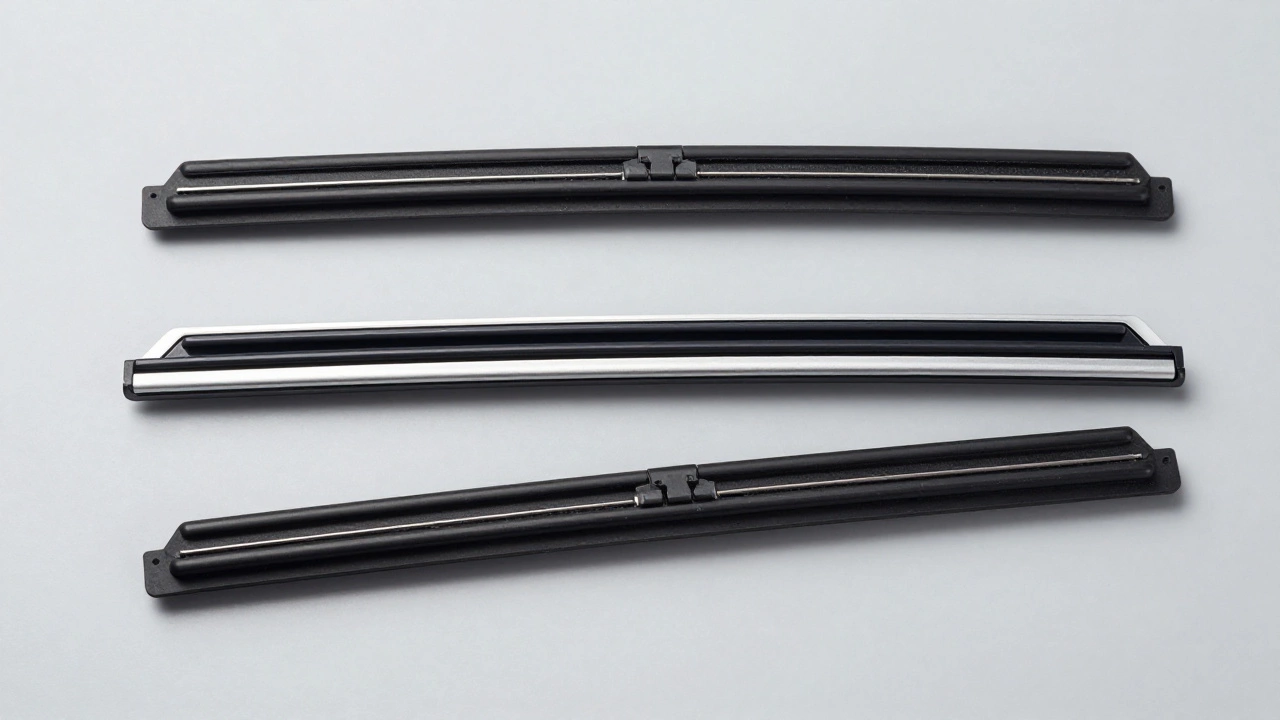
Conventional blades are the old-school style with a visible metal frame. They're cheap and effective but can sometimes lift off the glass at high motorway speeds. Flat blades (or beam blades) are the modern standard. They don't have a metal frame, which gives them a sleeker look and more consistent pressure across the curved windscreen. You'll find these on most new cars coming off the line today.
Then there are hybrid blades. These try to combine the strength of a conventional frame with the aerodynamic profile of a flat blade. They're often more expensive but offer a great middle-ground for performance in varying weather conditions, from light drizzle to heavy snow in the Scottish Highlands.
How to tell when your wipers need replacing
Living in the UK means dealing with a lot of rain. You can't afford to ignore your wipers until they completely stop working. There are a few red flags to look out for.
- Streaking: If you see thin lines of water left behind after the blade passes, the rubber is likely worn or chipped.
- Chattering: Does the blade jump or shudder across the glass? This usually happens when the rubber has hardened or the arm has lost its tension.
- Squeaking: A loud screeching sound often means the blade is dry or the rubber is rubbing against the glass rather than gliding over it.
- Smearing: Instead of clearing the water, the blade just pushes a blur of moisture around. This is a clear sign that the blade is "spent" and needs to be tossed.
Tips for maintaining your windscreen in the UK
Since we get a lot of road salt and grime during the winter, your wipers have to work harder. A pro tip is to occasionally clean the edge of the wiper blade with a damp cloth. You'd be surprised how much black soot and road grit accumulates on the rubber; removing it can extend the life of the blade by a few months.
Another common mistake is using the wipers on a dry windscreen. This is a recipe for disaster. If there's dust or a small pebble on the glass and you activate the wipers without any screen wash, you'll scratch both the glass and the rubber. Always spray first, then wipe.
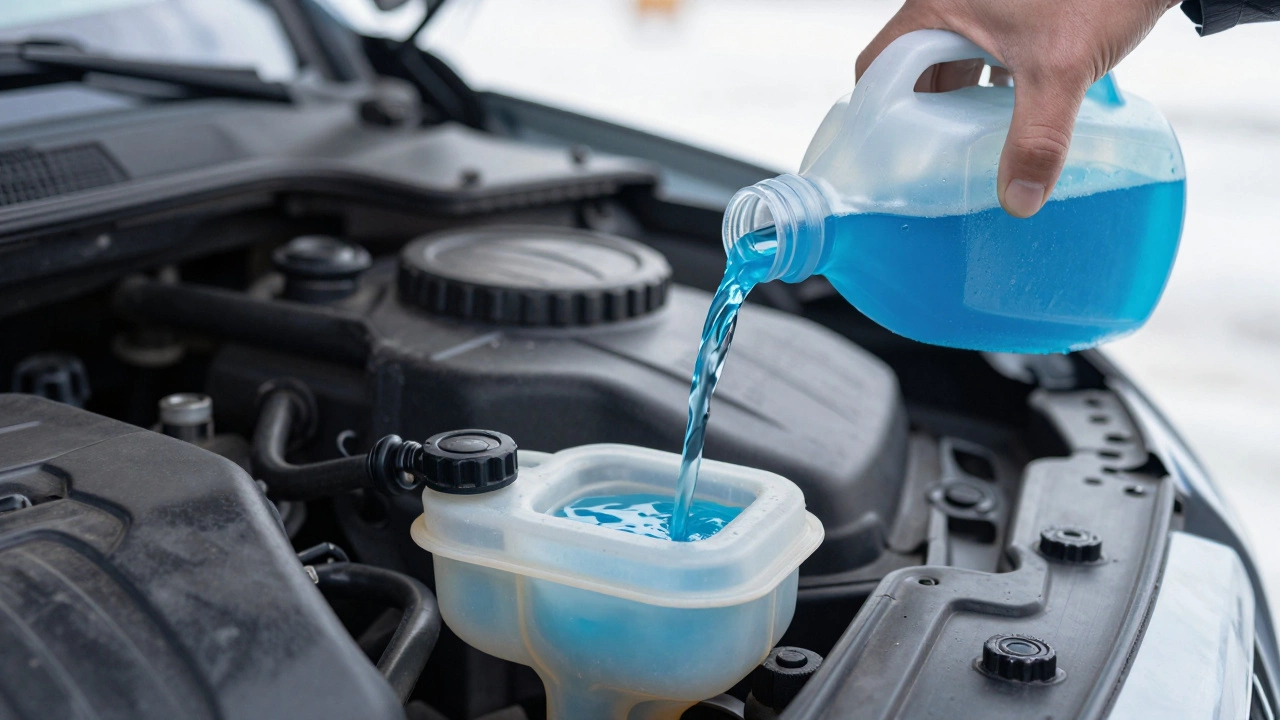
When it comes to the fluid, avoid using plain water in the winter. Water freezes at 0°C, and if the fluid in your lines freezes, it can crack the reservoir or pump. Use a dedicated winter screen wash that contains antifreeze agents to keep the system flowing even when the temperature drops in January.
Dealing with different wiper fittings
One of the most frustrating parts of buying wipers in the UK is the variety of fittings. You can't just buy "a wiper"; you have to make sure the attachment mechanism matches your car's arm. The most common is the J-hook, which is a simple hook-and-loop system. However, many European cars now use side-pin or push-button fittings.
If you're unsure, most UK retailers provide a "car registration lookup" tool. You enter your number plate (license plate), and the system tells you exactly which blade size and fitting you need. This is much safer than guessing and ending up with a blade that's two inches too short for your windscreen.
Do UK cars use the same wiper sizes as US cars?
Not necessarily. While the basic concept is the same, the size of the windscreen varies by car model and region. For example, a UK-spec Ford Focus might have different blade lengths than a US-spec version due to slight differences in glass curvature or manufacturer standards. Always check your vehicle's manual or use a registration lookup tool.
Is "windshield washer fluid" understood in England?
Yes, people will understand you, but it sounds very American. The natural term used in the UK is "screen wash." If you're looking for the product in a supermarket or petrol station, look for labels that say "Screenwash."
How often should I change my windscreen wipers in the UK?
Generally, it's recommended to change them once a year, typically just before the winter season starts. Given the amount of rain and the salt used on British roads in winter, the rubber degrades quickly. If you notice streaking or skipping, change them immediately regardless of how long they've been on.
What happens if I use the wrong wiper blade?
If the blade is too long, it might overlap with the other wiper or hit the edge of the windscreen frame. If it's too short, you'll have a large blind spot in your vision. More importantly, if the fitting isn't secure, the blade could fly off while you're driving at high speeds, which is a serious safety hazard.
Are beam blades better than conventional blades?
In most cases, yes. Beam blades (flat blades) are more aerodynamic and apply more even pressure across the glass. They also have no metal frame to collect ice or snow in the winter, making them more reliable in the harsh UK climate.
Next Steps for Car Maintenance
Once you've sorted your windscreen wipers, it's a good time to check other visibility-related items. Check your bulbs to make sure your headlights are bright enough for those dark winter evenings. You might also want to inspect your side mirrors for any cracks or loose fittings.
If you find that new wipers still aren't clearing the glass perfectly, you might have "glass pitting"-tiny chips caused by road debris. In this case, a professional glass polish or a windscreen replacement might be necessary. For most people, though, a simple set of fresh blades and a bottle of high-quality screen wash are all you need to stay safe on the road.