Suspension Symptom Diagnostic Tool
Select the symptom that best matches your driving experience to identify the likely failing component.
You’re driving down a familiar road, maybe the one past your local Tesco or along the canal path. Suddenly, the car feels different. It’s not just a pothole; it’s a clunk when you turn, a floaty feeling at highway speeds, or a vibration that wasn’t there last month. That uneasy sensation is your suspension waving a white flag. But which part is actually failing? Is it the shock absorber, the bushing, or something deeper in the geometry?
Understanding suspension parts is the first step to diagnosing these issues before they turn into expensive repairs or safety hazards. Your suspension isn't just about comfort; it keeps your tires planted on the tarmac, ensuring you can steer and brake effectively. When components wear out, handling degrades gradually, often so slowly you don’t notice until you’re swerving to avoid an obstacle and the car doesn’t respond quite right.
The Silent Killers: Control Arm Bushings
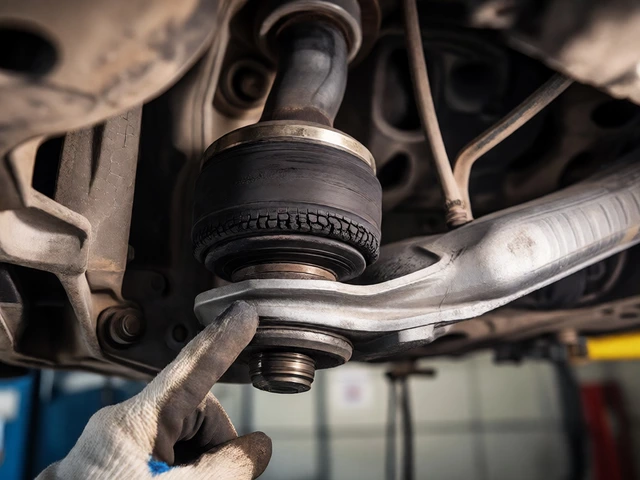
If you hear creaking or knocking over bumps, start with the bushings. These rubber or polyurethane sleeves isolate metal-to-metal contact within the control arms. They allow the suspension to move while keeping noise and vibration away from the cabin.
Rubber dries out over time. UK winters, with their mix of salted roads and freezing temperatures, accelerate this process. A cracked bushing might look fine visually but fail under load. The symptom? Vibration through the steering wheel at low speeds or during braking. You might also notice the car pulling slightly to one side, not because of alignment, but because the geometry shifts as the bushing collapses.
- Symptom: Clunking noises over small bumps.
- Symptom: Steering wheel vibration at idle or low speed.
- Check: Inspect for cracks, tears, or missing chunks of rubber.
The Cornering Culprits: Sway Bar Links
Ever heard a rattling sound when driving over uneven surfaces? Chances are, it’s the sway bar links, also known as anti-roll bar links. These thin rods connect the sway bar (a torsion spring) to the suspension strut or control arm. Their job is to reduce body roll when you corner.
Because they’re exposed to the elements and take constant stress, the ball joints at each end wear out quickly. When they go bad, the link becomes loose. This creates a metallic rattle that worsens on rough roads. While replacing them won’t drastically change your ride quality, ignoring them puts extra strain on the sway bar itself and can affect stability during emergency maneuvers.
| Component | Primary Symptom | Secondary Sign | Urgency |
|---|---|---|---|
| Sway Bar Link | Rattling/knocking on bumps | Loose feel in corners | Medium |
| Ball Joint | Clunking when turning | Uneven tire wear | High |
| Shock Absorber | Bouncing after bumps | Oil leaks on shaft | Medium-High |
| Control Arm Bushing | Vibration at low speed | Pulling under braking | Medium |
The Safety Critical: Ball Joints
Unlike bushings or links, a failed ball joint can cause catastrophic failure. This component acts like a hip joint, connecting the steering knuckle to the control arm. It allows the wheel to pivot up, down, and left/right.
When a ball joint wears, it develops play. You’ll hear a distinct clunk when turning the steering wheel at full lock, especially in tight parking lots. More concerning is the potential for separation. If the joint fails completely, the wheel can detach from the suspension assembly. In the UK, where roundabouts require frequent sharp turns, this is a serious risk. Never ignore clunks associated with steering input.
The Comfort Controllers: Shock Absorbers and Struts
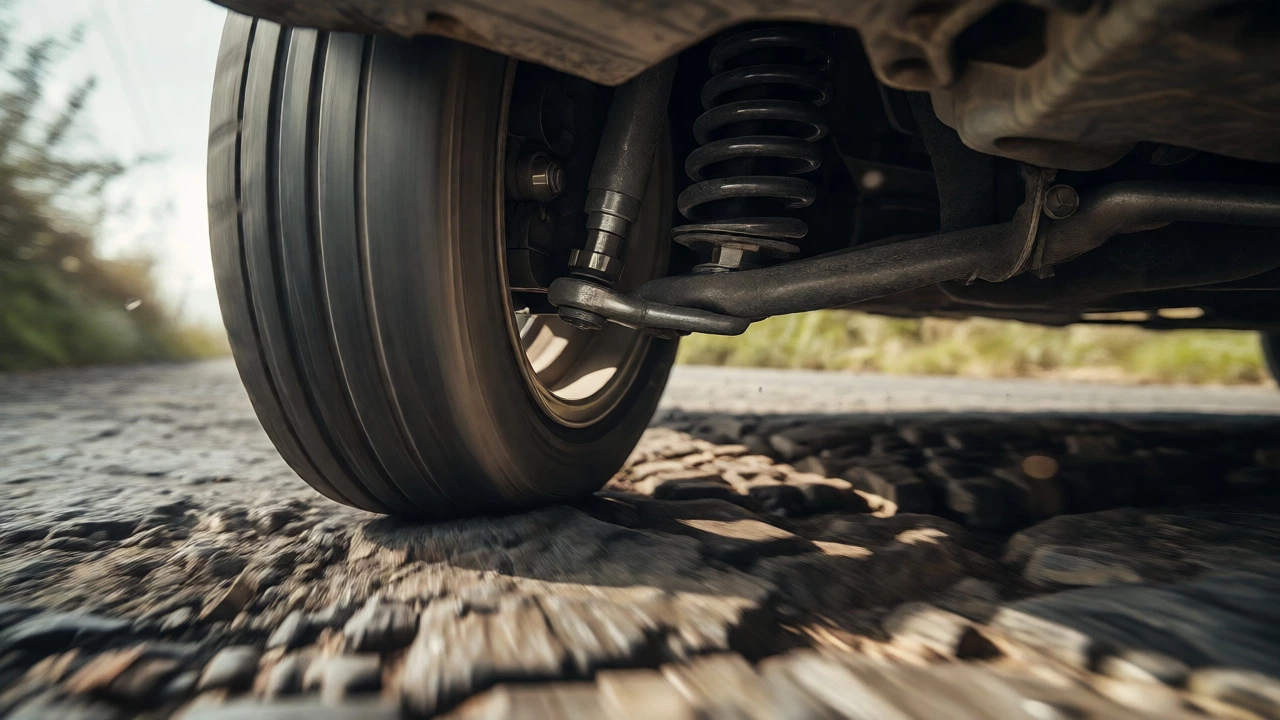
Most modern cars use struts at the front and shock absorbers at the rear. These dampen the movement of the springs. Without them, your car would bounce uncontrollably after hitting a bump.
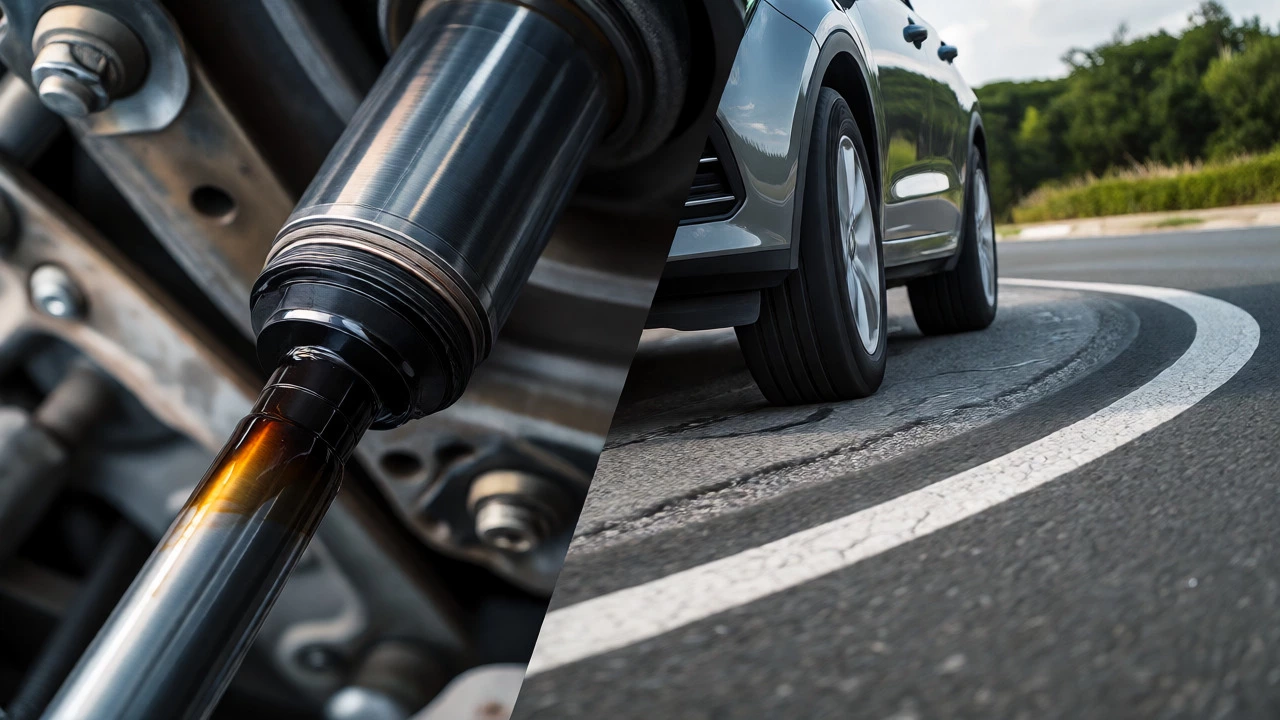
How do you know if they’re gone? Perform the "bounce test." Push down hard on the front bumper and release. The car should rebound once and settle. If it bounces two or three times, the dampening is shot. Visually, look for oily residue on the piston rod. This indicates a seal leak. Worn shocks increase stopping distances significantly-up to 10% on wet roads according to some automotive safety studies. That extra distance is the difference between a near-miss and a collision.
Other Frequently Overlooked Parts
While the big four above account for most failures, other components contribute to poor handling:
- Tie Rod Ends: Connect the steering rack to the wheels. Wear causes vague steering and excessive play in the wheel.
- Wheel Bearings: Not strictly suspension, but often diagnosed together. A humming noise that changes when you swerve slightly usually points here.
- Spring Seats: Rubber pads between the spring and chassis. If these crumble, you get metallic knocking sounds similar to broken springs.
Diagnosis Tips for DIY Enthusiasts
You don’t need a lift to spot many issues. Here’s how to check without getting under the car immediately:
- Listen: Drive slowly over a speed bump. Note exactly where the noise comes from. Front-left? Rear-right?
- Look: Check for uneven tire wear. Cupping (scalloped edges) often means worn shocks. Inner edge wear suggests alignment issues caused by worn bushings or ball joints.
- Feel: On a smooth road, let go of the steering wheel briefly. Does the car drift? Does it feel twitchy?
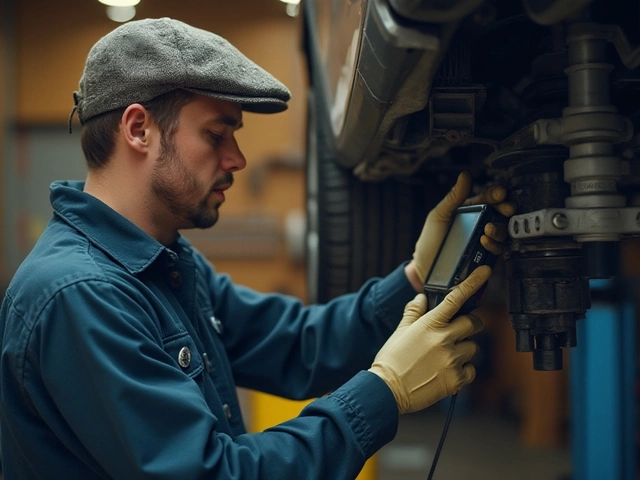
- Inspect: Use a torch to look inside the wheel arch. Look for oil streaks on shocks, cracked rubber on bushings, or rust on links.
Replacement Strategy: Replace in Pairs
A common mistake is replacing only the bad side. If your left shock is blown, the right one is likely close behind. Replacing just one creates imbalance, affecting handling and putting extra stress on the new part. Always replace struts, shocks, and control arms in axle pairs (both fronts or both rears). This ensures consistent performance and extends the life of the new components.
Also, consider upgrading materials. Standard rubber bushings wear faster than polyurethane alternatives. However, polyurethane transmits more vibration into the cabin. For daily drivers in Manchester, high-quality OE-spec rubber is often the best balance of comfort and durability.
How long do suspension parts typically last?
It varies by vehicle and driving conditions. Generally, shocks and struts last 50,000 to 100,000 miles. Bushings and ball joints can last longer, often 80,000+ miles, but UK roads with frequent potholes and salted surfaces may reduce this lifespan by 20-30%. Aggressive driving shortens these intervals further.
Is it safe to drive with bad suspension parts?
It depends on the part. Driving with worn shocks reduces control and increases braking distance, which is risky but manageable for short trips. However, driving with a severely worn ball joint or tie rod end is dangerous. These components hold the wheel to the car. Failure can lead to loss of steering control or wheel detachment.
Can I replace suspension parts myself?
Some parts, like sway bar links, are relatively easy for a DIYer with basic tools. Others, like coil springs and struts, require specialized spring compressors and pose safety risks due to stored energy. Ball joints often require pressing tools. If you’re not experienced with suspension work, professional installation is recommended to ensure correct torque specs and alignment.
Do I need an alignment after replacing suspension parts?
Yes, almost always. Replacing control arms, tie rods, or struts changes the geometry of the suspension. Even minor changes can throw off toe, camber, and caster angles. An alignment ensures your tires wear evenly and the car drives straight. Skipping it wastes money on new parts and tires.
What causes suspension parts to fail prematurely?
Road conditions are the biggest factor. Potholes, speed bumps taken too fast, and gravel roads accelerate wear. Additionally, lack of maintenance plays a role. Salt used on winter roads corrodes metal components and degrades rubber bushings. Leaking seals on shocks allow contaminants in, speeding up internal wear.