Exhaust Modification Advisor
Select your primary goal to see which exhaust setup matches your needs best.
Comfort & Stealth
Priority: Low noise, maximum legality, and passenger comfort.
Sporty Tone
Priority: Better sound during acceleration without excessive drone.
Raw Power/Sound
Priority: Maximum volume and minimal restriction (Track use).
| Drone | Legality | Gain |
|---|---|---|
Quick Summary: The Trade-offs
- Noise Pollution: Massive increase in volume and a high risk of "drone" at highway speeds.
- Legal Trouble: High probability of failing emissions tests or getting fined for noise violations.
- Performance Myths: Very little actual horsepower gain for most street cars.
- Resale Value: Modifications that look "cheap" or "tacky" often lower the car's market value.
The Noise Problem: More Than Just Volume
When you remove the muffler, you aren't just making the car louder; you're changing the frequency of the sound. A muffler is designed to cancel out specific sound waves. Without it, you encounter a phenomenon called "drone." Drone is that deep, humming vibration that happens at a specific RPM-usually around 2,000 to 3,000 RPM during highway cruising. It's not a roar; it's a persistent, skull-rattling buzz that makes it impossible to have a conversation with your passenger without shouting.
Think about a long trip from Manchester to London. After an hour of that constant resonance, you'll likely experience "ear fatigue." This isn't just annoyance; it's a physical sensation of exhaustion caused by the constant auditory pressure. Many people spend thousands on a straight-pipe setup only to realize they hate the sound of their own car within a week.
The Legal and Environmental Minefield
Depending on where you live, a muffler delete can be a legal disaster. Most regions have strict noise ordinances and emissions laws. If you're stopped by police, a missing muffler is an easy way to get a ticket. In many states and countries, this modification makes the car illegal for street use, meaning you might have to install a temporary muffler just to pass an annual inspection.
Then there's the Catalytic Converter. A common mistake is thinking a muffler delete is the same as a "cat-delete." While the muffler only handles sound, the catalytic converter handles pollutants. If you remove both, your car will smell like raw fuel and sulfur, and you'll almost certainly trigger a Check Engine Light (CEL) because the Oxygen Sensor will detect an abnormal air-fuel mixture. Even if you keep the cat and only remove the muffler, the increased back-pressure change can occasionally mess with the tuning of older vehicles.

Performance: Fact vs. Fiction
The biggest selling point for a muffler delete is usually "more power." Here is the truth: for a standard 4-cylinder or V6 commuter car, the horsepower gain is negligible. You might see a 1-3 hp increase, which you will never actually feel. The idea is that reducing back-pressure allows the engine to breathe better, but most modern exhaust systems are already highly optimized by engineers using computational fluid dynamics.
| Feature | Stock Exhaust | High-Flow Muffler | Muffler Delete |
|---|---|---|---|
| Sound Level | Quiet / Refined | Moderate / Sporty | Very Loud / Raw |
| Highway Drone | None | Minimal | Severe |
| Power Gain | Baseline | Slight (+1-2 hp) | Marginal (+2-5 hp) |
| Legal Status | 100% Legal | Usually Legal | Often Illegal |
Impact on the Engine and Components
While removing a muffler won't typically "blow up" your engine, it can change how the system behaves. Some engines are tuned for a specific amount of back-pressure. When you remove that restriction, you might actually lose a small amount of low-end torque. This means your car might actually feel slightly slower when pulling away from a stop sign, even if the peak horsepower on a dyno is slightly higher.
Additionally, without the muffler to dampen the vibrations, the rest of the exhaust piping is subjected to more stress. You might notice that your exhaust hangers wear out faster or that the piping starts to rattle against the chassis. If you didn't use high-quality stainless steel for the replacement pipe, you're also looking at rust issues much sooner than you would with an OEM part.
The Resale Value Trap
If you plan on selling your car in the next few years, a muffler delete can be a liability. To a casual buyer, a loud exhaust often signals that the car has been "beaten on" or driven hard. It creates a perception of a "boy racer" car rather than a well-maintained vehicle. Unless you are selling to a specific niche of enthusiasts, most buyers will view a missing muffler as a defect that needs to be fixed, which gives them leverage to negotiate a lower price.
Better Alternatives for Sound
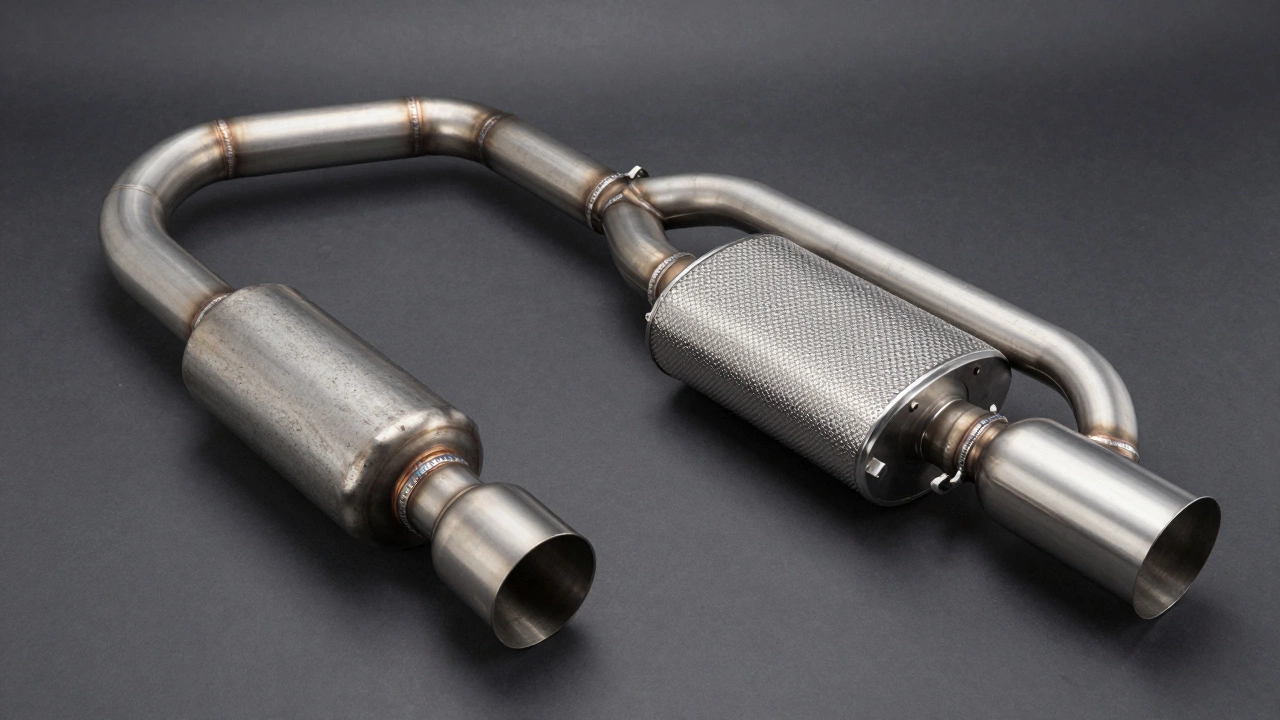
If you want a better sound without the headaches, there are smarter ways to go about it. A Cat-back Exhaust system replaces everything from the catalytic converter back. These are engineered to provide a deeper tone while using resonators to kill the drone.
Another option is a high-flow muffler. This gives you that aggressive sound during acceleration but keeps the cabin quiet while you're just cruising. If you're really committed to the "on/off" experience, look into an exhaust cutout valve. This allows you to switch between the stock muffler and a straight pipe with the press of a button, giving you the best of both worlds.
Will a muffler delete make my car faster?
Technically, it reduces back-pressure, which can lead to a tiny increase in top-end horsepower. However, for most street cars, this gain is so small that you won't feel it in real-world driving. In some cases, you may even lose a bit of low-end torque, making the car feel slower when accelerating from a stop.
Is it illegal to remove the muffler?
In most jurisdictions, yes. Most regions have laws regarding minimum noise levels and required emissions equipment. Removing the muffler can lead to fines or a failed vehicle inspection. Always check your local laws before modifying your exhaust.
What is "exhaust drone" and why does it happen?
Drone is a low-frequency booming sound that occurs when the exhaust system's natural frequency matches the engine's vibration at certain RPMs. Mufflers are designed to cancel these frequencies. When you remove the muffler, those sound waves echo through the cabin, creating a loud, irritating hum during highway driving.
Does a muffler delete affect fuel economy?
The impact on fuel economy is negligible. While it slightly changes the efficiency of the exhaust flow, it won't noticeably increase or decrease your MPG. However, if the modification causes you to drive more aggressively because the car sounds "sporty," you'll definitely use more fuel.
Can I put the muffler back in after deleting it?
Yes, as long as you kept the original muffler and the pipes weren't cut in a way that makes them too short to re-weld. If you had a custom straight pipe installed, you'll likely need a shop to weld the original components back in or buy a replacement OEM muffler.
Next Steps and Troubleshooting
If you've already done a muffler delete and you're hating the drone, your best bet is to install a resonator. A resonator is essentially a smaller, less restrictive muffler that targets specific frequencies to kill the buzz without taking away all the volume.
For those still undecided, start with a high-flow muffler replacement. It's a reversible change that satisfies the urge for a louder car without turning your vehicle into a neighborhood nuisance or a legal liability. If you're building a dedicated track car, a muffler delete makes sense-but for a daily driver, the cons almost always outweigh the pros.