Engine Oil Addition Calculator
Enter your dipstick reading to see how much oil to add.
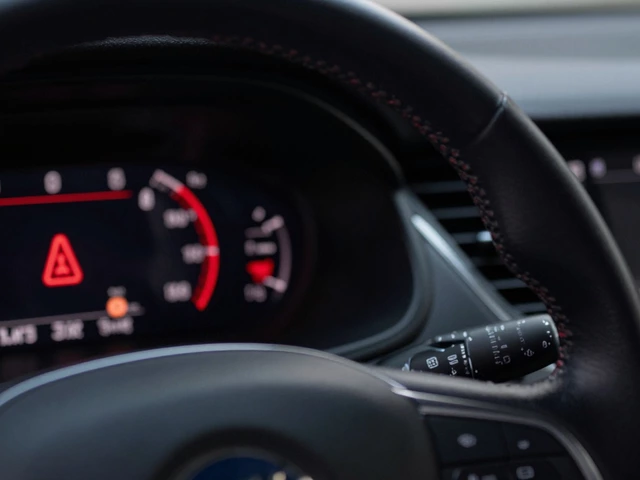
Ever pulled over because the dashboard lit up with a little oil can icon? You’re not alone. Millions of drivers panic when they see that warning - and for good reason. Running low on engine oil can wreck your engine faster than you think. But here’s the real question: how much oil should I add if it's low? Not too little. Not too much. Just right. Let’s cut through the noise and give you the straight answer - no fluff, no jargon.
First, check the dipstick - don’t guess
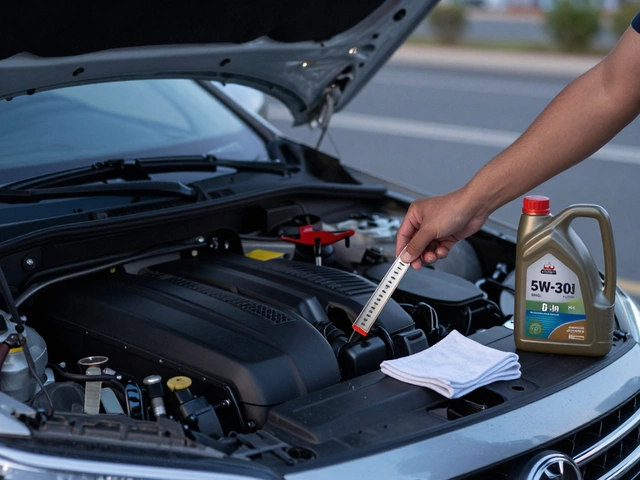
You can’t fix what you don’t measure. That’s why checking your oil with the dipstick is step one - and it’s not optional. Pop the hood, let the engine cool for at least five minutes (hot oil gives false readings), pull out the dipstick, wipe it clean with a rag, then reinsert it all the way. Pull it out again. Look at the oil level. There are two marks on the dipstick: minimum and maximum. If the oil is below the minimum mark, you need to add oil. If it’s between the two, you’re fine.
Most cars hold between 4 and 6 quarts of oil total. But here’s the key: you don’t need to fill it to the top. Overfilling is just as dangerous as underfilling. Too much oil creates pressure, causes foaming, and can damage seals or even the catalytic converter. So aim for the middle of the range - right at the full mark, not above it.
How much oil is really missing?
If your oil is right at the bottom of the dipstick, you’re probably low by about half a quart. That’s the most common scenario. If it’s halfway between min and max, you’re likely missing about a quarter of a quart. Most drivers add a full quart without thinking - and that’s where things go wrong.
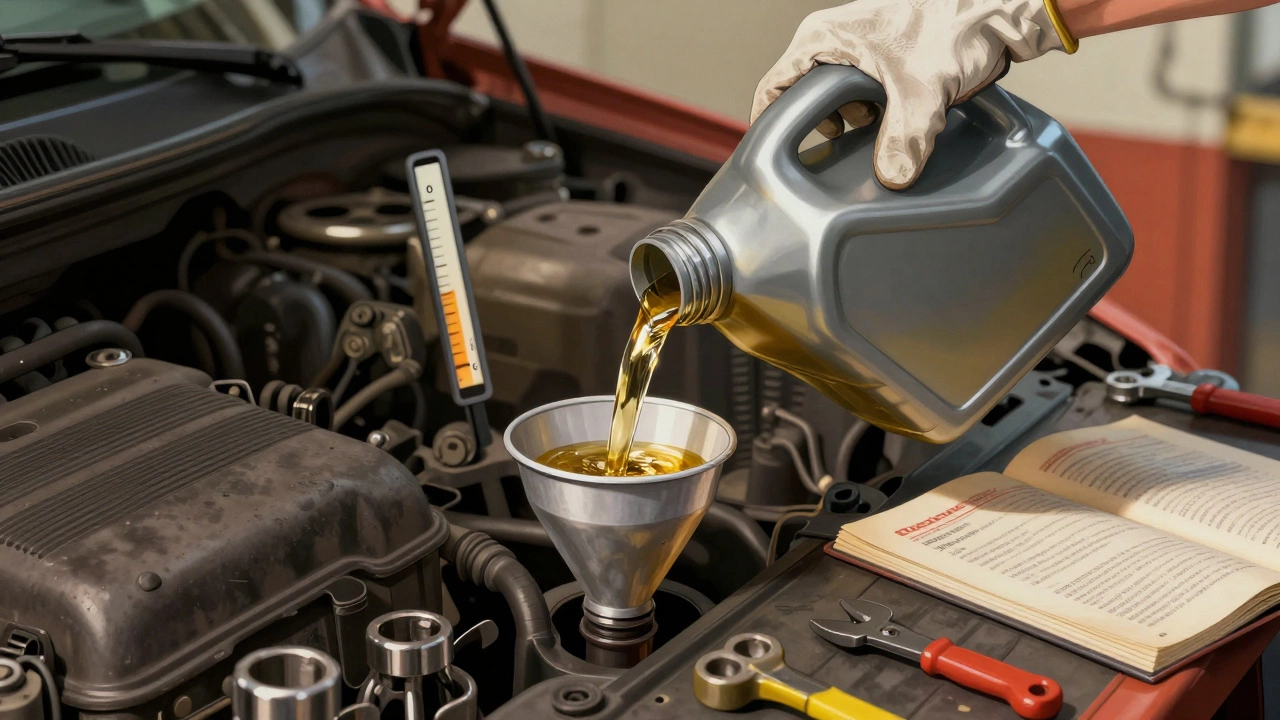
Let’s say your car takes 5 quarts total. If the dipstick shows the oil is at the low mark, you’re missing roughly 0.7 quarts. That’s not even two full cups. Adding a whole quart will push you over the max line. You don’t need to fix it all at once. Add a half quart, wait a minute, recheck, then add more if needed. Small amounts matter.
Oil viscosity matters - use the right type
Not all engine oils are the same. Your owner’s manual says what kind your engine needs - usually something like 5W-30 or 0W-20. Don’t mix types unless it’s an emergency. Mixing 5W-30 with 10W-40 might seem harmless, but it changes how the oil flows under heat and cold. Modern engines run tighter tolerances. Wrong viscosity = less protection = more wear.
Also, avoid old or used oil. If you’re topping off, use fresh oil from a sealed container. Don’t pour in that leftover half-gallon from last year’s oil change. It’s degraded, dirty, and won’t protect your engine the way it should.
Why is your oil low in the first place?
Oil doesn’t just disappear. If you’re constantly topping off, there’s a problem. Normal oil consumption is about a quarter quart every 3,000 miles. If you’re adding a full quart every 1,000 miles, something’s wrong. Common causes:
- Leaking seals (valve cover, oil pan, crankshaft)
- Worn piston rings letting oil burn in the combustion chamber
- Faulty PCV valve causing pressure buildup
- Using oil that’s too thin for your engine
Check under the car for puddles. Look for smoke from the tailpipe - blue smoke means burning oil. If you’re adding oil more than once between oil changes, get it checked. Ignoring this could mean a $3,000 engine rebuild down the road.
What happens if you wait too long?
Running with low oil isn’t like running out of gas. You won’t hear a loud bang. Instead, your engine starts to overheat silently. Bearings dry out. Pistons scuff. Valves stick. The damage builds slowly - until one day, your engine just stops. No warning. No sputtering. Just dead.
According to a 2024 study by the Auto Care Association, 18% of unexpected engine failures were linked to low oil levels that drivers ignored for weeks. Most of those drivers thought they were "just fine" because the car still started. But oil isn’t about starting. It’s about lubricating under load. And that’s where the damage happens.
Quick reference: How much to add
Here’s a simple guide based on dipstick readings:
| Oil Level | Estimated Missing | How Much to Add |
|---|---|---|
| Below minimum mark | 0.7-1.0 quarts | 0.5 quarts first, then recheck |
| Just above minimum | 0.3-0.6 quarts | 0.25 quarts, then recheck |
| Halfway between | 0.1-0.3 quarts | 0.125 quarts (a cup) or skip |
| At or above maximum | None | Do not add |
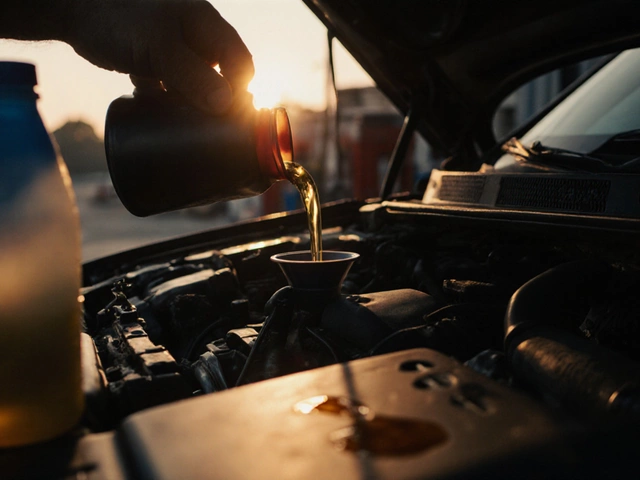
Always use a funnel. Spilling oil on hot engine parts is a fire hazard. And never top off while the engine is running. Turn it off. Wait. Check. Add slowly. Recheck.
When to change oil instead of topping off
Topping off is a temporary fix. It’s not a replacement for an oil change. If your oil looks dark, gritty, or smells burnt - even if the level is okay - it’s time to change it. Old oil loses its additives. It doesn’t lubricate. It doesn’t cool. It just grinds.
Most manufacturers recommend oil changes every 7,500 to 10,000 miles for synthetic oil. If you’re adding oil frequently, you might be due for a change sooner. Don’t wait for the light. Look at the oil. Smell it. Feel it. If it’s thick or has metal flakes - get it changed now.
Pro tip: Keep a quart in your trunk
It’s a small thing - but keeping one full quart of the right oil in your glove box or trunk can save you from a tow truck. If you’re on a long trip and the warning light comes on, you can safely top off and drive to the next service station. Just make sure it’s the right type. Write the viscosity on the bottle with a marker so you don’t grab the wrong one.
Can I use any oil to top off my engine?
No. Always use the oil type listed in your owner’s manual. Mixing different viscosities or brands can cause poor lubrication or sludge buildup. If you’re in a pinch and only have a different type, add just enough to get you to a shop - then change the oil immediately. Don’t make it a habit.
How often should I check my engine oil?
Check it once a month, or every time you fill up with gas. If your car is older, has high mileage, or you’ve had oil leaks before, check it weekly. Modern cars have sensors, but they’re not perfect. Your dipstick is still the most reliable tool.
Is it normal to lose oil between oil changes?
A little is normal. Most engines consume up to a quarter quart every 3,000 miles. If you’re adding more than half a quart between changes, that’s not normal. It could mean a leak, worn rings, or a faulty valve seal. Get it inspected.
What happens if I overfill the oil?
Overfilling causes the crankshaft to whip the oil into foam, which can’t lubricate properly. It also increases pressure, which can blow out seals, leak oil, or even damage the catalytic converter. If you overfill by more than half a quart, drain some out. Don’t drive with too much oil.
Can I add oil when the engine is hot?
You can, but it’s not accurate. Hot oil expands, so the dipstick will read lower than it should. Wait at least five minutes after turning off the engine. Let it settle. Then check and add. It’s safer and gives you the real reading.