Clutch Replacement Cost Calculator
Estimate Your Clutch Replacement Cost
Estimated Cost Breakdown
Industry average cost for standard cars: $1,200-$1,800
Replacing a clutch isn’t like changing your oil. It’s one of those repairs that makes you pause, stare at your bill, and wonder if you could’ve just bought a new car instead. The truth? A new clutch can cost anywhere from $800 to $2,500 - and that’s before you even know what kind of car you drive or where you live. If you’re asking how much a new clutch costs, you’re not just looking for a number. You’re trying to figure out if this repair is worth it, how long it’ll take, and whether you’re being overcharged.
What’s Actually in a Clutch Kit?
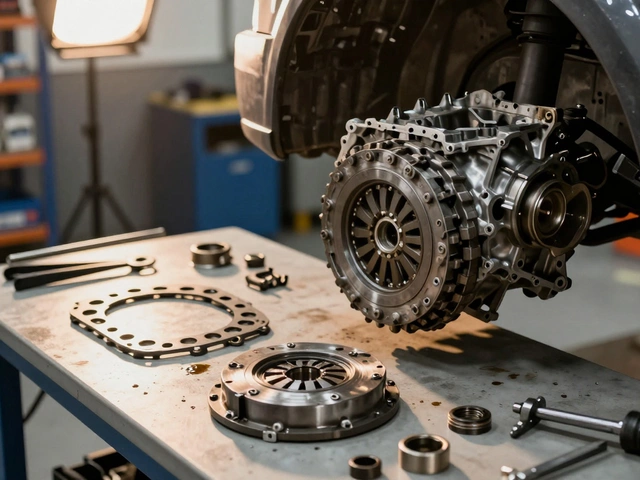
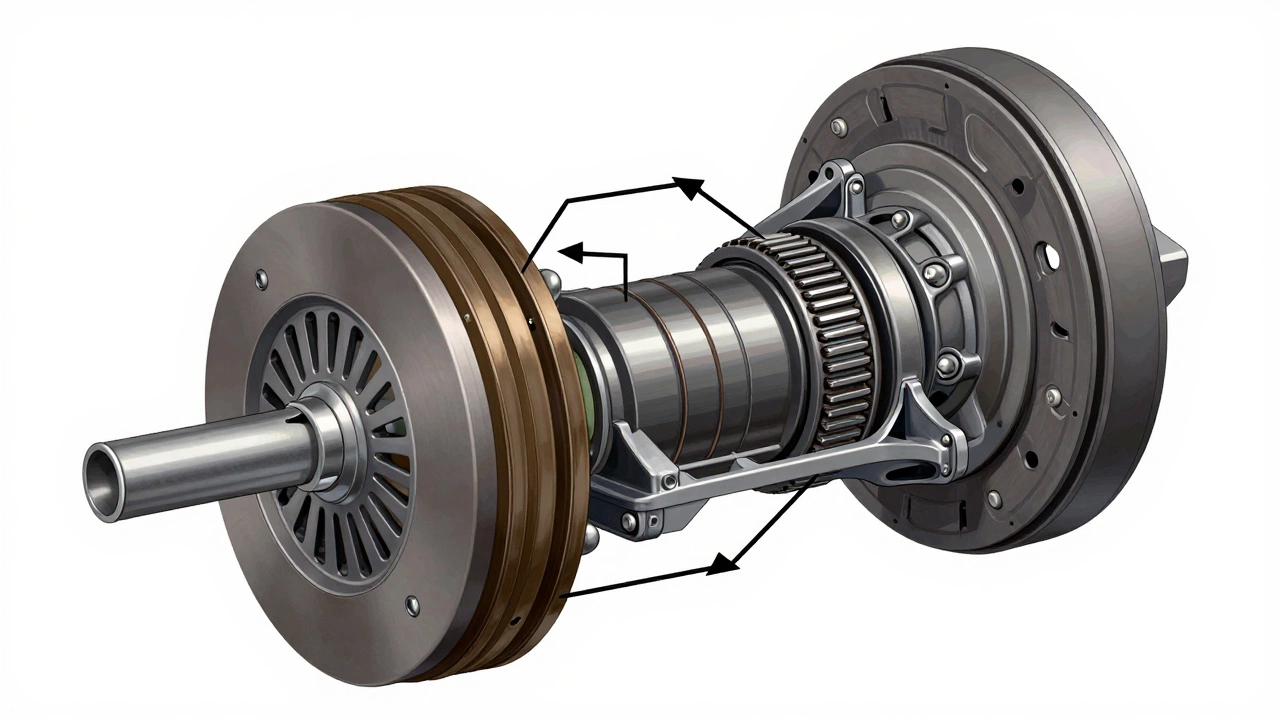
A clutch kit isn’t just one part. It’s a set of components that work together to connect your engine to the transmission. Most standard clutch kits include:
- Clutch disc - the friction surface that grips the flywheel and transfers power
- Pressure plate - the spring-loaded component that clamps the disc against the flywheel
- Release bearing (throw-out bearing) - the part that pushes against the pressure plate when you press the pedal
- Alignment tool - a small but essential gadget to keep the clutch centered during installation
Some kits also include a flywheel or a starter clutch, especially if the original is worn or cracked. Flywheels are often overlooked, but if yours is glazed or warped, replacing it at the same time saves you from doing the whole job twice. A dual-mass flywheel (DMF) can add $300-$700 to the cost, especially on European or modern diesel cars.
Clutch Kit Prices: OEM vs. Aftermarket
Not all clutch kits are created equal. The brand matters - and so does your budget.
OEM (Original Equipment Manufacturer) kits - made by the same company that built your car - usually cost between $400 and $800. Brands like Sachs, Luk, and Valeo are common OEM suppliers. These are reliable, quiet, and designed to match factory performance. If you drive daily and don’t tow or race, OEM is the safest pick.
Aftermarket kits from brands like Exedy, ACT, or LUK are cheaper, ranging from $250 to $600. They’re great for performance upgrades or if you’re on a tight budget. But don’t assume cheaper means better. Low-quality aftermarket clutches can slip, chatter, or wear out in under 20,000 miles. A $150 clutch might save you money now - but cost you $1,200 in labor to replace again.
Here’s a quick comparison:
| Kit Type | Price Range | Best For |
|---|---|---|
| OEM | $400-$800 | Daily drivers, low-mileage use |
| Performance Aftermarket | $500-$1,000 | Towing, racing, modified engines |
| Economy Aftermarket | $200-$400 | Short-term fixes, budget builds |
Labor Costs: The Real Hidden Expense
The clutch kit itself is only half the story. Labor is where most of the cost hides - and it’s not cheap.
Replacing a clutch means pulling the transmission. That’s not a 30-minute job. Even on a simple compact car, it takes 5 to 8 hours. On trucks, SUVs, or rear-wheel-drive vehicles, it can take 10+ hours. Labor rates vary wildly:
- Independent shops: $90-$130/hour
- Dealerships: $130-$180/hour
- Specialty performance shops: $150-$220/hour
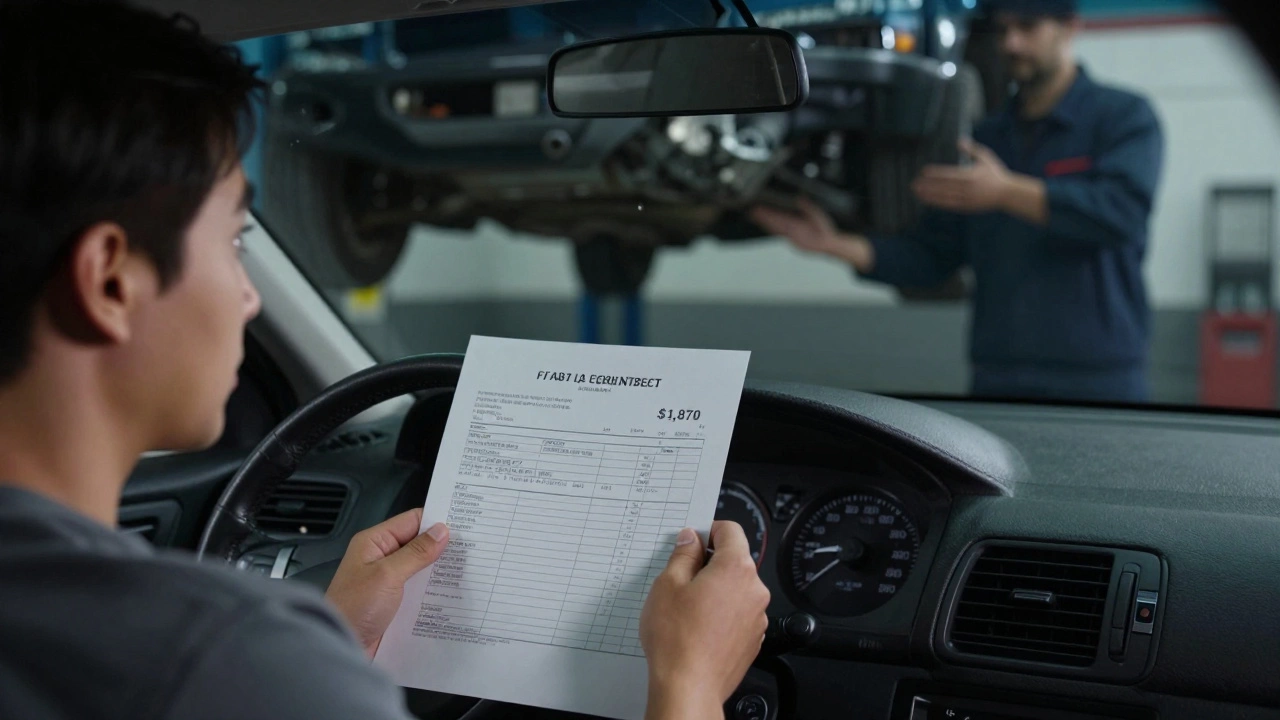
So if your car needs 7 hours of labor at $110/hour, that’s $770 right there. Add a new flywheel ($500) and an OEM clutch kit ($600), and you’re at $1,870 before tax. That’s why some people get sticker shock.
One trick to save money? Ask if the shop uses a flat-rate labor guide. Many shops charge by the hour, but some use standardized time estimates from sources like Mitchell or Alldata. For example, a 2018 Honda Civic clutch replacement might have a flat rate of 6.2 hours - no matter how long it actually takes. That gives you a predictable bill.
What Your Car Type Actually Costs
Not all clutches are the same. Your car’s make, model, and drivetrain make a huge difference.
Compact cars (Honda Civic, Toyota Corolla, Ford Focus) - These are the cheapest to fix. Clutch kits run $300-$500. Labor is 5-7 hours. Total cost: $900-$1,400.
SUVs and trucks (Toyota Tacoma, Ford F-150, Jeep Wrangler) - Heavier vehicles need stronger clutches. Kits start at $500 and can hit $900. Labor takes 7-10 hours. Total: $1,400-$2,200.
European cars (Volkswagen Golf, BMW 3 Series, Audi A4) - These often have dual-mass flywheels and complex hydraulic systems. Kits alone can cost $600-$1,000. Labor is 8-12 hours. Total: $1,800-$2,800. If your car has a DSG or dual-clutch transmission, you’re looking at a whole different repair - and a much higher price tag.
Performance cars (Mazda MX-5, Subaru WRX, Hyundai Veloster N) - These usually come with performance clutches from the factory. Replacing them with a stock unit costs $700-$1,100 in parts. Labor: 8-10 hours. Total: $1,600-$2,500.
Signs You Need a New Clutch (Before You Get Ripped Off)
Not every slipping gear means you need a new clutch. Sometimes it’s just a cable adjustment or low fluid. Here’s what to look for:
- Slipping clutch - Engine revs up but speed doesn’t. Happens most under heavy load, like accelerating uphill or towing.
- Grinding when shifting - If you hear metal-on-metal when shifting, the release bearing or clutch disc is worn.
- Clutch pedal feels spongy or goes all the way to the floor - Could be air in the hydraulic system or a worn master cylinder.
- Burning smell - A hot, burnt odor after driving means the clutch disc is overheating and wearing out fast.
- Car won’t move in gear - If you’re in first gear and the engine revs but the car doesn’t budge, the clutch is completely gone.
Don’t wait until it fails completely. A failing clutch can damage your flywheel, transmission input shaft, or even the starter. Replacing it early saves money.
Can You Replace a Clutch Yourself?
Yes - if you have time, tools, and patience. But it’s not a weekend project for beginners. You’ll need:
- Jack and jack stands
- Transmission jack
- Socket set, torque wrench, pry bars
- Clutch alignment tool
- Fluid catch pans
- Time: 8-12 hours minimum
Most DIYers spend $400-$700 on parts and save $800-$1,200 on labor. But if you mess up the torque specs on the pressure plate or misalign the clutch, you’ll ruin the new parts - and possibly the transmission.
Pro tip: Watch a YouTube video of your exact car model being repaired. If you see someone using a special tool you don’t have, that’s your sign to hire a pro.
How to Avoid Being Overcharged
Clutch replacement is one of the most common scams in auto repair. Here’s how to protect yourself:
- Get a written estimate before any work starts - include parts, labor, and taxes.
- Ask if the flywheel needs replacement. Some shops push it to increase the bill. If your flywheel looks smooth and has no cracks or grooves, it might be fine.
- Don’t buy parts from the shop unless you have to. You can buy your own clutch kit online and bring it in. Many shops will install customer-supplied parts.
- Check reviews. Look for shops that specialize in your car’s make. A Honda specialist won’t charge the same as a general mechanic.
- Ask for the old parts back. If they say no, that’s a red flag.
When to Consider a Used or Rebuilt Clutch
Some shops sell rebuilt clutches - parts taken from donor vehicles and reconditioned. They’re cheaper, sometimes $200-$400. But here’s the catch: you don’t know how many miles were on the original parts. A rebuilt clutch might last 20,000 miles… or 2,000. It’s a gamble.
Only consider this if:
- You’re on a tight budget
- You’re driving a high-mileage car you plan to sell soon
- You’re okay with replacing it again in a year or two
For long-term reliability, stick with new parts.
What’s the Lifespan of a New Clutch?
On average, a new clutch lasts 50,000 to 100,000 miles. But that’s not a guarantee. How you drive matters more than the brand.
Clutches die fast if you:
- Keep your foot on the pedal while stopped
- “Ride” the clutch instead of shifting smoothly
- Launch aggressively or tow heavy loads without a performance clutch
Drive gently, and your clutch will outlast your tires - and maybe your car.
How long does it take to replace a clutch?
Most clutch replacements take between 5 and 10 hours, depending on the car. Compact cars like a Honda Civic take around 6-7 hours. Trucks and SUVs can take 8-12 hours. Luxury or performance cars with complex transmissions may take longer. Labor time is usually the biggest factor in cost.
Can you drive with a bad clutch?
You can drive a car with a slipping clutch for a short time - but it’s risky. The clutch will get worse fast, and you might suddenly lose power while driving. You could also damage the flywheel or transmission. If you notice slipping, grinding, or burning smells, get it checked within a few days.
Is it cheaper to replace the clutch or buy a new car?
If your car is in good condition otherwise - no major engine or transmission issues - replacing the clutch is almost always cheaper than buying a new car. A $1,800 clutch repair on a 2018 Toyota Corolla with 80,000 miles is a smart investment. But if your car has multiple expensive problems, it might be time to move on.
Do you need to replace the flywheel with the clutch?
Not always, but it’s often recommended. If the flywheel is cracked, warped, or has deep grooves, it will ruin a new clutch quickly. A mechanic should inspect it. If it looks smooth and intact, you can skip replacing it. Dual-mass flywheels are expensive - $500-$800 - so if yours is fine, saving on this part can cut $600 off your bill.
Why is clutch replacement so expensive?
It’s expensive because it requires pulling the transmission, which is labor-intensive. The clutch itself is only part of the cost. You’re paying for skilled labor, specialized tools, and the risk of damaging other parts during the job. There’s no quick fix - it’s a multi-hour process that can’t be rushed.
Final Thoughts: Is It Worth It?
Yes - if your car is otherwise reliable. A clutch replacement isn’t a luxury. It’s a necessary repair to keep your car moving. The key is knowing what you’re paying for. Don’t just go with the cheapest quote. Ask questions. Get a breakdown. Compare labor rates. And never skip the flywheel inspection.
On average, most people pay between $1,200 and $1,800 for a full clutch replacement on a standard car. If you’re under $1,000, you’re probably getting a budget kit and skipping the flywheel. If you’re over $2,500, you might be paying dealership rates or dealing with a luxury car. Either way, you’re not being ripped off - you’re paying for what the job actually takes.