Brake Pad Health Checker
Check Your Brake Condition
Select any signs you're experiencing to assess your brake pad health:
Your car’s brakes are the most important safety system you have. Yet most drivers don’t check them until something goes wrong - usually with a loud screech or a sudden jolt. If you’re wondering how to tell if your brake pads are bad, you’re not alone. The truth is, brake pads wear out slowly. By the time you notice something’s off, you might already be risking your safety - and your wallet.
1. You Hear a Squealing or Screeching Sound
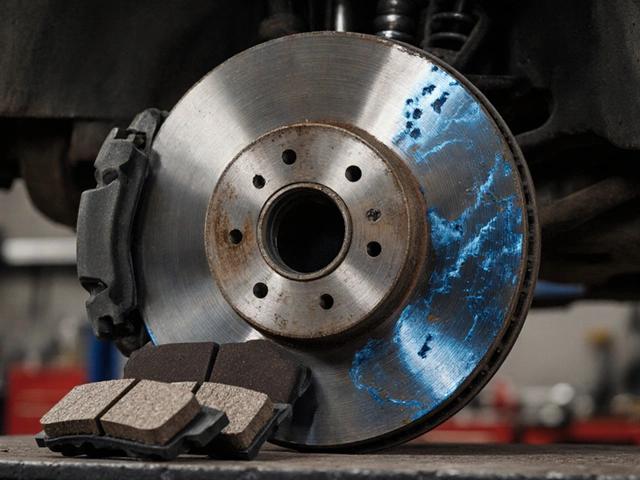
That high-pitched squeal when you press the brake pedal? That’s not your car singing. It’s a metal wear indicator tapping against the rotor. Most modern brake pads have a small metal tab built into them. When the friction material wears down to about 2mm thick, that tab scrapes the rotor to warn you. It’s not a bug - it’s a feature. Ignore it, and you’ll soon hear a grinding sound instead. That’s metal-on-metal. And that’s when you start damaging the rotors, which cost three times as much to replace as the pads.
2. Your Brake Pedal Feels Spongy or Goes Further Than Usual
If you’re used to stopping with a firm press and now you have to push the pedal halfway to the floor, your brake pads are likely worn thin. Less pad material means less friction. That translates to longer stopping distances. It’s not just inconvenient - it’s dangerous. A 2023 study by the UK’s Driver and Vehicle Standards Agency found that vehicles with worn brake pads took up to 40% longer to stop in wet conditions. If your pedal feels soft or mushy, get it checked immediately.
3. You Feel Vibration or Pulsing in the Pedal or Steering Wheel
When brake pads wear unevenly, they can cause the rotors to warp from overheating. That’s when you feel a pulsing sensation in the brake pedal - or worse, the steering wheel shakes when you brake. It’s not just the pads. The rotors are likely damaged too. You might think it’s a wheel balance issue, but if the vibration only happens when braking, it’s almost always brake-related. Warped rotors don’t fix themselves. They get worse. And replacing them adds £150-£300 to your bill.
4. The Brake Warning Light Comes On
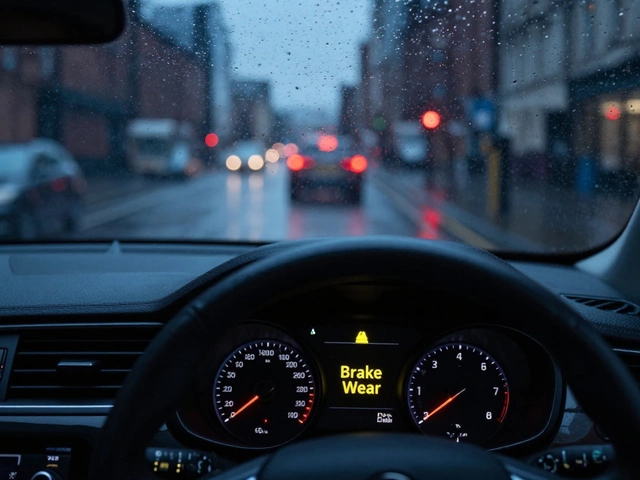
Modern cars have sensors that monitor brake pad thickness. If your dashboard lights up with a brake warning symbol - usually a circle with an exclamation point inside or the word “BRAKE” - don’t ignore it. It’s not always the pads, but it’s often the first sign. Some systems also trigger the light if the brake fluid is low, which can happen if pads are worn and the calipers have extended further than normal. Either way, this light means you need to stop driving and get it checked within 24 hours.
5. Your Car Pulls to One Side When Braking
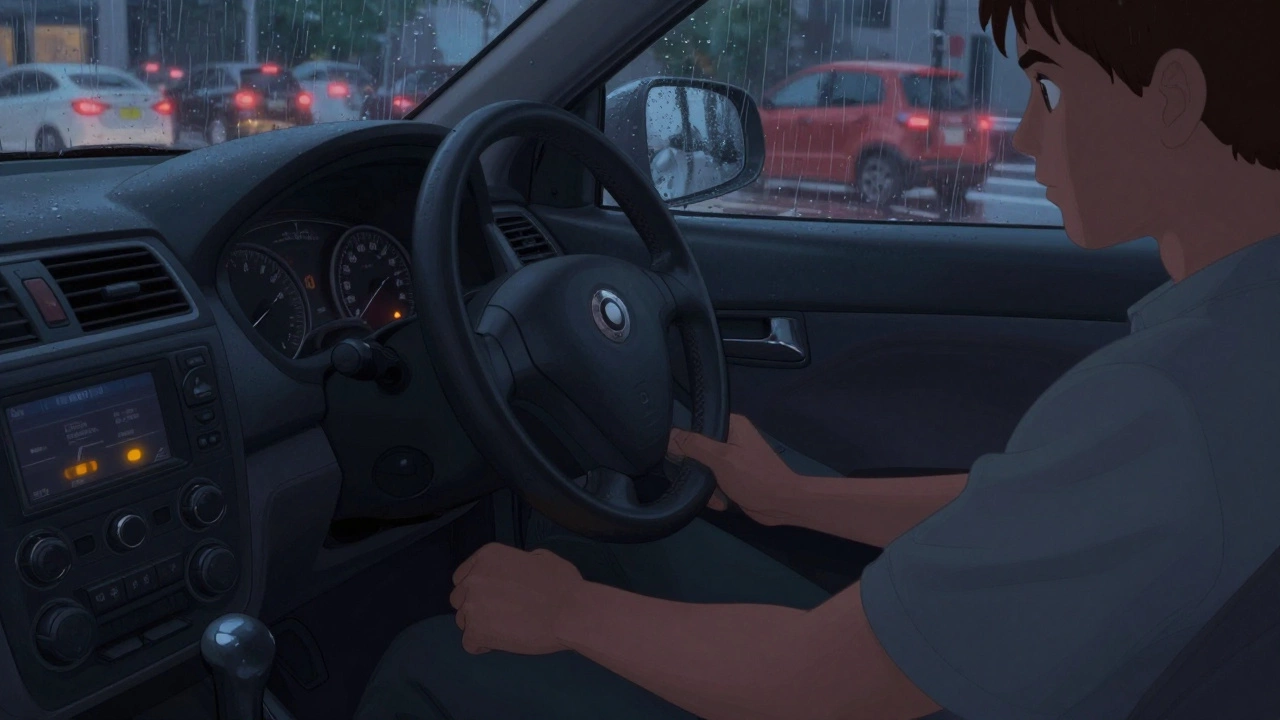
If your car tugs left or right every time you press the brake, something’s unbalanced. It could be a stuck caliper, a seized brake line, or uneven pad wear. One side is doing more work than the other. That’s not normal. It could mean one pad is completely worn out while the other still has life left. It could also mean brake fluid is leaking. Either way, pulling while braking reduces control - especially in emergencies. This isn’t a “maybe later” issue. It’s a “right now” problem.
6. You See Less Than 3mm of Pad Material
Here’s a simple way to check without lifting the car: look through the wheel spokes. You don’t need to remove the wheel. If you can see the brake pad through the gaps in the rim, measure it. Use a ruler or even a coin. A new brake pad is usually 10-12mm thick. Once it’s down to 3mm, it’s time to replace. At 2mm, you’re already in danger zone. If you can’t see the pad at all, you’re already damaging the rotor. Many mechanics recommend replacing pads before they hit 3mm - just to be safe. Don’t wait for the squeal.
7. Your Car Takes Longer to Stop or Feels Less Responsive
Think about how your car felt when the pads were new. Now compare it to today. Do you need to brake earlier for corners? Do you feel like you’re coasting instead of stopping? That’s not your imagination. Worn brake pads lose their gripping power. The friction material breaks down over time, especially if you drive in stop-and-go traffic or hilly areas. In Manchester, with its frequent rain and urban driving, brake pads wear faster than you think. A 2024 survey of UK mechanics found that 62% of brake pad replacements were done because drivers waited too long - not because they didn’t know the signs.
How Often Do Brake Pads Actually Wear Out?
There’s no fixed mileage. It depends on how you drive. City driving with lots of braking? You might need new pads every 20,000-30,000 miles. Highway driving with gentle stops? Maybe 50,000 miles. Heavy loads, towing, or aggressive braking? They’ll wear out faster. Most manufacturers suggest checking them every 12,000 miles or during every oil change. If you haven’t looked at them in over a year, you’re overdue.
What Happens If You Ignore Bad Brake Pads?
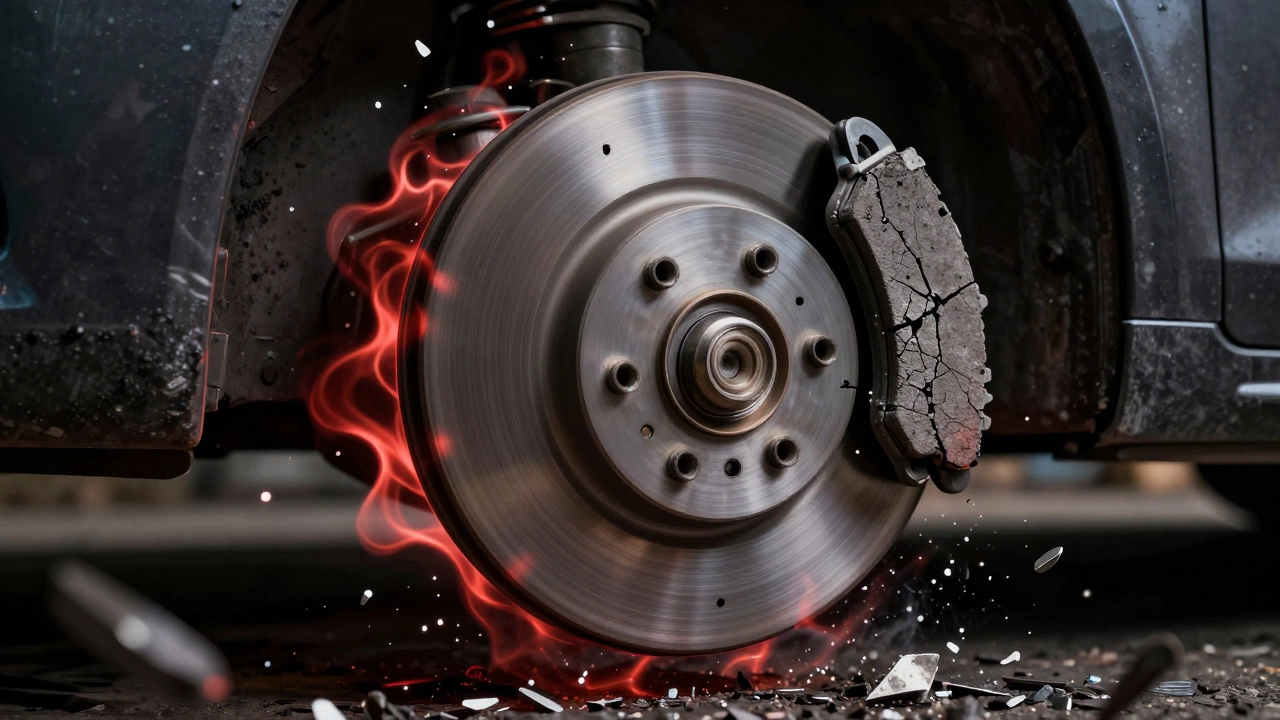
Ignoring worn pads doesn’t just mean a bigger repair bill. It means you’re driving with compromised safety. Once the pads are gone, the metal backing plate grinds against the rotor. That destroys the rotor. It can damage the caliper. It can even cause a brake failure. In the UK, driving with worn brakes is a motoring offence. You could fail your MOT, face a fine, or even be held liable in an accident if your brakes were known to be faulty.
What Should You Do Next?
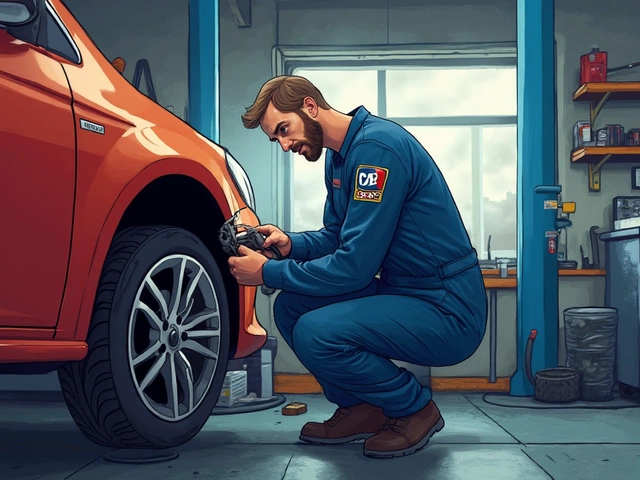
If you’ve noticed any of these signs, don’t delay. Book a brake inspection. A good mechanic will check:
- Pad thickness (front and rear)
- Rotor condition (for warping or scoring)
- Caliper movement and fluid leaks
- Brake fluid level and contamination
Most garages offer free brake checks. Use them. It takes 15 minutes. And if your pads are worn, you’ll know exactly what to do - no guesswork.
Pro Tip: Don’t Just Replace Pads - Check Everything
Some shops try to upsell you. But if your pads are worn, it’s smart to replace the rotors too - especially if they’re scored or thin. New pads on old rotors won’t last. You’ll get noise, vibration, and uneven wear again in just a few thousand miles. Ask for a full brake assessment. A quality replacement includes pads, rotors if needed, and a bleed of the brake fluid. Don’t settle for the cheapest option. Your life depends on it.
Can I drive with bad brake pads?
You can, but you shouldn’t. Driving with worn brake pads increases your stopping distance, damages other parts like rotors and calipers, and puts you at risk of a sudden brake failure. In the UK, it’s also a potential MOT failure and a legal liability if you’re in an accident.
How long do brake pads last on average?
Most brake pads last between 20,000 and 50,000 miles. City drivers with frequent stops often need replacements at the lower end. Highway drivers may get closer to 50,000 miles. Aggressive driving, towing, or mountainous terrain will shorten that lifespan significantly.
Is it safe to replace just the front brake pads?
It’s not recommended. Brakes work as a system. Replacing only the front pads creates uneven braking force, which can cause the car to pull, increase rear pad wear, and reduce overall stopping power. Always replace pads in pairs - front or rear - and ideally both axles at the same time.
Can I check my brake pads myself?
Yes. Look through the wheel spokes. You should see the brake pad pressed against the rotor. If the pad looks thinner than a £1 coin (about 3mm), it’s time to replace. If you can’t see it at all, you’re already damaging the rotor. Never rely on sound alone - visual inspection is more reliable.
Do brake pads wear out faster in the UK?
Yes. Wet, cold, and stop-and-go driving - common in UK cities like Manchester - accelerates brake wear. Rain reduces friction, forcing you to brake harder. Frequent traffic lights and congestion mean more frequent braking. UK drivers typically need brake pad replacements sooner than drivers in countries with longer highway commutes.
Final Thought: Brake Pads Are a Safety Issue, Not a Cost Issue
Replacing brake pads costs £100-£300. A new set of rotors? £200-£500. A car accident because your brakes failed? That’s not a cost - it’s life-changing. Don’t wait for the noise. Don’t wait for the warning light. If you’ve driven more than a year since your last brake check, get them looked at. Your family, your passengers, and every other driver on the road will thank you.