Suspension Replacement & Cost Estimator
Vehicle Configuration
Recommendation & Analysis
Estimated Cost Breakdown
Do not delay front suspension repairs. Front components control steering and braking stability.
Select your vehicle configuration and click Analyze to see recommendations.
Imagine you’re driving down the motorway and your car feels like it’s floating over every bump. You take it to a garage, and they tell you your suspension is shot. Then comes the tricky question: can you just fix the broken parts without replacing everything else? Specifically, can I replace shocks but not struts? It sounds like a simple money-saving move, but in the world of automotive engineering, mixing old and new suspension components is rarely that straightforward.
The short answer is yes, technically you can. Mechanics do it all the time. However, whether you *should* depends entirely on your vehicle’s design, the condition of the remaining parts, and how much you value a smooth, safe ride. To make this decision without getting ripped off or compromising safety, you need to understand exactly what these parts do and why they don’t always play nice together.
Understanding the Difference Between Shocks and Struts
Before we dive into the replacement strategy, let’s clear up the confusion. Most people use "shocks" and "struts" interchangeably, but they are two different beasts with distinct roles in your car’s suspension system.
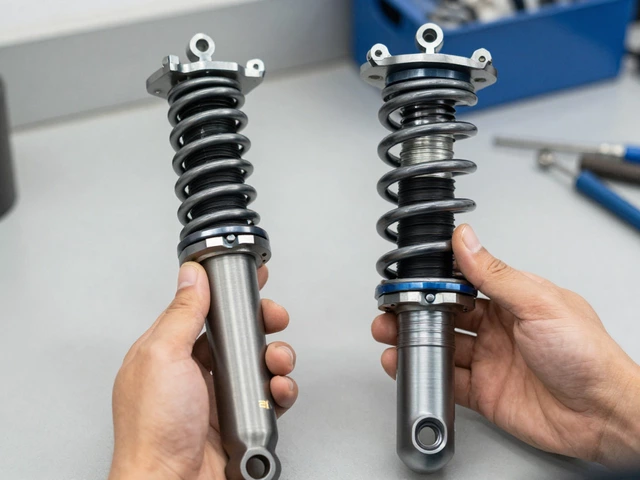
Shock Absorbers are devices designed to dampen spring oscillations and control the movement of the suspension. Think of them as the brakes for your springs. When you hit a pothole, the spring compresses and then wants to bounce back. The shock absorber stops that bouncing, keeping the tire planted on the road. They are standalone components attached to the suspension assembly.
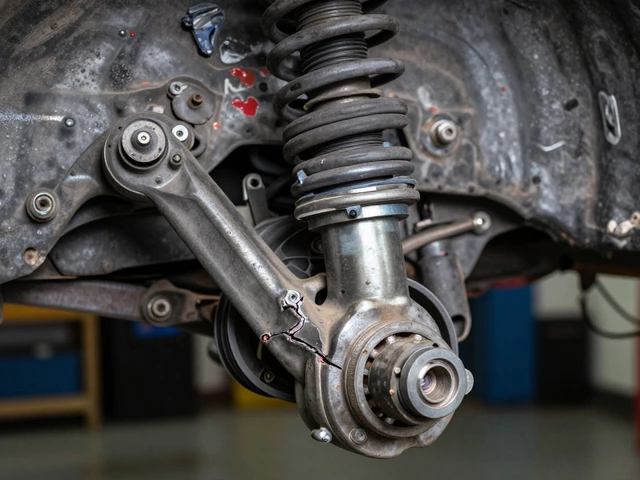
Struts, on the other hand, are structural components of the suspension that also serve as a mounting point for the wheel and steering system. A strut isn’t just a damper; it includes the coil spring, the shock absorber, and a mount, all wrapped into one unit. In many modern cars, especially front-wheel-drive models, the strut holds the entire weight of the engine and chassis.
This structural difference is crucial. If your car has shocks, replacing them is often a bolt-on job. If your car has struts, you’re dealing with a major structural component that affects alignment and handling geometry.
Why Mixing Old and New Parts Is Risky
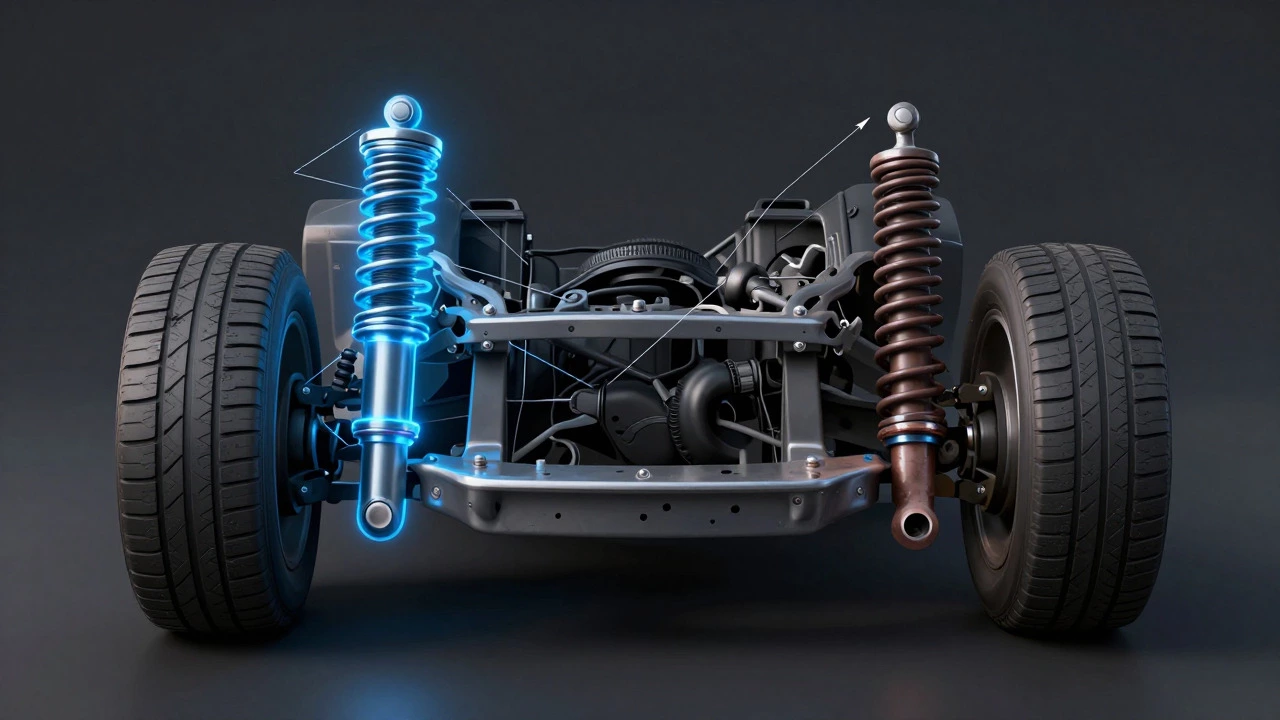
So, if your rear shocks are worn out but your front struts are fine, can you just swap the rears? Absolutely. That’s standard practice. But what if your car uses shocks on all four corners, and only the front ones are bad? Or worse, what if you have struts in the front and shocks in the rear, and you want to mix brands or ages?
Here is the problem: suspension systems work in harmony. When you replace only one side or one corner, you create an imbalance. Imagine walking with one leg shorter than the other. Your body compensates, but it puts stress on your hips and knees. Similarly, a new shock or strut will have firm damping characteristics, while the old one will be soft and sluggish.
This mismatch leads to several issues:
- Uneven Tire Wear: The new part keeps the tire flat against the road, while the old one allows excessive bouncing. This causes cupping or scalloping on the tires paired with the worn components.
- Pulling to One Side: During braking or cornering, the stiffer new shock will react faster than the old one. This can cause the car to pull toward the weaker side, making steering feel unpredictable.
- Increased Stress on Other Parts: The imbalance forces the CV joints, ball joints, and tie rods to work harder, potentially leading to premature failure in those areas.
Most reputable mechanics will recommend replacing shocks and struts in pairs-at least on the same axle (both fronts or both rears). Replacing all four at once is ideal but not always necessary if the rear components are still in good shape.
When Can You Safely Replace Only Some Components?
There are scenarios where partial replacement makes perfect sense. It’s not about cutting corners; it’s about smart maintenance.
Scenario 1: Different Front and Rear Designs Many vehicles use struts in the front and shocks in the rear. If your front struts are leaking oil and feeling rough, but your rear shocks are tight and responsive, there is no mechanical reason to replace the rears. They perform different functions and wear at different rates due to load distribution.
Scenario 2: Recent Partial Replacement Did you replace your front shocks last year? If so, and now the rear ones are failing, you should definitely just replace the rears. The age gap is small enough that performance differences won’t be drastic. Just ensure you buy the exact same brand and model for consistency.
Scenario 3: Budget Constraints If money is tight, prioritize the front axle. The front suspension handles steering and most of the braking force. Worn front struts pose a greater safety risk than worn rear shocks. You can tackle the rears later, but don’t delay the fronts.
The Hidden Costs of Partial Suspension Repairs
Replacing shocks or struts isn’t just about buying the part. Labor and ancillary components often add up quickly. Here is what you need to watch out for.
| Component | Necessity Level | Why It Matters |
|---|---|---|
| Springs | Conditional | If the spring is sagging or corroded, it must be replaced. Often sold separately from shocks, but integrated into struts. |
| Bushings | High | Rubber bushings degrade over time. Installing new shocks on old, cracked bushings results in clunking noises and poor performance. |
| Mounts (Top Hats) | Critical for Struts | Strut mounts contain bearings that allow steering rotation. Worn mounts cause vibration and uneven tire wear. |
| Wheel Alignment | Mandatory for Struts | Removing struts disturbs the camber angle. An alignment costs £50-£80 but saves hundreds in tire wear. |
| Stabilizer Links | Recommended | These connect the sway bar to the suspension. They often fail around the same time as shocks. |
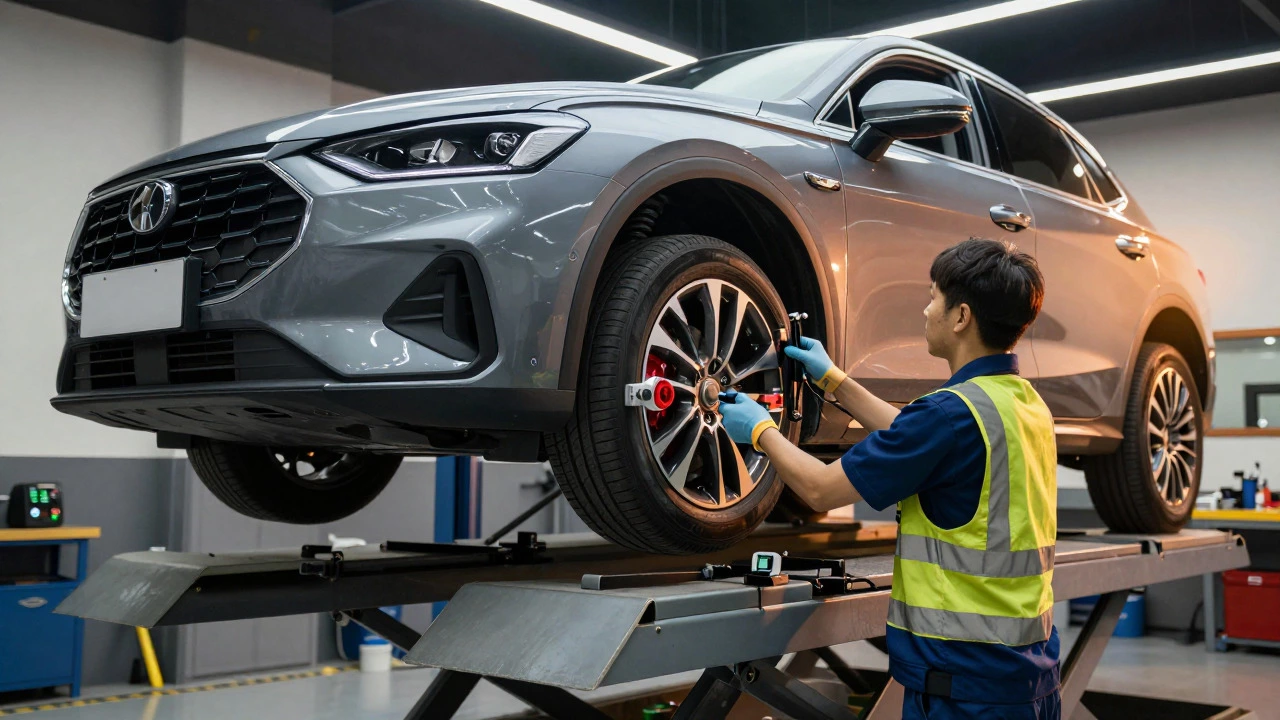
If you decide to replace only the front struts, you cannot skip the alignment. Unlike shocks, which can sometimes be swapped without altering geometry, struts are integral to the wheel’s position. Failing to align after a strut replacement is like painting a wall without filling the cracks-it looks okay for a week, then falls apart.
Signs You Need Immediate Attention
Don’t wait for a catastrophic failure. Suspension degradation happens gradually. Here are the red flags that indicate your shocks or struts are done:
- Nose Diving: Does the front of the car dip sharply when you brake? This means the front struts aren’t controlling the weight transfer.
- Excessive Bouncing: Hit a speed bump and keep counting the bounces. More than two or three oscillations indicates worn damping.
- Fluid Leaks: Look at your shocks or struts. Any oily residue on the body is a sign of seal failure. Once the fluid leaks out, the component is useless.
- Steering Vibration: If the steering wheel shudders at highway speeds, worn strut mounts or internal bearing failures could be the culprit.
- Uneven Tire Wear: Check your tires. Cupping (dips in the tread) is a classic sign of worn suspension components.
DIY vs. Professional Installation
Replacing shocks is relatively DIY-friendly if you have basic tools and a jack. You’ll need a socket set, wrenches, and possibly a spring compressor if you’re dealing with separate springs. However, replacing struts is a different story.
Struts hold significant tension from the coil spring. Compressing a spring incorrectly can launch it across the garage-or worse, injure you. Many professionals recommend having a mechanic handle strut replacements unless you own a dedicated spring compressor kit and have experience.
Even if you’re handy, consider the labor cost. In the UK, labor rates vary, but a full strut replacement including alignment might cost between £300 and £600 per axle. Doing it yourself saves cash but requires investment in tools and time.
Choosing the Right Replacement Parts
Not all shocks and struts are created equal. You’ll see options ranging from budget aftermarket brands to OEM (Original Equipment Manufacturer) parts and high-performance upgrades.
OEM Parts: These match your car’s factory specifications. They provide the ride quality you’re used to. Brands like Monroe, KYB, and Sachs dominate this space. For daily drivers, OEM-equivalent parts are usually the best choice.
Performance Shocks: If you tow heavy loads or drive aggressively, consider adjustable or gas-charged shocks. Bilstein and Koni offer units that reduce fade and improve response. However, they may result in a firmer ride.
Budget Options: Cheap shocks often use inferior seals and fluids. They might save you £20 upfront but fail within six months. Given the labor involved, cheap parts are rarely economical.
Always check the fitment guide for your specific vehicle model, year, and trim level. Suspension setups can vary even within the same car line depending on whether it’s a sport package or base model.
Maintenance Tips to Extend Suspension Life
Once you’ve invested in new shocks or struts, protect that investment. Here are practical steps to keep your suspension healthy:
- Avoid Overloading: Exceeding your vehicle’s payload capacity stresses the suspension beyond its design limits.
- Inspect Regularly: Every oil change, ask your mechanic to check for leaks or damaged boots.
- Drive Carefully: Speed bumps and potholes are the enemies of suspension. Slow down before hitting them to minimize impact force.
- Keep Tires Properly Inflated: Under-inflated tires absorb more shock, transferring extra stress to the struts and shocks.
- Check Alignment Annually: Even with good shocks, misaligned wheels accelerate wear on all suspension components.
Frequently Asked Questions
Can I replace just one shock absorber?
Technically yes, but it is highly discouraged. Replacing only one shock creates an imbalance in damping force, leading to uneven handling, increased tire wear, and potential safety risks. Always replace shocks in pairs on the same axle.
Do I need an alignment after replacing shocks?
If you replace standalone shock absorbers, an alignment is usually not required unless the mounting points were disturbed. However, if you replace struts, an alignment is mandatory because struts are structural components that affect wheel geometry.
How long do shocks and struts last?
On average, shocks and struts last between 50,000 and 100,000 miles. However, this varies significantly based on driving conditions, road quality, and vehicle load. Harsh driving or frequent off-roading can reduce lifespan by half.
What is the difference between gas-filled and hydraulic shocks?
Hydraulic shocks use fluid alone to dampen motion, which can lead to foaming and reduced performance under heavy use. Gas-filled shocks (usually nitrogen) prevent foaming, providing consistent damping and better heat dissipation. Gas shocks are generally preferred for modern vehicles.
Can I install struts myself?
While possible, it is risky without proper tools. Struts contain compressed springs that can cause serious injury if released unexpectedly. Unless you have a spring compressor and experience, professional installation is recommended for safety.
Why does my car bounce after hitting a bump?
Excessive bouncing indicates worn shock absorbers or struts. Healthy dampers should stop the spring from oscillating within two cycles. If your car continues to bounce, the internal valves or seals have likely failed, requiring replacement.