Bent Suspension Diagnostic Checker
Select Your Symptoms
Diagnostic Result
Select at least one symptom above to analyze your vehicle's condition.
Have you ever hit a deep pothole at speed and felt that sickening *clunk*? Or maybe you’re driving down the highway and notice your car feels like it’s constantly pulling to the left, even though your hands are steady on the wheel. It’s a stressful feeling. You might be wondering if your suspension is the system of springs, shocks, and linkages that connects your vehicle's body to its wheels actually bent, or if it’s just a minor annoyance.
The truth is, a bent suspension component isn’t just about comfort. It affects how your tires touch the road, which directly impacts braking distance and handling in an emergency. Ignoring a bent part can lead to uneven tire wear, premature failure of other components, and in severe cases, loss of vehicle control. This guide will help you identify the specific signs of a bent suspension so you can decide whether you need a quick alignment or a more serious repair.
The Immediate Physical Inspection: What to Look For Underneath
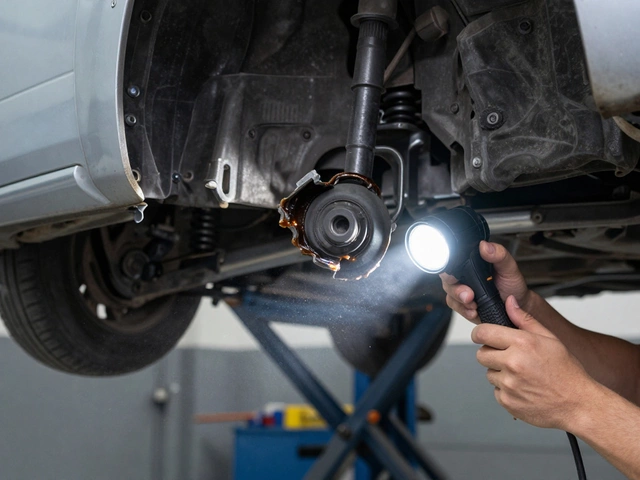
Before you start driving around testing for pulls, grab a flashlight and get under the car (safely, with it on level ground and jacked up properly). Visual inspection is often the fastest way to spot obvious damage. You don’t need to be a mechanic to see if something looks out of place.
Start by looking at the control arms are structural links that connect the wheel hub assembly to the vehicle frame. These are heavy-duty steel or aluminum beams. If one has been bent, it might look twisted or warped compared to the other side. Hold your eye level with the arm; if it doesn’t run straight parallel to the ground or looks kinked, that’s a red flag.
- Check the Struts and Shocks: Look at the main cylindrical bodies of your shock absorbers or struts. They should be perfectly straight. A dent or bend here usually means internal oil seals are damaged, rendering them useless regardless of shape.
- Inspect the Tie Rods: These connect your steering rack to the wheels. A bent tie rod end often causes the ball joint boot to tear open. If you see grease leaking from a torn rubber boot near the steering connection, the metal inside is likely compromised.
- Look at the Spindles/Knuckles: The spindle holds the wheel bearing and brake rotor. If this bends, the wheel itself may sit at an odd angle relative to the brake caliper. This is harder to see but critical because it changes the entire geometry of the wheel.
Pay attention to symmetry. Cars are built symmetrically. If the left control arm sits 1 inch lower than the right one, or if one strut looks visibly shorter due to compression damage, you have a problem. Take photos of both sides; sometimes comparing a photo of the good side to the bad side makes the distortion obvious.
Driving Symptoms: How a Bent Suspension Feels
Sometimes the damage isn’t visible until you take the car for a spin. Your senses are powerful diagnostic tools. Here is what a bent suspension typically feels like while you’re behind the wheel.
The Crooked Steering Wheel
This is the most common complaint. You’re driving on a perfectly straight road, but your steering wheel is tilted slightly to the left or right. To keep the car going straight, you have to hold the wheel off-center. While this can sometimes be fixed with a simple alignment adjustment, it often indicates that a mounting point-like a control arm or subframe-is physically displaced. If the geometry is too far off, no amount of toe adjustment will center the wheel without causing excessive tire scrubbing.
Pulling and Drifting
If your car consistently pulls to one side even when you let go of the steering wheel (on a flat, crowned-free road), your suspension geometry is skewed. A bent control arm changes the camber (tilt) and caster (steering pivot angle) of the wheel. This forces the tire to fight against itself, creating drag on one side. Note that uneven tire pressure can also cause pulling, so always check your tire pressures first before assuming the suspension is bent.
Vibration and Wobble
A bent wheel hub or spindle can cause a shimmy or vibration that feels like it’s coming from the brakes or the steering column. This usually gets worse as you accelerate. Unlike a bad tire balance, which vibrates at specific speeds (usually 50-60 mph), a structural bend in the suspension often creates a constant, low-frequency shudder that persists across various speeds.

The Alignment Test: The Definitive Proof
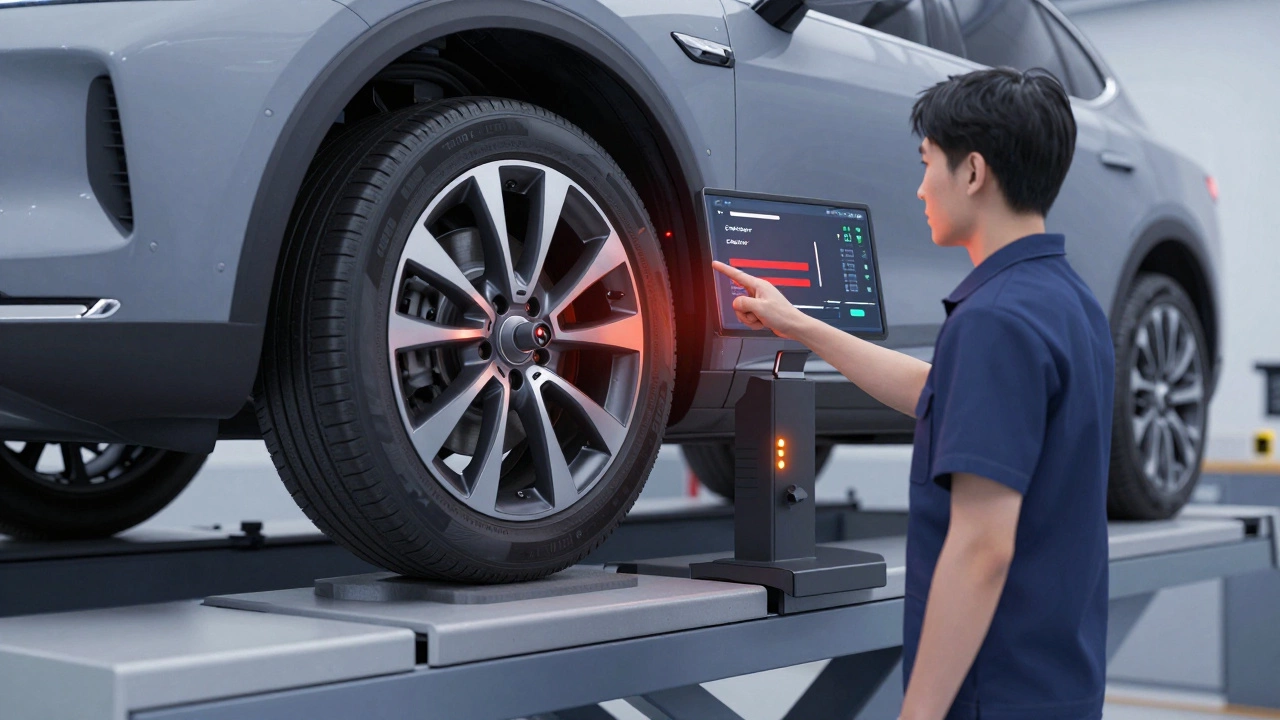
You can guess all day, but an wheel alignment is a service that adjusts the angles of the wheels to match the manufacturer's specifications machine provides the data. When you visit a shop, they will mount sensors to your wheels and measure three key angles: Camber, Caster, and Toe.
| Angle | What It Is | Sign of a Bent Part |
|---|---|---|
| Camber | The inward or outward tilt of the wheel when viewed from the front. | If the camber is out of spec and cannot be adjusted back into range, a control arm, strut tower, or spindle is likely bent. |
| Caster | The forward or backward tilt of the steering axis, viewed from the side. | Excessive caster difference between left and right sides often points to a bent upper strut mount or lower control arm bushing displacement. |
| Toe | The extent to which the wheels turn inward or outward, viewed from above. | Toe is easily adjustable. If toe is corrected but the car still pulls, the issue lies deeper in camber/caster (structural bends). |
Ask the technician to show you the "before" numbers. If the machine says your camber is -4 degrees when the factory spec is -1 degree, and there are no adjustment bolts available for that setting on your car model, you almost certainly have a bent component. Modern cars often have fixed geometry for durability, meaning any deviation from spec equals broken hardware.
Common Culprits: Which Parts Bend Most Often?
Not all suspension parts break equally. Some are designed to flex; others are rigid. Knowing which parts are vulnerable helps you focus your inspection.
- Lower Control Arms: These take the brunt of impact from potholes. Because they are long levers, a sharp impact can twist the steel or aluminum housing. Ball joints attached to these arms can also shear off if the arm bends sharply.
- Strut Towers: Located inside the engine bay, these are the mounts where your struts attach to the car body. Hitting a curb hard enough can bend the metal sheet of the strut tower. This is expensive to fix because it involves cutting and welding the chassis.
- Tie Rod Ends: These are smaller and more delicate. A direct hit to the front bumper or wheel can snap or bend the tie rod, immediately affecting steering response.
- Subframes: On rear-wheel-drive or luxury vehicles, the entire rear axle assembly sits on a subframe. A major impact can twist the subframe, misaligning the whole rear suspension. This requires specialized frame-rail equipment to correct.
DIY vs. Professional Diagnosis: When to Call a Pro
You can do a lot of detective work yourself. Check for visual bends, listen for clunks over bumps, and feel for steering pull. However, diagnosing a bent suspension ultimately requires precision tools that aren't practical for home garages.
If you suspect a bend, here is your action plan:
- Step 1: Tire Check. Ensure all four tires are inflated to the PSI listed on the driver’s door jamb. Rotate the tires and drive again. If the pull changes direction or disappears, it was a tire issue, not suspension.
- Step 2: Visual Scan. Use your flashlight method described earlier. Look for obvious dents, tears in rubber boots, or asymmetry between left and right sides.
- Step 3: The Bounce Test. Push down hard on each corner of the car. It should bounce up and settle quickly. If it oscillates (bounces up and down multiple times), your shocks are dead. While not a "bend," worn shocks exacerbate the effects of minor alignment issues.
- Step 4: Visit an Alignment Shop. Tell them you suspect a bent component. Ask them to print out the alignment report. If they say "it’s unadjustable," ask specifically which part is likely bent based on the error codes.
Do not ignore a confirmed bend. Driving with a bent control arm puts stress on the CV axles, wheel bearings, and even the transmission mounts. Over time, the metal fatigues further, increasing the risk of sudden failure. Replacing a bent part restores the safety margins your car was engineered with.
Preventing Future Suspension Damage
Once you’ve fixed the issue, how do you keep it from happening again? Road conditions are unpredictable, but your reaction to them matters.
Slow down for potholes. It sounds obvious, but hitting a hole at 30 mph generates significantly more force than at 10 mph. Give pedestrians and cyclists plenty of space-they act as natural buffers against curbs. And consider upgrading your aftermarket wheels if you drive on rough roads; lighter forged wheels absorb less impact energy than heavy cast alloys, reducing the shock transferred to your suspension components.
Can a bent suspension be straightened?
Generally, no. Critical suspension components like control arms, struts, and spindles are heat-treated for strength. Attempting to bend them back weakens the metal structure, making them prone to snapping under load. Always replace bent structural parts rather than trying to repair them.
How much does it cost to fix a bent suspension part?
Costs vary widely. A simple tie rod replacement might cost $100-$200 including labor. A bent control arm could run $300-$600 depending on the vehicle. If the strut tower or subframe is bent, repairs can exceed $1,000 due to the complexity of frame alignment work.
Is it safe to drive with a bent control arm?
It is not recommended. A bent control arm alters wheel alignment, leading to rapid tire wear and poor handling. More dangerously, the stress concentration on the bent metal can cause it to fracture suddenly, potentially causing you to lose control of the vehicle.
Will a wheel alignment fix a bent suspension?
No. An alignment adjusts the angles of the wheels within the limits of the existing hardware. If a part is bent, the hardware’s geometry is permanently altered. An alignment can only compensate slightly using adjustable components (like toe), but it cannot correct significant camber or caster errors caused by physical deformation.
What noises indicate a bent suspension component?
While bends themselves don’t make noise, the damage often accompanies torn bushings or ball joints. Listen for clunking sounds when going over bumps, squeaking during tight turns, or grinding noises if the bent part is rubbing against other components or the wheel well liner.